Kitchen & Court

K-Swiss Ultrashot 4 Review

The most-specified court shoe we list: a named heel structure, a 360-degree chassis and - uniquely - thicker rubber published where pickleball actually wears a sole through. Who it suits at 55+, and the three reasons to buy something else.

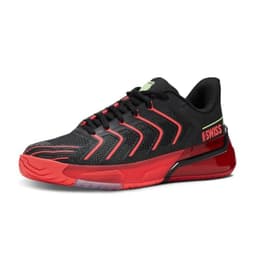
K-Swiss Ultrashot 4 Pickleball

Our pick

K-Swiss Ultrashot 4 Pickleball

The court shoe to buy if you want the most published structure on a pickleball-specific platform: a molded TPU shock frame under the heel, a 360 Plantar Support Chassis through the midfoot, and DragGuard 7.0 thicker rubber in the high-wear regions - the only drag-zone reinforcement claim we have found on any shoe we list. Skip it if you need a wide width, or if 16.2 oz is more shoe than your legs want late in a session.

$89.00 · View on Amazon

Price as of October 11, 2026. #ad How we’re funded

Read the full write-up
By Stephen V.Last updated How we research

The K-Swiss Ultrashot 4 has quietly become the shoe this site recommends most often, and it earned that the boring way: K-Swiss publishes more about how it is built than anyone else does. On a site whose whole method is ranking shoes on disclosed specs rather than on how a reviewer says they felt, a maker that names its heel structure, its midfoot chassis, its midsole foam, its outsole compound and where it put extra rubber ends up at the top of a lot of lists.

This review is for the player over 55 who wants one dependable court shoe and would rather not read five pages to choose it — and for the player who has seen the Ultrashot 4 at the top of our outdoor, plantar fasciitis and Achilles tendonitis rankings and wants to know whether that is one shoe genuinely doing three jobs or just a shortage of alternatives. We own no pair and make no on-court testing claim. Everything below is read from what K-Swiss and its retailers publish, dated, with the cons stated as clearly as the strengths.

How this is funded: we earn a commission if you buy through our links, at no extra cost to you. It never changes which product we recommend, and we’ll tell you plainly when to skip one. Full disclosure.

K-Swiss Ultrashot 4 Pickleball

The one shoe here that was designed around the two things a sore plantar fascia actually needs, and says so on the spec sheet: a molded TPU support chassis that stops the midfoot folding, and a shock frame sitting under the heel. It is also a genuine pickleball shoe rather than a tennis shoe pressed into service, which shows in the outsole. If you want one recommendation and no further reading, this is it.

Easier on the joints: The plantar fascia is a band under your arch that gets loaded every time the midfoot flattens and spreads. A shoe with a rigid chassis under that arch takes some of that load before your fascia has to, which is the entire mechanical argument for buying a supportive court shoe instead of a soft one.

What we like

  • Molded TPU support chassis — the midfoot resists the twisting that loads the fascia
  • Shock frame under the heel, which is where plantar fasciitis actually hurts
  • Surge 7.0 CMEVA midsole is cushioned without going soft and unstable
  • DragGuard 7.0 reinforcement in the drag zones, so it survives a pickleball toe drag

Skip it if

  • K-Swiss does not publish a heel-to-toe drop, so we cannot tell you what it is
  • No wide width listed for this model — a real problem if you need 2E or 4E
  • Mid-pack weight; it is a supportive shoe, not a light one
TypePickleball court shoe (men's)
Midfoot supportMolded TPU 360 Plantar Support Chassis
HeelShock frame (molded TPU under the heel)
MidsoleSurge 7.0 CMEVA
OutsoleAosta 7.0 rubber, multi-directional herringbone; DragGuard 7.0 thicker rubber in high-wear regions
Non-markingNot published
UpperDuraMesh and DuraPrint
Weight16.2 oz (size 10.5, per Tennis Warehouse)
Heel-to-toe dropNot published
Width optionsOne width, a “generous medium” (per Tennis Warehouse)

Specs read from the product listing, on August 31, 2026. “Not published” means the maker does not state that figure.

What K-Swiss actually publishes

Five things, and the fifth is the one no competitor matches.

  • A “Shock Frame”— molded TPU under the heel, for shock absorption and support. Note that this is a structure, not a foam: a rigid part doing a specific job in a specific place.
  • A 360 Plantar Support Chassis— K-Swiss’s name for the molded TPU support running under the midfoot and heel, for mid-foot and heel stability through directional changes.
  • Surge 7.0 CMEVA midsole— described as plush, and the cushioning layer sitting above that chassis.
  • Aosta 7.0 rubber outsole in a multi-directional herringbone pattern— a named compound and a named tread, which half the category does not provide.
  • DragGuard 7.0: “thicker rubber in high wear regions.” Read that twice. It is not a harder compound spread across the whole sole — it is extra material concentrated where the sole wears out. This is the only drag-zone reinforcement claim we have found on any court shoe in our registry.

The upper is DuraMesh and DuraPrint, for breathability with printed reinforcement rather than stitched overlays. Tennis Warehouse publishes the weight at 16.2 oz in a size 10.5 and lists one width, which it describes as a generous medium.

Why the DragGuard claim matters more than it sounds

Pickleball wears shoes out in a way tennis does not, and the difference is the kitchen line. Tennis footwork covers a big court with long strides and lots of heel contact. Pickleball is played standing close to the net in a crouch, shuffling sideways in short steps, and the inside edge of the front toe drags along the court on almost every one of them. The result is that nearly all your outsole wear lands in two small patches: the medial forefoot and the toe.

This is why “durable rubber” on a spec sheet is a weak claim. A marginally harder compound across the entire sole adds weight and stiffness everywhere to slow down wear in a spot that is maybe four percent of the contact area. Thicker rubber placed exactly in that spot is the better engineering answer, and it is what K-Swiss says it did. Whether the execution is good we cannot tell you — we have not worn a pair and we do not run an abrasion lab. What we can tell you is that nobody else in our registry even claims to have addressed it, and on an outdoor court that is the failure mode that ends a shoe’s life while the midsole is still fine.

One honest caveat on the same point: no outsole guarantee comes from K-Swiss. The six-month outsole durability guarantee attached to this shoe at Tennis Warehouse is the retailer’s, covers the rubber outsole only, requires the shoe to be worn completely through into the midsole or insole, and explicitly excludes toe-guard and upper damage. It does not travel with the shoe to another seller. Read the terms wherever you buy.

Why it keeps winning joint-specific rankings

Three of our condition pages put this shoe first, and in each case it is for a different published feature rather than a general sense that it is good.

Plantar fasciitis. The plantar fascia is loaded every time the midfoot flattens and spreads under weight. A rigid chassis running the length of the midfoot takes some of that load before the fascia has to, and the Ultrashot 4 is the only pickleball-specific shoe we list that publishes both a midfoot chassis anda heel structure. That pairing — support under the arch, structure under the heel where the fascia attaches — is the whole mechanical argument for buying a supportive court shoe rather than a soft one, and it is argued in full on best pickleball shoes for plantar fasciitis.

Achilles tendonitis. The spec that would actually settle an Achilles question is heel-to-toe drop, and no court shoe we list publishes it— not K-Swiss, not ASICS, not Skechers, not New Balance. So that ranking falls back to published heel structure, and a named shock frame plus a chassis that wraps the heel is the most any pickleball-specific shoe offers. The reason heel structure helps is unglamorous: it stops the heel bone tipping inward on a lateral push, and tipping is what tugs the tendon sideways.

Flat feet and overpronation. Same chassis, different reason: a frame that resists twisting is what a collapsing arch wants, rather than the softest shoe in the store. That is the argument on best pickleball shoes for flat feet.

Notice what all three have in common. This shoe does not win on cushioning, lightness or price. It wins because K-Swiss built structure into it and then wrote down where. If your problem is impact rather than instability, a cushioning-first shoe is the better buy, and best pickleball shoes for bad knees is the ranking to read instead.

The three reasons to buy something else

  1. One width, and it is not a wide.K-Swiss lists this model in a single width — a “generous medium” per Tennis Warehouse, which is not the same thing as a 2E or a 4E. If you know you need a true wide, no amount of published structure fixes a shoe that squeezes your forefoot, and a shoe that squeezes changes how you walk. Go to best pickleball shoes for wide feet, where the only entry requirement is a maker-listed wide width.
  2. 16.2 oz is a lot of shoe.That is the published weight in a size 10.5, and it is the cost of the TPU. Weight matters most late in a session, which is also when older players stumble — so if you play long social sessions and fatigue is your limiting factor rather than support, a lighter shoe may genuinely be the safer one. Our indoor ranking tops out at a published 12.4 oz for exactly this reason.
  3. No heel-to-toe drop, and no non-marking claim.Two published absences worth knowing. The drop figure is missing across the whole category, so it is not a mark against K-Swiss specifically. The non-marking one is more practical: the words do not appear on this shoe’s spec sheet, so if your venue is a gym that inspects soles at the door, buy a shoe that says it in writing instead.

How it compares to the alternatives we list

Against the ASICS Gel-Resolution X, the Ultrashot 4 is cheaper, lighter and purpose-built for this sport; the ASICS has more frame (a DYNAWALL that extends around the heel), a two-piece midsole with a softer heel foam, and the AHARPLUS compound — but it is heavier at a published 15.0 oz in a men’s size 9, stiffer, pricier, and it is a tennis shoe. If your heel pain has gone past annoying, the extra structure may be worth the penalty; if not, it is a lot of shoe to carry for a social doubles game.

Against the Skechers Viper Court Pro 2.0, the Ultrashot 4 is the structured option and the Skechers is the comfort one. The Skechers wins on two published details the Ultrashot 4 cannot match: its Arch Fit insole is removable, so you can fit your own orthotic, and it is listed in Medium and Wide. If you already own prescription insoles, that removability may outrank everything on this page — see our Skechers Viper Court Pro review.

Against the K-Swiss Express Light, its own stablemate: the Express Light is the lighter, cheaper, indoor-legal shoe (it publishes the non-marking claim the Ultrashot 4 does not), and the Ultrashot 4 is the structured outdoor one. They are genuinely different purchases rather than a good-better pair, and the Express Light review makes that case from the other side.

Who should buy it

Buy the Ultrashot 4 if you play mostly outdoors, you want one shoe that will not need replacing from the toe inward by August, and your foot is a medium or a forgiving slightly-wide. Buy it especially if you have been told you overpronate, or if your heel or arch flares up during a session rather than only the morning after — the published chassis is a real mechanical answer to that rather than a marketing one.

Do not buy it if you need a listed wide width, if you play on a gym floor that enforces non-marking soles, if you already own orthotics you intend to use (nothing published says this insole comes out), or if the heaviest shoe in your closet is already heavier than you want. In those four cases the right shoe is elsewhere on this site, and we would rather send you there than sell you this one. If none of the condition pages describes your feet, start at best pickleball shoes for seniors.

Nothing here is medical advice and we have examined nobody. We own no pair of these and claim no testing. Every spec above is K-Swiss’s or its retailer’s, read on the date in the sources list; the price is a daily live check with the date shown; and where the maker publishes nothing we say so instead of filling the gap. Our methodology is here.
Frequently asked questions

Is the K-Swiss Ultrashot 4 good for pickleball?

It is the most-specified court shoe we list, and it is built for this sport rather than adapted from tennis. K-Swiss publishes a molded TPU Shock Frame under the heel, a 360 Plantar Support Chassis through the midfoot and heel, a Surge 7.0 CMEVA midsole, an Aosta 7.0 multi-directional herringbone outsole, and DragGuard 7.0 thicker rubber in the high-wear regions. That last one is the only drag-zone reinforcement claim we have found on any shoe in our registry, and the medial forefoot is exactly where pickleball wears a sole through.

How much does the K-Swiss Ultrashot 4 weigh?

Tennis Warehouse publishes 16.2 oz in a size 10.5, which makes it one of the heavier shoes we list. That weight is the cost of the TPU structure, and it is a genuine trade-off rather than a flaw: weight tells late in a session, which is also when older players are most likely to stumble. If fatigue rather than support is your limiting factor, the K-Swiss Express Light publishes 12.4 oz in the same size.

Does the K-Swiss Ultrashot 4 come in wide widths?

No. K-Swiss lists this model in one width, which Tennis Warehouse describes as a generous medium - that is not the same as a 2E or 4E. If you know you need a true wide, this is the main reason to buy something else, because no amount of published structure compensates for a shoe that squeezes your forefoot. The New Balance Fresh Foam X 1007 we list is sold in a published 4E, and the Skechers Viper Court Pro is listed in Medium and Wide.

Is the K-Swiss Ultrashot 4 non-marking for indoor courts?

K-Swiss does not say, and we will not assume. The words 'non-marking' do not appear on this model's published spec sheet, so if you play in a gym that inspects soles at the door, buy a shoe whose own page uses the phrase. The K-Swiss Express Light does: its spec sheet publishes a non-marking Aosta 7.0 rubber outsole in a modified herringbone tread. For the Ultrashot 4 the published strengths all point outdoors.

What is DragGuard 7.0 on the K-Swiss Ultrashot 4?

It is thicker rubber laid into the outsole's high-wear regions rather than a different compound spread across the whole sole. That distinction matters for pickleball specifically: the sport is played from the kitchen line with short shuffling steps and a dragging inside toe, so almost all outsole wear concentrates in two small patches. Adding material exactly there is better engineering than making the entire sole marginally harder, which only adds weight and stiffness everywhere.

Does the K-Swiss Ultrashot 4 have a warranty on the outsole?

Not from K-Swiss, as far as we could establish. The six-month outsole durability guarantee attached to this shoe is Tennis Warehouse's, applies to purchases made from Tennis Warehouse, covers the rubber outsole only, requires the shoe to be worn completely through into the midsole or insole, and excludes toe-guard and upper damage. A retailer guarantee does not travel with the shoe, so check the terms wherever you actually buy it.

K-Swiss Ultrashot 4 or ASICS Gel-Resolution X?

The Ultrashot 4 is cheaper, lighter and purpose-built for pickleball. The Gel-Resolution X has more structure - a DYNAWALL frame that extends around the heel and a two-piece midsole with a softer FF BLAST PLUS ECO foam under the heel - plus the AHARPLUS outsole compound, but it is a tennis shoe, it is stiffer, it costs more, and it publishes 15.0 oz in a men's size 9. Choose the ASICS if stubborn heel pain wants maximum structure; choose the K-Swiss for everything else.

Can I put my own orthotic in the K-Swiss Ultrashot 4?

Nothing K-Swiss publishes says the insole is removable, so we cannot promise it. If you already own prescription insoles and intend to use them, buy a shoe that states removability: the Skechers Viper Court Pro 2.0's Arch Fit EVA insole is published as removable, and the Fila Volley Zone publishes a removable molded EVA sockliner. An orthotic you cannot fit is worse than a shoe with less published structure.

Sources

  • Tennis Warehouse - K-Swiss Ultrashot 4 (spec page) — Outsole: 'Aosta 7.0 durable rubber outsole in a multi-directional herringbone pattern; Dragguard 7.0 thicker rubber in high wear regions' to extend outsole life. Midsole: 'Surge 7.0 cushioning feels plush for increased comfort. Shock Frame molded TPU under the heel for shock absorption and support. 360 Plantar Support Chassis for mid-foot and heel stability.' Upper: 'DuraMesh and DuraPrint combine for comfort, support, and a high level of breathability.' Weight 16.2 oz (size 10.5); one width, a 'Generous Medium'. Tennis Warehouse (the retailer, not K-Swiss) attaches a one-time 6-month outsole durability guarantee to purchases made from Tennis Warehouse: it covers the rubber outsole only, requires the shoe to be worn completely through into the midsole or insole, and excludes toe-guard and upper damage (accessed October 11, 2026)
  • Tennis Warehouse - K-Swiss Express Light Pickleball (spec page) — Outsole: 'Non-marking Aosta 7.0 rubber outsole in a modified herringbone tread pattern provides excellent traction and good durability on any court surface.' Midsole: 'K-EVA midsole for cushion and support under foot' plus a 'Midfoot shank for added stability and unwanted twisting.' Upper: 'Seamless synthetic materials and mesh for comfort and breathability. DuraWrap protection in the toe for extra durability. An Ortholite liner for added cushioning.' Weight 12.4 oz (size 10.5); medium width only. No outsole durability guarantee listed and no indoor-vs-outdoor statement beyond 'any court surface' (accessed October 11, 2026)
  • Skechers - Pickleball Viper Court Pro 2.0 (maker's product page) — Outsole: 'Goodyear Gold compound, built for increased durability to allow the elite player to perform controlled slides specifically on the court surface.' The words 'non-marking' do NOT appear anywhere on this model's page. Insole: 'Patented Skechers Arch Fit EVA insole system with podiatrist-certified arch support', 'Removable EVA insole'. Midsole: 'Lightweight, responsive ULTRA GO Foam midsole cushioning'. Upper: 'Innovative durable yet breathable mesh technology with synthetic overlays and a lace-up front' plus a 'Rubber toe guard for lasting durability'. Width shown: Medium Wide. Described as 'Built for the elite pickleball athlete' and also suitable for 'padel and tennis game play'; no indoor-vs-outdoor distinction is stated (accessed October 11, 2026)
  • American Academy of Orthopaedic Surgeons (OrthoInfo) — Plantar Fasciitis and Bone Spurs — AAOS: plantar fasciitis is most common between ages 40 and 60, and repetitive high-impact activity is a named risk factor; more than 90% of patients improve within 10 months of starting simple treatment. Footwear guidance: 'Shoes with thick soles and extra cushioning can reduce pain with standing and walking', soft silicone heel pads work by elevating and cushioning the heel, pre-made or custom shoe inserts are also helpful, and old athletic shoes should be replaced before they wear out (accessed August 31, 2026)
  • American Academy of Orthopaedic Surgeons (OrthoInfo) - Achilles Tendinitis — AAOS: Achilles tendinitis occurs 'when the large tendon that runs down the back of the lower leg becomes irritated and inflamed'; the Achilles 'is the largest tendon in the body', 'connects the calf muscles to the heel bone' and is 'prone to tendinitis, a condition associated with overuse'. Two types: NONINSERTIONAL (middle of the tendon; fibres 'begin to break down and develop tiny tears', more common in younger active people and runners) and INSERTIONAL (the lower portion where it attaches to the heel bone; 'can occur at any time or with any activity level' and 'is frequently caused by calf muscle tightness, which places increased stress on the Achilles tendon insertion'); bone spurs often form on the back of the heel with the insertional type. Cause: 'typically not related to a specific injury. The problem results from repetitive stress to the tendon. This often happens when we push our bodies to do too much, too quickly.' Named contributing factors: 'a sudden increase in the amount or intensity of exercise activity', 'a change in shoewear, which can also lead to increased strain on the Achilles tendon', 'tight calf muscles', and Haglund's deformity. Symptoms: 'pain and stiffness along the Achilles tendon in the morning', 'pain along the tendon or back of the heel that worsens with activity', 'severe pain the day after exercising', thickening of the tendon, swelling 'that is present all the time and gets worse throughout the day or with activity', and 'pain on the back of the heel when you wear shoes'. AAOS warning: 'if you have experienced a sudden pop in the back of your calf or heel, you may have torn your Achilles tendon. See your doctor immediately.' Nonsurgical treatment 'will provide acceptable pain relief' in most cases, 'although it may take a few months for symptoms to improve significantly. Even with early treatment, the pain may last longer than 3 months'; mainstays are 'anti-inflammatory pain medications, activity modification, shoewear modification, and physical therapy exercises'. Rest advice: 'decrease or even stop the activities that make the pain worse'; 'if you regularly participate in high-impact exercises (such as running), switching to low-impact activities will decrease the amount of stress on the Achilles tendon', with biking, elliptical and swimming named. Ice 'up to 20 minutes at a time'. The calf stretch is specified (lean against a wall, back knee straight, heel on the ground, hold 30 seconds, 10 repetitions each foot). Eccentric heel-drop exercises 'should be performed only for noninsertional Achilles tendinitis. Do not perform these exercises if you have insertional Achilles tendinitis.' NSAIDs 'do not reduce the thickening of the degenerated tendon' and should not be used 'for more than 1 month' without talking to a doctor (accessed October 11, 2026)
  • Non-fatal senior pickleball and tennis injuries in US EDs, 2010–2019 — Injury Epidemiology (2021) — For players 60+: strains/sprains 31.0%, fractures 30.4%; the wrist is the single most-injured body part (13.2%); women 3.7x more likely to fracture (accessed July 22, 2026)

Keep reading