What changes when you move up from a beginner paddle
The single biggest change is the face material. Beginner paddles are usually fiberglass — cheap, lively and forgiving, which is exactly right while you’re learning. As your control improves, though, that liveliness starts to work against you: the ball pops off a touch unpredictably, and the fine touch a soft game needs isn’t there. A carbon face fixes that, giving a muted, controlled response that rewards placement. If you want the full explanation before you spend, our carbon vs fiberglass guide walks through it.
The second change is core and shape. Thicker cores (a 16mm core, for instance) feel softer and more controlled, muffling impact well — good for touch and good for the arm. Elongated shapes add reach and stretch the sweet spot, which helps at the kitchen line, at the cost of a slightly more head-heavy feel. Which brings us to the one rule that overrides everything else at this tier.
The intermediate trap: buying more paddle than your arm wants
Here is the mistake we see improving players make constantly: they chase the paddle the pros use, or the one with the biggest power and spin numbers, and end up with a stiff, head-heavy, demanding paddle that beats up an aging arm. Getting better does notmean you should buy the most aggressive paddle you can. The specs that protect your joints — a manageable weight, a comfortable grip, a forgiving sweet spot — matter just as much at intermediate level as they did on day one.
Two practical warnings follow from that. First, elongated shapes and weak wrists don’t mix: several picks here (the Hyperion, the Selkirk XL paddles) are elongated, which puts more weight out front. An elbow can handle that; a weak wrist can’t. If your wrist is the problem, step to a standard-shape paddle from our wrist-pain list instead; if you came from tennis and want the long handle on purpose, our tennis-players roundup ranks those. Second, thermoformed unibody paddles feel stiffer, which many players love for stability but a very sensitive arm may not. Buy the upgrade that helps your game and respects your joints — not the one with the loudest spec sheet.
How to choose from this list
- Want the benchmark to grow into? The JOOLA Ben Johns Hyperionis the performance standard — thick 16mm core, real spin — if your wrist is healthy.
- Want carbon without the benchmark price? The Selkirk SLK Halo is the best-value carbon step-up, with a forgiving XL sweet spot.
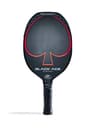
- Upgrading around a sore arm?The ProKennex Black Ace brings the brand’s comfort design at a mid-market price; the Gamma Obsidian’s molded foam handle suits arthritic hands.
- Want a modern build?The Friday Challenger’s thermoformed carbon gives a stable, big-sweet-spot feel — just note the stiffer feel.
How much should an intermediate paddle cost?
More than a beginner paddle, but you don’t need to spend at the very top. The paddles here span a mid-market range, from the affordable Selkirk Evo and Halo up to the benchmark Hyperion, and the sweet spot for most improving players is a mid-tier carbon paddle — a real upgrade in feel without pro-level pricing. Spend where it helps your game and your arm, not where the marketing points. And if your priority is a specific joint rather than performance, start with the list that matches it — arthritis, tennis elbow or a weak wrist— rather than a general intermediate paddle.