What carbon fiber actually changes
A paddle is a core sandwiched between two face sheets, and the face is what touches the ball. A carbon face is stiffer than fiberglass and returns energy in a more controlled, muted way, with a textured surface that grips the ball for spin. The results you feel are a stable, predictable response, a generally softer feel on mis-hits, and better durability — carbon holds its surface texture longer than fiberglass, which wears a little faster. The catch is simply price: carbon paddles cost more, sometimes a lot more. Our carbon vs fiberglass guide covers the full comparison.
Is carbon actually better for an older arm?
Mildly, and with an important caveat. Carbon’s muted feel does transmit a little less harshness on off-center hits, which is why it often suits a sore elbow— ProKennex built its whole comfort reputation on carbon-and-cushion paddles. But the face material is not the biggest factor in arm comfort. Weight, grip and core softnessmatter more. A lighter fiberglass paddle with a thick soft core and a cushioned grip is gentler than a heavy carbon paddle you have to swing hard. So don’t buy carbon foryour joints — buy for weight and grip first, and treat carbon as a preference on top. Our how-to-choose guide walks through the specs that actually decide comfort.
How to choose from this list
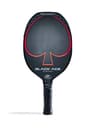
- For a sore arm above all: the ProKennex Ovation Speed IIpairs a Toray carbon face with a cushioned grip — the comfort benchmark. The Black Ace brings the same recipe at a friendlier price.
- For value: the Selkirk SLK Halo is a genuine carbon paddle priced well under premium, with a forgiving XL sweet spot.
- For performance and spin: the JOOLA Ben Johns Hyperionis the benchmark — but its elongated head isn’t for a weak wrist.
- For arthritic hands:the Gamma Obsidian pairs a carbon build with a molded foam handle that’s genuinely softer to grip.
- For a modern build:the Friday Challenger’s thermoformed carbon gives a stable, big-sweet-spot feel — just note it feels stiffer, which not every sensitive arm loves.
The honest caveats before you buy carbon
Two things to keep in mind. First, carbon costs more, and you do not need it to play well or comfortably — a good fiberglass paddle is cheaper, forgiving and perfectly capable, especially for a beginner. If you’re just starting, our beginner roundup is the smarter first stop; save the carbon upgrade for when you know you want the more controlled feel. Second, elongated and thermoformed carbon paddles can be demanding: the elongated Hyperion runs a touch head-heavy (fine for an elbow, not for a weak wrist), and thermoformed builds feel stiffer. Match the build to your body, not just to the “carbon” label. If a specific joint is your concern, start with the list that matches it — arthritis, tennis elbow or a weak wrist.
One terminology note, because the labels on this page are not standardised: “graphite” and “carbon fiber” describe the same element and two different eras of paddle face. Graphite vs carbon fiberexplains what each word usually means on a spec sheet — and why the core underneath matters more than either.