Kitchen & Court

Best Low-Vibration Pickleball Paddles

Paddles built to dampen the shock that travels into your hand and elbow — carbon faces, cushioned grips and thick, soft polymer cores.

By Stephen V.Last updated How we research

Every time a ball hits the paddle, a little shock travels back down the handle into your hand and up your arm. On a mis-hit off the edge, it’s a lot. For a healthy arm that’s nothing; for a sore elbow, an achy wrist or arthritic hands, it’s the thing that turns a fun afternoon into an evening of ache. A low-vibration paddle is designed to soak up that shock before it reaches you.

Three design choices do the dampening: a carbon-fiber face, which tends to feel more muted and controlled than a lively fiberglass one; a thick, soft polypropylene core that cushions the ball; and a cushioned gripthat stops the handle transmitting buzz into your palm. One brand — ProKennex — has built its whole reputation on arm comfort, so it features heavily here. We can’t lab-measure vibration ourselves, so we rank on those published design choices and each maker’s stated intent, not on a test we didn’t run.

How this is funded:we earn a commission if you buy through our links, at no extra cost to you. It never changes which product we recommend, and we’ll tell you plainly when to skip one. Full disclosure.

Quick picks

Ranked on published specs, grip and build, and honest buyer fit. Select a row to jump to the full write-up. We have not lab-tested these — here is exactly what we do instead.

#ProductBest forPrice
1
ProKennex Pro Flight

ProKennex Pro Flight

A slightly more all-court ProKennex than the Ovation, with the same Toray carbon face and Comfort Pro grip. You keep the brand's arm-friendly feel but get a touch more reach and drive, which suits players who want comfort without giving up the ability to put a ball away.

Best low-vibration overall
$189.95 · View on Amazon

Price as of August 4, 2026. #ad How we’re funded

2
ProKennex Ovation Speed II

ProKennex Ovation Speed II

ProKennex built its whole reputation on arm comfort, and the Ovation Speed II is the clearest expression of it — a Toray carbon face and the brand's cushioned Comfort Pro grip, aimed squarely at players whose elbow or wrist flares up. If a paddle has ever left your arm sore, this is the brand to try first.

Best for a sore elbow
$159.99 · View on Amazon

Price as of August 4, 2026. #ad How we’re funded

3
Gamma Obsidian 13

Gamma Obsidian 13

The standout for hands that hurt: Gamma gives this one a molded foam handle instead of a hard wrapped grip, plus a system that lets you add handle weight to balance the paddle. Softer to hold and easier to customize is exactly what an arthritic grip wants.

Softest handle
$129.99 · View on Amazon

$159.9919% off

Price as of August 4, 2026. #ad How we’re funded

4
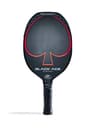
ProKennex Black Ace Ovation

ProKennex Black Ace Ovation

The most affordable way into ProKennex's comfort-first design. It carries the Toray carbon face and Comfort Pro grip at a price closer to a mainstream paddle, so it's the one to pick if the brand appeals but the flagship prices don't.

Best value ProKennex
$100.00 · View on Amazon

$122.9719% off

Price as of August 4, 2026. #ad How we’re funded

5
JOOLA Ben Johns Hyperion CAS 16

JOOLA Ben Johns Hyperion CAS 16

The performance benchmark on this list — a carbon-surface, 16mm-core paddle with an elongated handle built for spin and reach. It's more paddle than a beginner needs, but for an improving player the extra sweet spot and control are the payoff. Note the elongated handle suits a two-handed backhand.

Thickest, softest core
$119.99 · View on Amazon

Price as of August 4, 2026. #ad How we’re funded

6
Selkirk SLK Halo Power XL

Selkirk SLK Halo Power XL

A carbon-fiber Selkirk that still lands under most premium paddles. The XL shape adds reach and a generous sweet spot; the carbon face gives a cleaner, more controlled response than the fiberglass Evo. A strong mid-tier step up.

Best carbon on a budget
$99.99 · View on Amazon

Price as of August 4, 2026. #ad How we’re funded

The picks in full

#1Best low-vibration overall

ProKennex Pro Flight

A slightly more all-court ProKennex than the Ovation, with the same Toray carbon face and Comfort Pro grip. You keep the brand's arm-friendly feel but get a touch more reach and drive, which suits players who want comfort without giving up the ability to put a ball away.

Easier on the joints: The carbon face plus ProKennex's cushioned grip is the same arm-friendly recipe as the Ovation — a good option if you want comfort but don't want a pure control paddle.

What we like

  • Same Toray T700 carbon face and cushioned grip as the Ovation
  • A bit more all-court than the pure-comfort models
  • USA Pickleball approved

Skip it if

  • The most expensive paddle in this roundup
  • Weight is not published, so you're buying on feel and reputation
Face materialToray T700 carbon fiber
CoreNot published
GripComfort Pro (cushioned)
WeightNot published
USA Pickleball approvedYes (per listing)

Specs read from the product listing, on July 22, 2026. “Not published” means the maker does not state that figure.

#2Best for a sore elbow

ProKennex Ovation Speed II

ProKennex built its whole reputation on arm comfort, and the Ovation Speed II is the clearest expression of it — a Toray carbon face and the brand's cushioned Comfort Pro grip, aimed squarely at players whose elbow or wrist flares up. If a paddle has ever left your arm sore, this is the brand to try first.

Easier on the joints: ProKennex designs its comfort line around vibration control, and pairs it with an extra-cushioned grip — the two things that most reduce the shock and squeeze your elbow and hand feel on every hit.

What we like

  • Toray T700 carbon-fiber face — a controlled, muted feel rather than a harsh pop
  • Cushioned Comfort Pro grip takes pressure off the palm and fingers
  • ProKennex is the brand arm-sensitive players reach for — that following is real

Skip it if

  • Among the pricier paddles here for its category
  • Exact weight and grip circumference are not published on the listing
Face materialToray T700 carbon fiber
CoreNot published
GripComfort Pro (cushioned)
WeightNot published
USA Pickleball approvedYes (per listing)

Specs read from the product listing, on July 22, 2026. “Not published” means the maker does not state that figure.

#3Softest handle

Gamma Obsidian 13

The standout for hands that hurt: Gamma gives this one a molded foam handle instead of a hard wrapped grip, plus a system that lets you add handle weight to balance the paddle. Softer to hold and easier to customize is exactly what an arthritic grip wants.

Easier on the joints: The molded foam handle spreads pressure across your palm instead of concentrating it, and the weight system lets you keep the paddle light — both directly reduce hand and wrist strain.

What we like

  • Molded foam handle is genuinely softer to grip than a standard wrap
  • Customizable handle-weight system lets you tune the balance
  • 13mm carbon-fiber build for a controlled, forgiving feel

Skip it if

  • Foam handle is a love-it-or-not feel — try before committing if you can
  • Exact weight isn't published
Face materialCarbon fiber
Core thickness13 mm
GripMolded foam handle
WeightNot published (adjustable via weight system)
USA Pickleball approvedNot published

Specs read from the product listing, on July 22, 2026. “Not published” means the maker does not state that figure.

#4Best value ProKennex

ProKennex Black Ace Ovation

The most affordable way into ProKennex's comfort-first design. It carries the Toray carbon face and Comfort Pro grip at a price closer to a mainstream paddle, so it's the one to pick if the brand appeals but the flagship prices don't.

Easier on the joints: Same comfort recipe as the flagship ProKennex paddles — carbon face, cushioned grip — for players who want the arm-friendly feel on a smaller budget.

What we like

  • ProKennex comfort design at a mid-market price
  • Toray carbon face and cushioned Comfort Pro grip
  • Good bridge from a beginner paddle to a comfort-focused one

Skip it if

  • Fewer published specs than the pricier ProKennex models
  • Still costs more than a budget fiberglass paddle
Face materialToray 700 carbon fiber
CoreNot published
GripComfort Pro (cushioned)
WeightNot published
USA Pickleball approvedNot published

Specs read from the product listing, on July 22, 2026. “Not published” means the maker does not state that figure.

#5Thickest, softest core

JOOLA Ben Johns Hyperion CAS 16

The performance benchmark on this list — a carbon-surface, 16mm-core paddle with an elongated handle built for spin and reach. It's more paddle than a beginner needs, but for an improving player the extra sweet spot and control are the payoff. Note the elongated handle suits a two-handed backhand.

Easier on the joints: The thick 16mm core is the soft, control-oriented kind that muffles impact well — but the elongated head puts a little more weight out front, so it's better for elbows than for a weak wrist.

What we like

  • Carbon abrasion surface generates real spin and control
  • Thick 16mm polypropylene honeycomb core for a soft, muted feel
  • Elongated handle helps two-handed backhands and reach

Skip it if

  • The elongated head can feel heavier in the hand — not ideal for a sore wrist
  • More paddle (and price) than a casual player needs
Face materialCarbon abrasion surface
Core thickness16 mm polypropylene honeycomb
HandleElongated (sure-grip)
WeightNot published
USA Pickleball approvedYes (per listing)

Specs read from the product listing, on July 22, 2026. “Not published” means the maker does not state that figure.

#6Best carbon on a budget

Selkirk SLK Halo Power XL

A carbon-fiber Selkirk that still lands under most premium paddles. The XL shape adds reach and a generous sweet spot; the carbon face gives a cleaner, more controlled response than the fiberglass Evo. A strong mid-tier step up.

Easier on the joints: Carbon faces tend to feel more muted and predictable than fiberglass, so the ball comes off cleanly — easier on the arm than a lively, unpredictable budget face.

What we like

  • Carbon-fiber face for cleaner control than fiberglass
  • XL shape adds reach and forgiveness
  • Priced well below premium carbon paddles

Skip it if

  • The Power build leans toward drive, not pure touch
  • Elongated shape isn't for everyone
Face materialCarbon fiber
CoreNot published
ShapeXL (elongated)
WeightNot published
USA Pickleball approvedNot published

Specs read from the product listing, on July 22, 2026. “Not published” means the maker does not state that figure.

How a paddle actually dampens vibration

There’s no magic here, just materials. A carbon-fiber face flexes and returns energy in a more controlled, muted way than fiberglass, which tends to feel livelier and — on a mis-hit — harsher. A thicker core (16mm versus 13mm, say) has more soft honeycomb to absorb the impact, so less of it reaches your hand. And a cushioned grip is the last line of defense, damping whatever buzz makes it down the handle. ProKennex layers all three in its comfort line, which is why arm-sensitive players reach for the brand first.

The single biggest thing you can do, though, is hit the ball in the middle of the face. A centered hit sends almost no jarring vibration into your arm; an off-center one sends a lot. That’s why a large, forgiving sweet spot — which every paddle here has — matters as much as the core.

Low-vibration, tennis elbow and arthritis

If your elbow is the specific problem, our tennis-elbow paddle list covers the same arm-friendly paddles alongside counterforce bracing, and our guide on tennis elbow from pickleball explains how to settle a flare. If it’s your hands, the Gamma’s foam handle makes it our arthritispick too. And if you’re weighing carbon against fiberglass in general, our material guide lays out the trade-offs.

Frequently asked questions

What makes a pickleball paddle low-vibration?

A combination of a carbon-fiber face (more muted than fiberglass), a thick, soft polypropylene core that cushions the ball, and a cushioned grip that stops buzz reaching your palm. A large, forgiving sweet spot helps too, because a centered hit transmits far less shock than an off-center one. ProKennex's comfort line layers all of these, which is why it's popular with arm-sensitive players.

Do low-vibration paddles actually help tennis elbow?

They can reduce a common trigger. Tennis elbow is an overuse strain of the forearm tendons, and repeated shock — especially from mis-hits — is one thing that aggravates it. A paddle designed to dampen that shock, held with a relaxed grip, gives the tendon less to react to. It's not a cure, though: rest, a counterforce strap and technique matter as much as the paddle.

Is carbon or fiberglass better for low vibration?

Carbon generally feels more muted and controlled, while fiberglass feels livelier and can be harsher on a mis-hit — so carbon is usually the better pick for a sore arm. That said, a lighter fiberglass paddle with a thick soft core and cushioned grip can still be very arm-friendly. Our carbon-vs-fiberglass guide covers the full trade-off.

Does grip affect vibration?

Yes. A cushioned or molded grip absorbs some of the buzz travelling down the handle, and — just as importantly — it lets you hold the paddle loosely. A tight, tense grip transmits far more shock into the hand and arm than a relaxed one, so grip comfort matters as much as the material.

Sources

Keep reading