Kitchen & Court

Quiet Pickleball Balls and Paddle Pads

USA Pickleball runs a Quiet Category and publishes exactly who is on it. We rank by that list first, by whoever publishes an actual number second, and by price last.

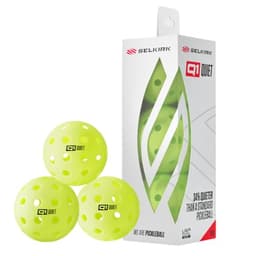
Selkirk Sport Q1 Quiet Pickleball

Our pick

Selkirk Sport Q1 Quiet Pickleball

The only quiet ball we can find that is both listed in USA Pickleball’s Quiet Category andapproved for sanctioned play — so it cuts the pop without demoting your club to practice balls. Selkirk publishes a 34 percent reduction claim; nobody publishes a decibel figure.

$11.99 · View on Amazon

Price as of October 25, 2026. #ad How we’re funded

Read the full write-up
By Stephen V.Last updated How we research

The verdict first. If your courts are under a noise complaint and you still play real games, buy the Selkirk Q1 Quiet Ball. It is the only product in this whole category that clears both bars at once: USA Pickleball lists it as a Quiet Category ball, and it is approved for sanctioned play. Everything else here either quiets the game by changing what the game is, or quiets it without anyone publishing a number.

This is the page where a 55+ community actually loses court hours. The complaint is never about the running or the shouting — it is the sharp, repetitive crack of a hard plastic ball on a stiff paddle face, forty or fifty times a minute, from eight in the morning. HOA boards and city parks departments restrict hours over that sound, and once the hours are cut they rarely come back. So the question is not “is pickleball loud?” It is “what can we change this week?”

Here is the one genuinely useful thing to know before you shop. USA Pickleball created a Quiet Categoryin September 2023 and publishes a live list of what is in it — paddles, balls, paddle covers and court screens. The qualifying bar is relative, not absolute: a product should deliver “essentially 50 percent or less of the acoustic footprint of equipment commonly sourced and used in community parks.” The thresholds and test fixtures go to manufacturers during development, which is the honest reason you cannot look up a pass mark: USA Pickleball gives you a list, not a number.

That list is our first criterion. In full, the order we rank on:

  1. Is it on USA Pickleball’s Quiet Category list? This is the only check in the category that is not the seller marking its own homework. Four balls, seventeen paddles and four cover/sleeve products are on it as of this writing. Three of the six picks below are on the list; three are not, and we say which.
  2. Does anybody publish a number?A decibel figure, a hertz figure, or at minimum a stated percentage. Most sellers in this category publish the word “quiet” and nothing else. Where a figure exists we print it and name whose figure it is.
  3. Can you still play a real game with it?A foam ball is dramatically quieter and is also not a pickleball — the flight, the pace and the bounce are all different. That trade is fine for a driveway and wrong for a league night, and a page that blurs the two is useless to a club.
  4. What does it do to the way the paddle feels? Pads stuck to a paddle face change contact. Nobody selling them states how, which is a finding rather than a footnote.
  5. Price last. The six picks here run from roughly the cost of an overgrip to the cost of a mid-range paddle at the price we last read. Noise is the cheapest problem on this site to make a dent in, and the cheapest fix is not the worst one.

We own no sound meter and we have measured nothing. Every figure on this page is published by USA Pickleball or by the maker, and is attributed to whichever of them said it.

How this is funded: we earn a commission if you buy through our links, at no extra cost to you. It never changes which product we recommend, and we’ll tell you plainly when to skip one. Full disclosure.

Quick picks

Ranked on published specs, grip and build, and honest buyer fit. Select a row to jump to the full write-up. We have not lab-tested these — here is exactly what we do instead.

#ProductBest forPrice
1
Selkirk Sport Q1 Quiet Pickleball

Selkirk Sport Q1 Quiet Pickleball

The only quiet ball we can find that you are allowed to use in a sanctioned match. Selkirk publishes a 34% noise-reduction claim and USA Pickleball lists the Q1 in its Quiet Category, which together make this the one noise fix that does not demote you to practice. It is also several times the price of an ordinary outdoor ball, and 34% quieter is not quiet.

Best quiet ball for real games
$11.99 · View on Amazon

Price as of October 25, 2026. #ad How we’re funded

2
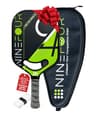
NineFour Apex Pro Series 3k

NineFour Apex Pro Series 3k

The only paddle on USA Pickleball's Quiet Category list we could find for sale at the retailer we link to: seventeen paddles are certified, and the others we searched for on 2026-10-25 returned no matching listing and appear to be sold direct by their makers. It is a conventional 3k carbon face over a polypropylene honeycomb core, which is to say it is not a strange-feeling paddle; the quiet is engineered in rather than stuck on.

Best certified quiet paddle
$85.00 · View on Amazon

Price as of October 25, 2026. #ad How we’re funded

3
Gamma Librarian Foam Quiet Pickleballs

Gamma Librarian Foam Quiet Pickleballs

A foam practice ball built to solve the noise problem, and in a 55+ community that problem is real — the crack of a hard ball is what gets courts restricted and hours cut. These are not tournament balls and don't pretend to be. They are for drilling in a driveway, a garage or a court with neighbors, and for that they're excellent.

Quietest of all, practice only
$12.99 · View on Amazon

Price as of October 25, 2026. #ad How we’re funded

4
Bloop Paddle Cover Pickleball Paddle Pads

Bloop Paddle Cover Pickleball Paddle Pads

The one paddle-side product we can verify against something other than its own marketing: Bloop Pickleball Paddle Pads appear by name on USA Pickleball's Quiet Category equipment list under covers and sleeves. That listing is third-party, which in this category is rare. What Bloop itself publishes is close to nothing - no decibel figure, no paddle sizes, no quantity.

Best fix for the paddle you already own
$29.99 · View on Amazon

Price as of October 25, 2026. #ad How we’re funded

5
Onix Fuse G2 Outdoor Pickleballs

Onix Fuse G2 Outdoor Pickleballs

Onix's answer to the durability complaint. The Fuse G2 is built as a rotationally-molded one-piece ball rather than two halves glued together, which is why it tends to stay round and stay whole longer than the balls it competes with. If you're tired of throwing away cracked balls, start here.

Best standard ball with a published decibel figure
$16.99 · View on Amazon

Price as of October 25, 2026. #ad How we’re funded

6
Quietshhot Paddle Sound Reducer (Standard/Hybrid)

Quietshhot Paddle Sound Reducer (Standard/Hybrid)

The cheap, widely sold version of the same idea, and the reason it is last here is simple: it is not on USA Pickleball's Quiet Category list, and it publishes no decibel figure either. It does publish one genuinely useful thing the others do not - the paddle footprint each version fits - so at least you can buy the right size.

Cheapest thing to try first
$19.95 · View on Amazon

Price as of October 25, 2026. #ad How we’re funded

The picks in full

#1Best quiet ball for real games

Selkirk Sport Q1 Quiet Pickleball

The only quiet ball we can find that you are allowed to use in a sanctioned match. Selkirk publishes a 34% noise-reduction claim and USA Pickleball lists the Q1 in its Quiet Category, which together make this the one noise fix that does not demote you to practice. It is also several times the price of an ordinary outdoor ball, and 34% quieter is not quiet.

Easier on the joints: A sound-dampening ball has to give way more on contact to lose the pop, and a ball that gives way more returns less shock up the paddle into your elbow. Selkirk does not claim that benefit and we have not measured it, but it is the same physics that makes the softer Franklin X-40 the kinder of the two tournament balls.

What we like

  • Listed by USA Pickleball in the Quiet Category AND approved for sanctioned play - the only ball we list that is both
  • Selkirk publishes a specific claim (34% quieter than a standard pickleball) rather than the word quiet on its own
  • Full-size ball at 2.9 in and 0.86 oz, so it plays like a pickleball rather than like foam
  • Sold in 3, 12 and 100 packs, so a club can buy at volume

Skip it if

  • The 34% figure is Selkirk's own, and no decibel number is published anywhere we can find
  • Costs several times a standard outdoor ball, per ball
  • Selkirk does not publish whether it is an indoor or an outdoor ball
  • Quieter is not silent - a complaining neighbor may still complain
Holes40 (per Selkirk)
Weight0.86 oz (per Selkirk)
Diameter2.9 in (per Selkirk)
ConstructionInjection-molded, custom material blend (per Selkirk)
Published noise claim34% quieter than a standard pickleball (per Selkirk)
Measured decibel figureNot published
USA Pickleball statusUSAP approved; listed in the Quiet Category ball list
Indoor or outdoorNot published
Quantity3 per pack on this listing (12 and 100 also sold)

Specs read from the product listing, on October 25, 2026. “Not published” means the maker does not state that figure.

#2Best certified quiet paddle

NineFour Apex Pro Series 3k

The only paddle on USA Pickleball's Quiet Category list we could find for sale at the retailer we link to: seventeen paddles are certified, and the others we searched for on 2026-10-25 returned no matching listing and appear to be sold direct by their makers. It is a conventional 3k carbon face over a polypropylene honeycomb core, which is to say it is not a strange-feeling paddle; the quiet is engineered in rather than stuck on.

Easier on the joints: A paddle engineered to put out less sound energy is, by conservation of energy, a paddle doing something different with the energy of the hit - but NineFour publishes no vibration figure, so we will not claim your elbow benefits. If arm comfort is the actual goal, buy on published core thickness instead; this paddle does not publish one.

What we like

  • Named on USA Pickleball's Quiet Category paddle list - an independent check, not the seller's adjective
  • 3k raw carbon face over a polypropylene honeycomb core: ordinary, well-understood construction
  • USAPA approved per the listing, so it is a legal paddle as well as a quiet one
  • Thermoformed with an open throat, which is current mid-price construction rather than a budget build

Skip it if

  • No decibel or hertz figure is published for THIS paddle - certification is a list entry, not a number
  • Core thickness, weight and grip circumference are all absent from the listing
  • The Amazon listing title omits the brand name, which makes it easy to mistake for a generic
  • Stock has been thin on this listing
  • Priced like a mid-range paddle, with no published spec table to justify it
Face material3k carbon fiber (per listing)
CorePolypropylene honeycomb (per listing)
Core thicknessNot published
ConstructionThermoformed, open throat (per listing)
WeightNot published
GripNot published
USA Pickleball Quiet CategoryListed (quiet paddles)
Published decibel / hertz figureNot published
USA Pickleball approvedYes (per listing)

Specs read from the product listing, on October 25, 2026. “Not published” means the maker does not state that figure.

#3Quietest of all, practice only

Gamma Librarian Foam Quiet Pickleballs

A foam practice ball built to solve the noise problem, and in a 55+ community that problem is real — the crack of a hard ball is what gets courts restricted and hours cut. These are not tournament balls and don't pretend to be. They are for drilling in a driveway, a garage or a court with neighbors, and for that they're excellent.

Easier on the joints: A foam ball comes off the paddle with almost no shock, which makes it the right ball for drilling technique when your elbow or wrist is already sore and you want reps without impact.

What we like

  • Dramatically quieter than a hard plastic ball
  • Soft foam is gentle on hands, walls and windows
  • Bounces usably on a range of surfaces, so you can drill anywhere

Skip it if

  • A practice ball — not for approved or competitive play
  • Flight and pace don't match a real outdoor ball
TypeFoam practice (indoor/outdoor)
NoiseLow-noise foam (per listing)
USA Pickleball approvedNot published
QuantitySold in 3, 6 or 48 (per listing)
ColorYellow

Specs read from the product listing, on August 19, 2026. “Not published” means the maker does not state that figure.

#4Best fix for the paddle you already own

Bloop Paddle Cover Pickleball Paddle Pads

The one paddle-side product we can verify against something other than its own marketing: Bloop Pickleball Paddle Pads appear by name on USA Pickleball's Quiet Category equipment list under covers and sleeves. That listing is third-party, which in this category is rare. What Bloop itself publishes is close to nothing - no decibel figure, no paddle sizes, no quantity.

Easier on the joints: A softer contact surface means a duller hit, and a duller hit sends less shock up the handle. That is the same mechanism as a thicker core, and it is why a pad is worth a thought for a sore elbow and not only for a complaining neighbor - though neither Bloop nor anyone else publishes a figure for it.

What we like

  • Named on USA Pickleball's Quiet Category equipment list (covers and sleeves) - independent of the seller's own claim
  • Lets you keep the paddle you already chose for your arm instead of buying a quiet paddle
  • Far cheaper than replacing a paddle

Skip it if

  • No decibel or percentage reduction published anywhere we could find
  • USA Pickleball publishes no threshold on the list page, so listed is not a measured number
  • Nothing we could find says a padded paddle is legal in sanctioned play - treat it as recreational
  • A pad on the face changes how the paddle plays, and Bloop does not say how
  • Stock on this listing has been thin
TypePaddle face pads / cover
USA Pickleball Quiet CategoryListed (covers and sleeves)
Published noise reductionNot published
Measured decibel figureNot published
Paddle shapes fittedNot published
QuantityNot published
Effect on playNot published

Specs read from the product listing, on October 25, 2026. “Not published” means the maker does not state that figure.

#5Best standard ball with a published decibel figure

Onix Fuse G2 Outdoor Pickleballs

Onix's answer to the durability complaint. The Fuse G2 is built as a rotationally-molded one-piece ball rather than two halves glued together, which is why it tends to stay round and stay whole longer than the balls it competes with. If you're tired of throwing away cracked balls, start here.

Easier on the joints: A ball that stays round bounces where you expect it to. Predictable bounces mean fewer emergency stretches and reaches — the movements that put a knee or a back out for a fortnight.

What we like

  • Seamless one-piece construction — no glued seam to split
  • Holds its shape longer than most outdoor balls
  • A consistent, predictable bounce out of the box

Skip it if

  • Firmer feel than a Dura on contact
  • Costs more per ball than the volume packs
TypeOutdoor
ConstructionSeamless (per manufacturer)
USA Pickleball approvedNot published
QuantityNot published
ColorNot published

Specs read from the product listing, on August 19, 2026. “Not published” means the maker does not state that figure.

#6Cheapest thing to try first

Quietshhot Paddle Sound Reducer (Standard/Hybrid)

The cheap, widely sold version of the same idea, and the reason it is last here is simple: it is not on USA Pickleball's Quiet Category list, and it publishes no decibel figure either. It does publish one genuinely useful thing the others do not - the paddle footprint each version fits - so at least you can buy the right size.

Easier on the joints: If what you actually want is less shock rather than less noise, a pad is a guess and a thicker core is a published number. Read our lowest-vibration paddle ranking first - a 16 mm polymer core is a measured 16 mm, and nobody has to take the seller's word for it.

What we like

  • Publishes the paddle footprint it fits (10.5 x 7.6 in for the standard/hybrid version), in four shape-specific versions
  • Four pads per pack
  • Cheapest route to a quieter paddle by a wide margin

Skip it if

  • NOT on USA Pickleball's Quiet Category list - the independent check it fails and the Bloop passes
  • No decibel or percentage figure published
  • The listing also claims it increases spin, which we cannot verify and which is an odd thing for a sound pad to do
  • You have to match the pad version to your paddle's shape or it will not sit right
  • Same recreational-only caution as any padded paddle
TypeAdhesive paddle sound-reducer pads
USA Pickleball Quiet CategoryNot listed
Published noise reductionNot published
Measured decibel figureNot published
Paddle shapes fittedStandard/hybrid 10.5 x 7.6 in on this listing; widebody, elongated and beginner versions sold separately
Quantity4 pads (per listing)
Effect on playSeller claims increased spin; no figure published

Specs read from the product listing, on October 25, 2026. “Not published” means the maker does not state that figure.

The two numbers USA Pickleball does publish

Buried in the announcement of the first certified quiet paddle are the only hard figures the governing body has put in print, and they are worth knowing because they tell you what you are actually fighting:

  • An industry-standard paddle striking a ball registers 1,100 to 1,200 hertz and a decibel range of 85+.
  • The first certified quiet paddle delivers below 600 hertz and below 80 decibels, and is described as “proven to reduce noise by 50 percent.”

Notice that the certified paddle moved bothnumbers, and that the frequency roughly halved. USA Pickleball blames complaints on the “distinct staccato pop sound the ball makes on impact” rather than on loudness alone — it does not go on to explain how frequency and annoyance are linked, so we will not either. What we will say is that any product promising a quieter game without touching either number is asking you to take its word for it.

The Quiet Category list also carries a second section, headed Lower Acoustic Profile, and it is the only place on the whole list where absolute figures appear: two balls with published dBA ratings, the Onix Fuse at 83.3 dBA and the Monarch Outdoor at 81.6 dBA. Those are not quiet balls. They are ordinary balls that measured lower than their peers, which is a genuinely useful distinction if you want a normal game and a small improvement rather than a different game.

Where the noise actually comes from, and what that means for you

The sound is made at one place: the instant the ball meets the paddle face. Both halves of that collision are yours to change, and they are not equally easy to change.

The ball is the easy half. Everyone on a court can switch balls at once, for the cost of a few dollars a ball, with no argument about equipment. If your club has twelve players and a noise problem, one box of quiet balls changes every court the same evening.

The paddle is the hard half.Changing paddles means persuading twelve people to each buy something, and for a player over 55 the paddle is often the one piece of gear that was chosen carefully — for a sore elbow, for a small hand, for a specific weight. Our whole lowest-vibration paddle ranking is about making that choice well, and asking someone to throw it away to please a neighbor is a losing argument. That is why the pad products on this page matter more than their price suggests: they let a player keep the paddle their arm likes.

One more practical note for a community under pressure: of the seventeen paddles on USA Pickleball’s certified quiet list, we could find exactly one for sale at the retailer we link to on the day we published this, and the others we searched for are sold direct by their makers rather than through Amazon at all. If your board wants certified quiet paddles for a club set, plan on ordering direct and plan on lead time.

Foam balls: honestly, what you gain and what you lose

The foam ball is the biggest single reduction available to you, and it is the one most likely to end up unused in a bag. Both of those things are true at once, so here is the trade without the sales pitch.

What you gain:the pop essentially disappears. A foam ball coming off a paddle makes a dull thud instead of a crack, and the Gamma Librarian is on USA Pickleball’s certified quiet ball list, so this is not a seller’s claim. It is also almost free of shock, which makes it the right ball for drilling when your elbow or wrist is already sore — reps without impact.

What you lose: the game. Foam is lighter, slower and far more affected by wind; the bounce is different and the ball does not carry. You cannot run a competitive third-shot drop with it and you cannot play a sanctioned match with it. Treat it as what it is: a practice ball for a driveway, a garage, a gym with a sleeping neighbor overhead, or a court with a house ten feet behind the fence.

That is exactly why the Selkirk Q1 sits above it on this page despite being the quieter-on-paper choice by a smaller margin. A 34 percent reduction that your league will actually use beats a 90 percent reduction that lives in a cupboard.

What “certified quiet” does and does not promise

Three honest limits on the list we rank by, because a criterion you cannot interrogate is not much better than a slogan:

It is a list, not a measurement. The equipment page publishes no certification criteria, no decibel threshold and no hertz threshold. A product is on it or it is not. The only numbers anywhere on the page are the two dBA ball figures in the Lower Acoustic Profile section.

The bar is relative.“Fifty percent or less of the acoustic footprint of equipment commonly used in community parks” is measured against a moving reference. It tells you a certified product is markedly quieter than the average park paddle. It does not tell you it will satisfy the specific neighbor who called the city.

Quieter is not quiet.This is the sentence to take to an HOA meeting. If a standard paddle is 85+ decibels and a certified one is below 80, you have not eliminated the sound; you have reduced it. Gear is one lever. Court orientation, screening, setback and hours are the others, and USA Pickleball’s own acoustics guidance points facilities at acoustic fabrics and sound-absorbing panels rather than at equipment alone.

The order we would actually do this in

If you are the person at your club who has been handed the noise problem, this is the sequence that costs least and moves fastest:

  1. Change the ball first. One decision, one purchase, every court at once. The Selkirk Q1 if you play real games; the Gamma Librarian foam if the sessions in question are drills and warm-ups.
  2. Buy one pad set and try it.Cheap enough that being wrong costs nothing. The Bloop pads are the ones on USA Pickleball’s list; the Quietshhot pads are not, and are a third of the price.
  3. Only then talk about paddles.A certified quiet paddle is the biggest published reduction available, and it is also the hardest sell and the hardest to source. Bring the 1,100–1,200 Hz versus below-600 Hz comparison to that conversation; it is the most persuasive thing on this page.
  4. Keep the arm-comfort decision separate. Do not let a noise purchase quietly become a paddle downgrade for a player with a sore elbow. If that is the situation, read best pickleball paddles for tennis elbow and pick the paddle for the arm, then pad it.

What we would buy, in one paragraph

For a club that plays real games under a real complaint, the Selkirk Q1 Quiet Ball— certified, approved for sanctioned play, and the only product here that is both. For drills, driveways and anywhere a thud is enough, the Gamma Librarian foam ball, which is also on the certified list and which our best pickleball balls page already ranks for quiet practice. If you want the paddle side handled and will order a certified paddle, the NineFour Apex Pro Series 3k is the one we could find at the retailer we link to. If you would rather keep your own paddle, start with the Bloop padsbecause they are the pad product on USA Pickleball’s list, and fall back to the Quietshhot sound reducer if you want to test the idea for the price of an overgrip. And if you want a normal outdoor ball that simply measured lower than its peers, the Onix Fuse is the one with a published 83.3 dBA figure next to its name. We measured none of this. Our methodology is here.
Frequently asked questions

What are the quietest pickleball balls?

Foam practice balls are by a wide margin the quietest - the Gamma Librarian Foam is on USA Pickleball's certified Quiet Category ball list - but they are practice balls and cannot be used in sanctioned play. Among balls you can play a real game with, the Selkirk Q1 Quiet Ball is the one to buy: it is on the same certified list and is approved for sanctioned play, and Selkirk publishes a claim of 34 percent quieter than a standard pickleball. No ball maker publishes an absolute decibel figure for its own ball. The only two dBA numbers published anywhere on USA Pickleball's acoustic list are 83.3 dBA for the Onix Fuse and 81.6 dBA for the Monarch Outdoor, and both of those are listed as lower acoustic profile rather than as quiet balls.

How loud is a pickleball paddle?

USA Pickleball publishes the only figures we can cite: an industry-standard paddle striking a ball registers 1,100 to 1,200 hertz and a decibel range of 85 or above. Its first certified quiet paddle delivers below 600 hertz and below 80 decibels, and is described as reducing noise by 50 percent. Those are the governing body's numbers, not ours - we own no sound meter. Note that the certified paddle halved the frequency as well as cutting the decibel level, and that USA Pickleball attributes neighbor complaints to the distinctive staccato pop rather than to loudness on its own.

Is there a pickleball paddle that is actually approved as quiet?

Yes. USA Pickleball maintains a Quiet Category list and seventeen paddles were on it when we last read the page, including the OWL models, the Diadem Hush, the NineFour Apex Pro Series 3k, three Gearbox Pro Ultimate variants, the Stafford Blackbird and Nighthawk, and the Whisper Silencer. The practical catch is availability: when we searched the retailer we link to on October 25, 2026, we found one of those seventeen listed - the NineFour. The others we searched for, including the OWL models, the Diadem Hush, the Gearbox Pro Ultimate, the Stafford paddles and the Whisper Silencer, returned no matching listing, so a club buying a set should expect to order direct from the maker and allow lead time.

Do paddle pads or sound-reducing stickers really work?

We cannot tell you by how much, because nobody selling them publishes a figure. What we can tell you is which ones pass an independent check: USA Pickleball lists four cover and sleeve products in its Quiet Category, and the Bloop Pickleball Paddle Pads are one of them. The cheaper Quietshhot pads are not on that list. Two cautions either way. First, a pad changes how the paddle plays and no seller states how. Second, we could find nothing confirming that a padded paddle is legal in sanctioned play, so treat pads as a recreational fix.

Will quieter gear stop the neighbors complaining?

It will help and it will probably not finish the argument. Quieter is not quiet: if a standard paddle is 85+ decibels and a certified quiet one is below 80, the sound is reduced rather than removed. Gear is one lever among several, and USA Pickleball's own acoustics guidance points facilities toward acoustic fabrics and sound-absorbing panels as well as equipment. If your courts are already under restricted hours, the strongest case you can make to a board is that you have adopted certified equipment on the published list and want the screening assessed too.

Is a quiet ball easier on an arthritic elbow?

Plausibly, and nobody publishes a figure for it, so we will not claim one. The mechanism is the same as the one we argue on our paddle pages: a ball or a face that gives way more on contact returns less of the impact up the handle into your hand and elbow. That is why the softer Franklin X-40 is the kinder of the two outdoor tournament balls, and why a foam ball is the right choice for drilling on a sore arm. But if arm pain rather than noise is your actual problem, buy on published core thickness instead - read our lowest-vibration paddle ranking first.

Sources

  • USA Pickleball - USA Pickleball Announces Quiet Category for Pickleball Products — The governing body's own description of the program, announced September 25, 2023. The initiative 'aims to reduce the sport's sound output during recreational play'. The qualifying bar is stated as a relative one, not an absolute decibel number: qualifying equipment should deliver 'essentially 50 percent or less of the acoustic footprint of equipment commonly sourced and used in community parks'. The category covers 'paddles, balls, paddle covers, and noise mitigation screens for pickleball courts'. USA Pickleball says it 'will provide test fixture requirements and procedures to manufacturers during development' and that the category includes specific acoustic thresholds given to manufacturers - which is why those thresholds are not published for buyers to read (accessed October 25, 2026)
  • USA Pickleball - Quiet Category Acoustic Pickleball Equipment (approved list) — The live list, read on this date. QUIET PADDLES: OWL Founders Edition, OWL CX, CXE, PX, PXE, Diadem Hush Black and Purple, NineFour Apex Pro Series 3k, Gearbox Pro Ultimate Power 14mm / Elongated / Hyper, ProXR Quiet Luxury, Silent Storm SS1, Stafford Blackbird 67db, Stafford Nighthawk 66db, Whisper Silencer, Whisper The Saint Paddle System. COVERS AND SLEEVES: Bloop Pickleball Paddle Pads, PB Muffler slip cover + foam inlay, Quiet Strike Acoustic Pads, Whisper removable AcousticPads. QUIET BALLS: Accel Digital Sports DigiPro 3.0, Accel DigiPro 3.1 FastPlay, Gamma Librarian Foam Pickleball, Selkirk Q1 Quiet Ball. A separate LOWER ACOUSTIC PROFILE section carries the only two absolute figures on the page: Onix Fuse at 83.3 dBA and Monarch Outdoor at 81.6 dBA. The page states NO certification criteria, no decibel threshold and no hertz threshold - a product is either on the list or it is not (accessed October 25, 2026)
  • USA Pickleball - USA Pickleball Announces its First Certified Quiet Product, the OWL by OWL Sport — Published November 14, 2023 - the only place USA Pickleball publishes numbers for what ordinary and quiet equipment sound like. Industry-standard paddles 'register 1,100 - 1,200 hertz and a decibel range of 85+' when striking a ball; the certified OWL paddle delivers 'a hertz level below 600 and a decibel level below 80' and is 'proven to reduce noise by 50 percent'. USA Pickleball attributes the complaints to the 'distinct staccato pop sound the ball makes on impact' rather than to raw loudness alone (accessed October 25, 2026)
  • Selkirk Sport - Q1 Quiet Pickleball (manufacturer product page) — Selkirk's published specs: 40 holes, 0.86 oz, 2.9 in diameter, 'USAP Approved', injection-molded construction with a 'Custom Material Blend' and an 'Acoustic Sound-Dampening Design'. The noise claim is relative and Selkirk's own: a 'USAP-approved pickleball that's 34% quieter'. NO absolute decibel figure is published, and the page does not state whether the ball is intended for indoor or outdoor play, nor any bounce or durability measurement (accessed October 25, 2026)
  • USA Pickleball — Approved Ball list — The official approved-ball database — 382 approved models at time of access, each classified Indoor (Ind), Outdoor (Out) or both (I/O) (accessed August 19, 2026)
  • Pickleball Science — DuraFast 40 vs Franklin X-40 (independent measured comparison) — Measured both balls as single-piece rotationally molded, the equatorial seam being a mold parting line rather than a weld. New stiffness: DuraFast 40 at 130 lb/in against the Franklin X-40 at 94 lb/in — the Dura roughly 40% stiffer. Aging: the Dura changed about 8% in 32 games (~0.25% per game) while the X-40 lost about 10% of its stiffness every four games (~2.5% per game) and was too soft to measure reliably after 12. Both cracked at around 30 games of aggressive play. Hole diameters: Dura mixed 0.26 in / 0.32 in (2.56 sq in open area), X-40 uniform ~0.29 in (2.64 sq in) (accessed September 13, 2026)

Keep reading