Kitchen & Court

Best Tennis Shoes for Pickleball

A tennis shoe is a court shoe, so yes - it works. Six we list that hold up on a pickleball court, ranked on what they publish, plus the one thing a tennis shoe gives up to a pickleball-specific one.

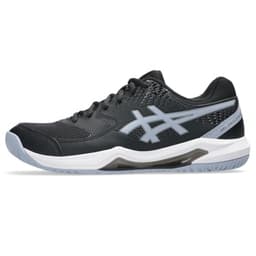
ASICS Gel-Dedicate 8 (Tennis)

Our pick

ASICS Gel-Dedicate 8 (Tennis)

The ASICS Gel-Dedicate 8 is the tennis shoe to buy for pickleball if you want one decision and no regret: a proper court outsole, ASICS GEL cushioning in the heel, and the lowest price of anything on this page. It is the pick for the player who is converting from tennis, already owns court shoes and simply wants to know whether a tennis shoe is allowed to do this job. It is. One caveat: it has no reinforced toe-drag guard, which is the single thing pickleball-specific shoes add.

$69.95 · View on Amazon

$85.0018% off

Price as of October 5, 2026. #ad How we’re funded

Read the full write-up
By Stephen V.Last updated How we research

Short answer, because it is the only thing most people came for: yes, a tennis shoe is the right shoe for pickleball. Both sports are played on a hard court with the same movements — split step, lateral push, stop, pivot — and a tennis shoe is engineered for exactly that: a flat, grippy outsole, a reinforced upper that resists rolling sideways, and a stiff enough platform that your foot does not slide around inside the shoe when you change direction. If you already own tennis shoes, you already own pickleball shoes.

The shoe that is notfine is a running shoe, and that distinction matters far more than tennis-versus-pickleball. A running shoe is built to roll forward through a stride: soft, tall, deliberately unstable sideways. Wear one on a court and the first hard lateral push rolls the shoe off its own platform — which matters because the AAOS names cutting sports among the leading causes of ankle sprains, and names “shoes that do not provide enough foot and ankle support” as a footwear risk factor in its own right. We cover that comparison in full on pickleball shoes vs tennis shoes.

So the real question is which tennis shoes, and what you give up. Below are the six tennis-court shoes in our registry, ranked for a player over 55, with the honest trade-off stated plainly: tennis shoes do not have the toe-drag reinforcement the pickleball-specific models have, because tennis players do not drag the inside of the front foot the way a kitchen-line pickleball player does.

How this is funded: we earn a commission if you buy through our links, at no extra cost to you. It never changes which product we recommend, and we’ll tell you plainly when to skip one. Full disclosure.

Quick picks

Ranked on published specs, grip and build, and honest buyer fit. Select a row to jump to the full write-up. We have not lab-tested these — here is exactly what we do instead.

#ProductBest forPrice
1
ASICS Gel-Dedicate 8 (Tennis)

ASICS Gel-Dedicate 8 (Tennis)

The value way to get ASICS GEL cushioning under your feet. The Gel-Dedicate is ASICS' entry tennis shoe, and it crosses to pickleball for well under a hundred dollars — a lot of court-shoe support and cushioning for the money.

Best overall - and the cheapest here
$69.95 · View on Amazon

$85.0018% off

Price as of October 5, 2026. #ad How we’re funded

2
ASICS Gel-Resolution X (Tennis)

ASICS Gel-Resolution X (Tennis)

The most structured shoe on this page by some distance. ASICS' DYNAWALL frame now wraps the heel, the midsole is built in two pieces so the heel can be softer than the forefoot, and a higher medial collar fights the ankle roll that ends up loading the fascia. This is the shoe for someone whose heel pain has gone past annoying. It is heavy and it is expensive, and both of those are the price of the support.

Most supportive (men's)
$139.95 · View on Amazon

$164.9515% off

Price as of October 5, 2026. #ad How we’re funded

3
New Balance FuelCell 996 V6 (Tennis)

New Balance FuelCell 996 V6 (Tennis)

A tennis shoe that crosses over well to pickleball, built on New Balance's FuelCell foam for a springy, cushioned ride with tennis-grade lateral stability. Buy it for the cushioning and the stable platform, not for room: the standard width runs narrow (the shoe's most common owner complaint), and New Balance's July 2026 successor, the 996v7, was redesigned with a roomier toe box. If width is your problem, order a wide or look at the v7.

Most cushioned (men's)
$108.56 · View on Amazon

$134.9920% off

Price as of October 5, 2026. #ad How we’re funded

4
New Balance FuelCell 996 V6 (Women's)

New Balance FuelCell 996 V6 (Women's)

A women's tennis shoe that crosses beautifully to pickleball, built on New Balance's springy FuelCell foam with tennis-grade lateral stability. The reason it earns the wide-fit slot is the listing, not the brand's reputation: we link a genuine W width, which matters because the V6's standard width drew consistent criticism for running narrow — the fit New Balance's July 2026 successor, the 996v7, was redesigned to fix.

Most cushioned (women's)
$99.95 · View on Amazon

$134.9926% off

Price as of October 5, 2026. #ad How we’re funded

5
ASICS Gel-Resolution X (Women's)

ASICS Gel-Resolution X (Women's)

The same heavily-structured platform as the men's, on a women's last and nearly two ounces lighter. Plantar fasciitis is more common in women than men and this is the strongest women's option we could verify: DYNAWALL wrapping the heel, a softer heel foam than the forefoot, and the same higher medial collar. If your heel pain has outlasted a couple of shoe changes, start here.

Most supportive (women's)
6
New Balance Fresh Foam X 1007 (Men's, 4E)

New Balance Fresh Foam X 1007 (Men's, 4E)

The honest pick for two specific people: anyone with a wide foot, and anyone who has already been told to wear an orthotic. New Balance lists this in a 4E extra-wide, which almost no court shoe offers, and it has the internal volume to swallow a real insert without squashing your toes. Read the con about the arch before you buy — it changes who this shoe is for.

Best for wide feet - published 4E
$119.99 · View on Amazon

Price as of October 5, 2026. #ad How we’re funded

The picks in full

#1Best overall - and the cheapest here

ASICS Gel-Dedicate 8 (Tennis)

The value way to get ASICS GEL cushioning under your feet. The Gel-Dedicate is ASICS' entry tennis shoe, and it crosses to pickleball for well under a hundred dollars — a lot of court-shoe support and cushioning for the money.

Easier on the joints: GEL cushioning and a stable court platform, at a price that makes proper court shoes affordable — the cheapest route to protecting your knees from the pounding.

What we like

  • ASICS GEL cushioning at an entry price
  • Tennis-grade lateral support crosses to pickleball
  • Reliable, no-surprises court shoe

Skip it if

  • Entry-level materials versus ASICS' premium lines
  • Fewer color and width options
TypeTennis / court shoe
Cushioning techASICS GEL
Width optionsNot published
Key featuresEntry-level court support

Specs read from the product listing, on July 22, 2026. “Not published” means the maker does not state that figure.

#2Most supportive (men's)

ASICS Gel-Resolution X (Tennis)

The most structured shoe on this page by some distance. ASICS' DYNAWALL frame now wraps the heel, the midsole is built in two pieces so the heel can be softer than the forefoot, and a higher medial collar fights the ankle roll that ends up loading the fascia. This is the shoe for someone whose heel pain has gone past annoying. It is heavy and it is expensive, and both of those are the price of the support.

Easier on the joints: Every degree your arch collapses inward is extra stretch on an already-irritated band of tissue. A frame this rigid simply does not let the foot do that, which is why the stiff, heavy shoe is often the one that lets a stubborn heel settle down.

What we like

  • DYNAWALL frame extends around the heel — among the most rigid platforms sold for court sport
  • Two-piece midsole: FF BLAST PLUS ECO under the heel, FLYTEFOAM in the forefoot
  • Higher medial collar resists the ankle roll that overloads the arch
  • AHARPLUS outsole rubber, so a heavy shoe still lasts

Skip it if

  • 15.0 oz in a men's size 9 — the heaviest shoe here, and you feel it late in a session
  • The stiffest shoe here, which some players simply find uncomfortable
  • Premium price, and it is a tennis shoe rather than a pickleball-specific one
  • ASICS does not publish a heel-to-toe drop for it
TypeTennis / court shoe (men's)
Midfoot supportDYNAWALL frame, extends around the heel
HeelFF BLAST PLUS ECO foam
MidsoleTwo-piece: FLYTEFOAM forefoot, FF BLAST PLUS ECO heel
OutsoleAHARPLUS rubber
Weight15.0 oz (men's size 9, per listing)
Heel-to-toe dropNot published
Width optionsNot published

Specs read from the product listing, on September 22, 2026. “Not published” means the maker does not state that figure.

#3Most cushioned (men's)

New Balance FuelCell 996 V6 (Tennis)

A tennis shoe that crosses over well to pickleball, built on New Balance's FuelCell foam for a springy, cushioned ride with tennis-grade lateral stability. Buy it for the cushioning and the stable platform, not for room: the standard width runs narrow (the shoe's most common owner complaint), and New Balance's July 2026 successor, the 996v7, was redesigned with a roomier toe box. If width is your problem, order a wide or look at the v7.

Easier on the joints: FuelCell cushioning plus a tennis-grade stable platform means soft landings and a foot that doesn't roll — the combination that protects sore knees and weak ankles at once. Just don't buy it to solve a width problem.

What we like

  • FuelCell foam gives a cushioned, energetic feel
  • Tennis-grade lateral support handles pickleball's cuts easily
  • The same FuelCell midsole and tennis platform the v7 keeps — the update was about fit, not cushioning

Skip it if

  • Standard width runs narrow — the shoe's most common owner complaint, and the reason the newer v7 got a roomier toe box
  • Superseded by the FuelCell 996v7 (July 2026); still sold, but no longer the current model
  • A tennis last is a touch heavier than a minimal court shoe
TypeTennis / court shoe
Cushioning techFuelCell foam
Width optionsNot published
Key featuresLateral stability, FuelCell cushioning
Successor modelFuelCell 996v7 (July 2026) — roomier toe box

Specs read from the product listing, on July 22, 2026. “Not published” means the maker does not state that figure.

#4Most cushioned (women's)

New Balance FuelCell 996 V6 (Women's)

A women's tennis shoe that crosses beautifully to pickleball, built on New Balance's springy FuelCell foam with tennis-grade lateral stability. The reason it earns the wide-fit slot is the listing, not the brand's reputation: we link a genuine W width, which matters because the V6's standard width drew consistent criticism for running narrow — the fit New Balance's July 2026 successor, the 996v7, was redesigned to fix.

Easier on the joints: FuelCell cushioning plus a stable tennis platform means soft landings and a foot that doesn't roll — protecting sore knees and weak ankles together.

What we like

  • FuelCell foam for a cushioned, energetic ride
  • Tennis-grade lateral support for pickleball's cuts
  • The linked listing is a real W width — not a standard shoe marketed as 'roomy'

Skip it if

  • Order the W, not the standard width, which owners consistently report as narrow
  • Superseded by the FuelCell 996v7 (July 2026); still sold, but no longer the current model
  • A tennis last is a touch heavier than a minimal shoe
TypeTennis / court shoe (women's)
Cushioning techFuelCell foam
Width optionsWide (W) sold — the linked listing is a W
Key featuresLateral stability, FuelCell cushioning
Successor modelFuelCell 996v7 (July 2026) — roomier toe box

Specs read from the product listing, on July 22, 2026. “Not published” means the maker does not state that figure.

#5Most supportive (women's)

ASICS Gel-Resolution X (Women's)

The same heavily-structured platform as the men's, on a women's last and nearly two ounces lighter. Plantar fasciitis is more common in women than men and this is the strongest women's option we could verify: DYNAWALL wrapping the heel, a softer heel foam than the forefoot, and the same higher medial collar. If your heel pain has outlasted a couple of shoe changes, start here.

Easier on the joints: Structure does the work your arch is currently doing on its own. For a fascia that is already irritated, taking even part of that job away for two hours is the difference between a session that sets you back and one that does not.

What we like

  • DYNAWALL extends into the heel — the most rigid women's court platform we could verify
  • FF BLAST PLUS ECO in the heel with FLYTEFOAM in the forefoot
  • 13.2 oz in a size 8, meaningfully lighter than the men's version
  • Higher medial collar to limit the inward ankle roll that stretches the fascia

Skip it if

  • Still a heavy, stiff shoe by women's court-shoe standards
  • Premium price, and no wide width is listed
  • A tennis shoe, so the outsole is not optimized for a pickleball toe drag
  • No published heel-to-toe drop
TypeTennis / court shoe (women's)
Midfoot supportDYNAWALL frame, extends around the heel
HeelFF BLAST PLUS ECO foam
MidsoleTwo-piece: FLYTEFOAM forefoot, FF BLAST PLUS ECO heel
OutsoleAHARPLUS rubber
Weight13.2 oz (women's size 8, per listing)
Heel-to-toe dropNot published
Width optionsNot published

Specs read from the product listing, on August 31, 2026. “Not published” means the maker does not state that figure.

#6Best for wide feet - published 4E

New Balance Fresh Foam X 1007 (Men's, 4E)

The honest pick for two specific people: anyone with a wide foot, and anyone who has already been told to wear an orthotic. New Balance lists this in a 4E extra-wide, which almost no court shoe offers, and it has the internal volume to swallow a real insert without squashing your toes. Read the con about the arch before you buy — it changes who this shoe is for.

Easier on the joints: A wide shoe with a low arch and a removable liner is a chassis, not a finished product. Pair it with a supportive insert and you get arch support shaped to your foot plus room your toes are not fighting for — which for a wide-footed player is a better answer than cramming into a narrower shoe that has the arch built in.

What we like

  • Listed in 4E extra wide — genuinely rare in a court shoe
  • Fresh Foam midsole for shock absorption, with a plush heel and ankle area
  • NDurance rubber outsole with a six-month outsole durability guarantee
  • No break-in period, which matters when your foot already hurts

Skip it if

  • Tennis Warehouse lists it as a LOW arch design — on its own it gives you little arch support, which is exactly what plantar fasciitis wants
  • 15.6 oz in a size 10.5 — heavy
  • The stability comes from integrated stabilizers rather than a rigid chassis, so it is less locked-down than the ASICS
  • Realistically a two-part purchase: the shoe plus an insert
TypeTennis / court shoe (men's)
Midfoot supportIntegrated stabilizers
ArchLow arch design (per Tennis Warehouse)
MidsoleFresh Foam
OutsoleNDurance rubber, six-month durability guarantee
Weight15.6 oz (size 10.5, per listing)
Width options4E extra wide
Heel-to-toe dropNot published

Specs read from the product listing, on August 31, 2026. “Not published” means the maker does not state that figure.

What a tennis shoe gives you, and the one thing it does not

Everything that makes a court shoe a court shoe is shared between the two sports. The outsole is flat and wide rather than curved, so the shoe sits level when you load the outside edge. The tread pattern is a herringbone or modified herringbone that grips in every direction instead of just fore-and-aft. The upper is stiffened through the midfoot, usually with a plastic or TPU cage, so the foot stays over the platform during a hard sideways push. The midsole is lower and firmer than a runner’s, which feels like less cushioning and is actually what keeps your ankle from tipping. None of that is tennis-specific; all of it is court-specific.

The one real difference is the toe drag. In pickleball the kitchen line puts you in a half-lunge over and over, and most players finish a reach by dragging the inside of the front toe across the court. Pickleball-specific shoes answer that with extra rubber over the medial forefoot — K-Swiss builds the Express Light around durable toe protection, and the Skechers Viper Court line does the same. A tennis shoe generally does not, because tennis footwork does not do that. The practical consequence is wear, not injury: a tennis shoe used for pickleball tends to show a scuffed hole at the big-toe side months before the rest of the shoe is finished. If that is the only thing standing between you and buying, buy the tennis shoe — it is a durability tax, not a safety one.

What to look for, in the order that matters

  • A flat, non-marking court outsole. The first filter and the only non-negotiable one. If the sole is curved under the heel, has a thick visible wedge, or is made of exposed soft foam, it is a running shoe. Indoor gym courts usually also require non-marking soles, which every shoe on this page has.
  • A midfoot that resists twisting. Hold the shoe at heel and toe and twist. A court shoe barely gives. That resistance is what holds your ankle over the sole when you push off sideways.
  • Cushioning, but only after stability.If you feel the court in your knees and hips, ASICS GEL in the Gel-Dedicate and Gel-Resolution, and New Balance’s FuelCell foam in the 996, are the reason to spend more. Our best shoes for bad knees roundup goes further into that trade.
  • A published width, if your feet are wide. This is where tennis shoes beat the pickleball-specific ones outright. The New Balance Fresh Foam X 1007 is published in a 4E width, which is wider than anything the pickleball brands offer. See best pickleball shoes for wide feet for the full set.
  • Weight, last. A heavier court shoe is usually a more supportive one. The weight figures that matter to a tennis player sprinting a baseline barely register on a 44-foot court.

How we ranked them, and two honest notes

We own none of these shoes and have tested none of them on a court. The ranking is built from what each maker and listing publishes — outsole type, cushioning technology, published widths — read on the dates recorded in each product table, plus honest buyer fit for a player over 55. There are no scores on this page because a score would imply testing we did not do; here is exactly what we do instead.

Two things worth saying out loud. First, the women’s ASICS Gel-Resolution X has no buyable offeron Amazon as this page publishes, so its row shows “Check price” rather than a number — that is the price layer refusing to show a figure it cannot verify, not an omission. Second, the Gel-Dedicate 8 and the FuelCell 996 also appear on our best pickleball shoes for seniorspage, where they are ranked against the pickleball-specific models rather than against each other. If you want the shortest possible answer to “what should I buy” with no tennis constraint at all, read that page instead; this one exists for the player who has decided tennis shoes are the category and wants the best of them.

If you are converting from tennis, two more things change

Your shoes are the easy part. The paddle is the adjustment — a tennis player arrives with a grip that is usually too small for comfort and a swing that is far too long for a 44-foot court, which is the fastest route to a sore elbow. We wrote best pickleball paddles for tennis players for exactly that handover, and pickleball vs tennis for the differences that surprise people most.

The other thing: tennis shoes wear differently on a pickleball court, so the replace-it-now signs are not the ones you are used to. We cover them in when to replace your pickleball shoes, and if you are shopping with no brand in mind yet, how to choose pickleball shoes is the shorter route.
Frequently asked questions

Can I wear tennis shoes to play pickleball?

Yes. Tennis shoes and pickleball shoes are both court shoes built around the same movement - lateral pushes, stops and pivots on a hard surface - so a tennis shoe does the job properly. The shoe to avoid is a running shoe, which is deliberately soft and unstable sideways. If you already own tennis shoes, play in them.

What is the difference between tennis shoes and pickleball shoes?

Less than the marketing suggests. The outsole, the stiff midfoot and the low platform are shared. The main difference is toe-drag reinforcement: pickleball players drag the inside of the front toe at the kitchen line, so pickleball-specific shoes such as the K-Swiss Express Light and Skechers Viper Court add rubber there. Tennis shoes generally do not, so they wear through at the big-toe side sooner. It is a durability difference, not a safety one.

Which tennis shoe is best for pickleball on a budget?

The ASICS Gel-Dedicate 8. It is the cheapest shoe on this page, it has a genuine court outsole and ASICS GEL cushioning in the heel, and it is also the top pick of our best budget pickleball shoes roundup. For a player who wants court-correct footwear without spending three figures, it is the obvious answer.

Are tennis shoes good for pickleball if I have wide feet?

Better than pickleball-specific shoes, usually. Tennis and court brands publish wider widths than the pickleball lines do - the New Balance Fresh Foam X 1007 is published in 4E, which is wider than anything the dedicated pickleball models offer. If your feet are wide, the tennis aisle is where to shop.

Do I need a tennis shoe for indoor pickleball?

You need a non-marking sole, which every shoe here has, and most gyms care about nothing else. Indoor courts are typically slicker than outdoor ones, so a herringbone outsole with plenty of tread depth is worth having. Avoid an outsole that has already worn smooth - that is the single most common cause of a slip on a gym floor.

How long will tennis shoes last if I play pickleball in them?

Expect the toe area to go first. Because tennis shoes usually lack the medial toe-drag guard, the big-toe side can scuff through while the midsole and outsole still have life in them. Watch for a worn-smooth outsole and a midsole that no longer springs back under thumb pressure - we go through all the signs in our guide on when to replace pickleball shoes.

Sources

  • American Academy of Orthopaedic Surgeons (OrthoInfo) — Sprained Ankle — An ankle sprain is 'an injury to one or more of the ligaments that stabilize the ankle'; about 90% are inversion injuries to the lateral ligaments (ATFL and CFL). Causes named: walking or exercising on an uneven surface, falling or tripping, and 'high-risk sports that require cutting or jumping actions, such as trail running, basketball, tennis, football, and soccer'. Footwear risk factors: 'wearing shoes that do not provide enough foot and ankle support' and 'shoes with slippery soles'. Prevention: 'warm up thoroughly before exercise and physical activity', strengthening exercises for ankle stability, 'choose footwear with appropriate support for your activity', and balance (proprioception) training, often on a balance board (accessed September 18, 2026)
  • Non-fatal senior pickleball and tennis injuries in US EDs, 2010–2019 — Injury Epidemiology (2021) — For players 60+: strains/sprains 31.0%, fractures 30.4%; the wrist is the single most-injured body part (13.2%); women 3.7x more likely to fracture (accessed July 22, 2026)
  • USA Pickleball — Health and Safety Hub — The governing body's safety guidance states that proper eye protection is highly recommended for all players — a recommendation, not a rule; nothing in the rulebook requires it for recreational play (accessed August 31, 2026)
  • Tennisnerd — New Balance FuelCell 996v7 tennis shoes (Jul 20, 2026) — 'the v7 generation features an updated fit profile that provides a more accommodating, roomier toe box compared to earlier versions'; available in B, D and 2E widths; NDurance upper; priced around $135 (accessed September 15, 2026)
  • American Academy of Orthopaedic Surgeons (OrthoInfo) — Bunions — 'A bunion is a painful bony bump that develops on the inside of the foot at the big toe joint.' More common in women than men and in adulthood; up to 70% of people with bunions have a family history; narrow, pointed toe boxes that force the toes into an unnatural position are a contributor. Footwear advice: 'Choose shoes with wide insteps, broad toe boxes, soft soles, and plenty of stability' and 'avoid shoes that are too short, tight, or sharply pointed, and shoes with heels higher than a couple of inches'; shoe stretchers, silicone pads, over-the-counter or custom orthotics and toe spacers are listed as nonsurgical measures (accessed September 18, 2026)

Keep reading