What Tourna Grip is known for, feature by feature
Work out which of these four properties you are actually buying, because only one of them is unique to the dry-feel family and the other three are available elsewhere for less.
- The absorbent, gets-tackier-when-wet mechanism. This is the genuinely distinctive part and the only one worth paying a premium for. A tacky grip holds by surface adhesion, which water defeats; a dry grip holds by soaking the moisture up. One alternative below sits in the same family. The other three do not, and if sweat is your problem they are the wrong answer no matter how cheap they are.
- A thin profile. Nobody publishes a gauge for it, but every description agrees it is a thin wrap, and the registry’s own cons row for it says so: it will not build a small handle up on its own. Thinness is a feature if your paddle’s grip already fits and a problem if it does not. Our pickleball grip size guide covers how to tell which of those you are.
- Ten wraps in a pack. The economics are excellent and also, for a recreational player over 55, slightly beside the point — ten wraps is roughly a year or more of play. Two of the alternatives come in three- and four-packs at a lower total outlay, which is the better shape if you want to find out whether you like a surface before committing to a year of it.
- A dry, slightly abrasive surface — and this is the trade. The feel is the thing people either love or abandon. The registry’s cons row on it has said this since launch: “dry, slightly abrasive feel that not everyone likes”. The one published hint at the other cost is Tourna’s own: the retailer page for Tourna Tuff positions that grip as lasting “significantly longer” than Tourna Grip, which is the clearest acknowledgement available that the Original’s surface is its weak point.
Why any of this matters more after 55
A grip is two dollars and sits upstream of problems that cost a great deal more, which is the only reason we give this category real page space. A handle you do not trust does not make you drop the paddle — it makes you squeeze, unconsciously, on every shot. Published work on lateral epicondylitis identifies repetitive gripping and wrist extension as the loading pattern that irritates the tendon attachment at the elbow. AAOS, writing about base-of-thumb arthritis, names activities involving “a lot of gripping, pinching, or heavy lifting” among the risk factors. So the right grip is not a comfort preference; it is the cheapest piece of injury-prevention gear you can buy, and choosing the wrong family of grip is why people conclude that overgrips do not work for them.
Three families, three problems. Dry for a hand that sweats. Tacky for a hand whose grip strength has faded, because a sticky surface does some of the holding for you. Cushioned for a hand that hurts, because padding both absorbs impact and fattens the handle so your fingers do not have to curl as far — and a less-curled hand grips more loosely. Match the family to the symptom first and the brand second.
The four alternatives
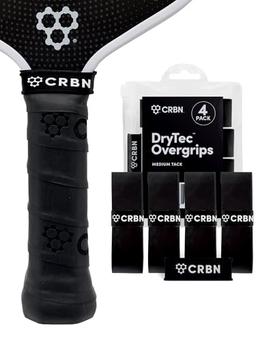
CRBN Drytec Overgrips. The closest alternative, and the one to try if you like what Tourna Grip does but not how it feels. It stays in the dry-feel family — CRBN publishes the surface as “Drytec” dry feel — while being less abrasive on the pads of the fingers, which is the specific complaint that sends arthritic hands looking. Two practical advantages over the thing you are replacing: it is cut for pickleball handles rather than tennis, so there is less waste and less overlap per wrap, and it comes from a brand that makes pickleball paddles rather than tennis grips. Honest cons: the per-grip cost is higher than the value multi-packs, it is still a thin overgrip and therefore no cushioning fix, and CRBN publishes no thickness figure either — the same gap as Tourna, recorded the same way. Four wraps per pack.
Gamma Honeycomb Cushion Replacement Grip. Second, and the pick for a large share of readers of this site — because for them the real problem was never sweat. This is a replacement grip, not an overgrip: it goes on instead of the factory grip rather than over it. That distinction is the whole point. It is the only product on this page that adds genuine padding between the handle and your palm, which is what an arthritic hand needs and what no overgrip in any brand’s catalog provides. Gamma publishes a honeycomb, moisture-wicking surface. The honest cons are real: fitting a replacement grip is fiddlier than wrapping an overgrip over an existing one, it adds a little more weight than a thin wrap, and Gamma publishes no thickness figure and no quantity — on a product whose entire selling point is thickness, that is a gap worth naming. It leads our overgrips for arthritic hands roundup for the same reason it is second here.
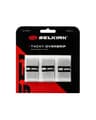
Selkirk Non-Slip Grip Tape. Third, and the alternative that does the opposite job on purpose. Where a dry grip absorbs, this one sticks: Selkirk publishes a tacky, non-slip surface, three per pack. Buy it instead of a dry grip if your problem is a weak hand rather than a wet one — and after 55 that is the more common of the two. A tacky surface holds the paddle so your fingers do not have to, which lets you play with the loose grip that every hand, wrist and elbow guide on this site keeps asking for. Cons, stated plainly: the tack fades once your hands get damp, which is precisely the failure mode Tourna Grip was invented to avoid, so this is the wrong choice for July if you sweat heavily. It is thin, so no cushioning benefit. And it is the one pick here that may show “check price” rather than a number — our price layer only ever displays a live figure, never a remembered one.
Gamma Supreme Overgrip (3-Pack). The budget pick, and the cheapest useful change you can make to a paddle you already own. It is a tacky overgrip, so it sits in the opposite family to Tourna Grip, and its real advantage is one nothing else on this page offers at the price: you can stack layers to add circumference. A grip that is a size too small is the most common unforced cause of hand and elbow pain in this sport — you clench harder to stop the paddle twisting, and the clench is what leaves the joint sore. Two wraps fixes that for about a dollar. Cons: one layer adds tack rather than padding, it needs replacing every few months with regular play, and Gamma publishes no thickness here either. Three per pack.
Which alternative, for which hand
- Your hands sweat and you want the dry mechanism, just gentler. The CRBN Drytec. This is the actual like-for-like swap.
- Your hands ache and the handle feels hard and thin. The Gamma Honeycomb replacement grip. Then read pickleball and arthritis.
- Your grip strength has faded and the paddle twists. The Selkirk grip tape for tack, or the Gamma Supreme if you also need the handle to be fatter.
- Your handle is a size too small. The Gamma Supreme, two layers. No dry grip of any brand solves this — see how to check your grip size.
- Your elbow is the thing that hurts. Grip choice is only half of it; grips for tennis elbow covers the pairing with a brace and a looser hold.
- You have never wrapped a grip before. Start with how to wrap a pickleball grip — it is the step people get wrong, and an overgrip wrapped loosely performs like a worn one.
When you should still buy Tourna Grip
Three situations, and we would rather say so than pretend the alternatives beat it across the board. If your hands sweat heavily, the absorbent mechanism is the correct category and only the CRBN competes with it here. If you want the lowest possible cost per wrap, ten and thirty-grip packs are hard to beat and nothing on this page matches them. And if you play with a two-handed backhand or a longer handle, Tourna publishes XL and XXL widths — which, notably, it publishes no guidance for, so you are choosing on handle length yourself. Our overgrips for sweaty hands page ranks it first on exactly those grounds.
What we do not claim: we have not wrapped, worn or measured any of these grips. We own no units and run no lab. Every figure above is read from the maker’s or retailer’s published wording named in each product’s table, on the date shown there. Where a maker publishes nothing — and on thickness, every single grip on this page publishes nothing — the cell says “Not published” rather than borrowing a number from a third-party listing we cannot verify. Prices come from the live price layer with an “as of” date, and where no live offer exists the button says “check price” instead of showing a stale one.