Kitchen & Court

Best Pickleball Overgrips for Arthritic Hands

The cheapest upgrade in pickleball: a cushioned or tacky grip that lets you hold the paddle loosely, and two wraps that fix a handle a size too small.

By Stephen V.Last updated How we research

This is the highest-value few dollars in the sport, and almost nobody spends it. A grip that’s too thin, too hard or too slippery makes you squeeze the handle harder than you need to — and that constant clench is what leaves an arthritic hand aching and keeps pulling on the forearm tendons behind tennis elbow. You can fix all of it for the price of a sandwich, on the paddle you already own.

Three different problems, three different answers. If your hands hurt and the handle feels hard, you want cushioning — a thicker replacement grip. If your grip strength has faded, you want tack — a sticky surface that does some of the holding for you. If your hands sweat, you want a dry-feel grip, which gets grippier as it absorbs moisture instead of slicker. We’ve ranked these for the joint-sore player, which puts cushioning first.

How this is funded:we earn a commission if you buy through our links, at no extra cost to you. It never changes which product we recommend, and we’ll tell you plainly when to skip one. Full disclosure.

Quick picks

Ranked on published specs, grip and build, and honest buyer fit. Select a row to jump to the full write-up. We have not lab-tested these — here is exactly what we do instead.

#ProductBest forPrice
1
Gamma Honeycomb Cushion Replacement Grip

Gamma Honeycomb Cushion Replacement Grip

A thick, cushioned replacement grip — meaning it goes on instead of the factory grip, not over it. That matters for arthritic hands: it's the one product here that adds real padding between the handle and your palm, rather than a thin tacky layer. If your paddle's stock grip feels hard and thin, this is the fix.

Best for arthritic hands
$10.99 · View on Amazon

Price as of September 6, 2026. #ad How we’re funded

2
Gamma Supreme Overgrip (3-Pack)

Gamma Supreme Overgrip (3-Pack)

The overgrip most players end up on, and the cheapest way to make a too-small handle the right size. Wrap one layer for tack, two if your grip is genuinely a size too small. At a few dollars for three, it's the highest-value change you can make to a paddle you already own.

Best for building up a small grip
$7.99 · View on Amazon

Price as of September 6, 2026. #ad How we’re funded

3
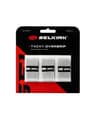
Selkirk Non-Slip Grip Tape (3-Pack)

Selkirk Non-Slip Grip Tape (3-Pack)

A tacky grip tape from a top-tier pickleball name at a genuinely cheap price. Tack is the right choice when your grip strength has faded — a sticky surface does some of the holding for you, so your hand doesn't have to. Buy this rather than a dry grip if your problem is weak hands rather than sweaty ones.

Best for a weak grip
$6.99 · View on Amazon

Price as of September 6, 2026. #ad How we’re funded

4
Tourna Tourna Grip Original (10-Pack)

Tourna Tourna Grip Original (10-Pack)

The blue dry-feel grip you see on tour, and the answer if your hands sweat. Where a tacky grip gets slick when it's damp, Tourna Grip gets grippier — which is exactly backwards from every other grip and exactly what you want in July. It feels dry and slightly rough rather than sticky; most people love it or don't.

Best for sweaty hands
$18.50 · View on Amazon

Price as of September 6, 2026. #ad How we’re funded

5
CRBN Drytec Overgrips (4-Pack)

CRBN Drytec Overgrips (4-Pack)

A pickleball-specific dry overgrip from one of the sport's own paddle brands, cut to pickleball handle length rather than tennis. Slightly softer underfoot than Tourna Grip while staying in the dry-feel family — a reasonable middle ground if the classic blue grip feels too rough on your fingers.

Best dry grip for sensitive fingers
$12.99 · View on Amazon

Price as of September 6, 2026. #ad How we’re funded

The picks in full

#1Best for arthritic hands

Gamma Honeycomb Cushion Replacement Grip

A thick, cushioned replacement grip — meaning it goes on instead of the factory grip, not over it. That matters for arthritic hands: it's the one product here that adds real padding between the handle and your palm, rather than a thin tacky layer. If your paddle's stock grip feels hard and thin, this is the fix.

Easier on the joints: Padding between the handle and your palm does two jobs at once for an arthritic hand: it absorbs a share of the impact shock, and it fattens the handle so your fingers don't have to curl as far — and a less-curled hand grips more loosely.

What we like

  • Genuine cushioning, not just tack — the thickest option here
  • Moisture-wicking honeycomb surface
  • Replaces a worn factory grip outright, so you're not stacking layers

Skip it if

  • Replacing a grip is fiddlier than wrapping an overgrip over one
  • Adds a little more weight than a thin overgrip does
TypeReplacement grip
SurfaceHoneycomb, moisture-wicking (per listing)
ThicknessNot published
QuantityNot published

Specs read from the product listing, on August 19, 2026. “Not published” means the maker does not state that figure.

#2Best for building up a small grip

Gamma Supreme Overgrip (3-Pack)

The overgrip most players end up on, and the cheapest way to make a too-small handle the right size. Wrap one layer for tack, two if your grip is genuinely a size too small. At a few dollars for three, it's the highest-value change you can make to a paddle you already own.

Easier on the joints: A grip that's too small is the most common unforced cause of hand and elbow pain in pickleball — you clench harder to stop the paddle twisting, and the clench is what leaves the joint sore. Two wraps of overgrip fixes that for about a dollar.

What we like

  • Three grips for the price of a coffee — the cheapest paddle upgrade there is
  • Stack layers to add real circumference to a small handle
  • Widely available, so replacing one is never a hunt

Skip it if

  • Thin on its own — one layer adds tack, not much padding
  • Needs replacing every few months with regular play
TypeOvergrip
SurfaceTacky
ThicknessNot published
Quantity3 per pack (per listing)

Specs read from the product listing, on August 19, 2026. “Not published” means the maker does not state that figure.

#3Best for a weak grip

Selkirk Non-Slip Grip Tape (3-Pack)

A tacky grip tape from a top-tier pickleball name at a genuinely cheap price. Tack is the right choice when your grip strength has faded — a sticky surface does some of the holding for you, so your hand doesn't have to. Buy this rather than a dry grip if your problem is weak hands rather than sweaty ones.

Easier on the joints: If grip strength is the thing that's gone, tack is the cheapest substitute for it. A paddle that stays put in a relaxed hand means you can play with the loose grip every hand, wrist and elbow guide on this site keeps asking for.

What we like

  • Sticky surface holds the paddle so your hand doesn't have to squeeze
  • A major pickleball brand at the lowest price in this list
  • Three per pack

Skip it if

  • Tack fades once your hands get damp
  • Thin — no cushioning benefit
TypeOvergrip / grip tape
SurfaceTacky, non-slip (per listing)
ThicknessNot published
Quantity3 per pack (per listing)

Specs read from the product listing, on August 19, 2026. “Not published” means the maker does not state that figure.

#4Best for sweaty hands

Tourna Tourna Grip Original (10-Pack)

The blue dry-feel grip you see on tour, and the answer if your hands sweat. Where a tacky grip gets slick when it's damp, Tourna Grip gets grippier — which is exactly backwards from every other grip and exactly what you want in July. It feels dry and slightly rough rather than sticky; most people love it or don't.

Easier on the joints: A grip you trust is a grip you hold loosely. When a handle feels like it might slip, you squeeze harder without noticing — and that squeeze travels straight into the forearm tendons an elbow brace is trying to protect.

What we like

  • Gets tackier as it absorbs moisture, not slicker
  • Ten grips per pack — a year of play for most recreational players
  • The long-standing default for players who sweat

Skip it if

  • Dry, slightly abrasive feel that not everyone likes
  • Thin — it won't build a small grip up on its own
TypeOvergrip
SurfaceDry feel (absorbent)
ThicknessNot published
Quantity10 per pack (per listing)

Specs read from the product listing, on August 19, 2026. “Not published” means the maker does not state that figure.

#5Best dry grip for sensitive fingers

CRBN Drytec Overgrips (4-Pack)

A pickleball-specific dry overgrip from one of the sport's own paddle brands, cut to pickleball handle length rather than tennis. Slightly softer underfoot than Tourna Grip while staying in the dry-feel family — a reasonable middle ground if the classic blue grip feels too rough on your fingers.

Easier on the joints: Fingertip comfort sounds trivial until arthritis is involved: a grip surface that irritates the pads of your fingers is one you'll subconsciously hold differently, and any unnatural hold shows up as ache somewhere further up the arm.

What we like

  • Cut for pickleball handles, so there's less waste per wrap
  • Dry feel without the abrasiveness of the classic blue grip
  • Four per pack from a pickleball-native brand

Skip it if

  • Costs more per grip than the value multi-packs
  • Still a thin overgrip — not a cushioning fix
TypeOvergrip
SurfaceDry feel (Drytec)
ThicknessNot published
Quantity4 per pack (per listing)

Specs read from the product listing, on August 19, 2026. “Not published” means the maker does not state that figure.

Overgrip or replacement grip? The one distinction that matters

A replacement grip goes on instead of the factory grip — you peel the old one off and wrap the new one directly onto the handle. That’s how you get real padding, because a replacement grip is thick and cushioned in a way an overgrip never is. An overgrip goes over whatever is already there. It’s thin, it’s cheap, it’s about texture rather than cushioning, and it takes ten minutes with no commitment.

For arthritic hands, the replacement grip is usually the right answer: padding between the handle and your palm absorbs a share of the impact shock, and it fattens the handle so your fingers don’t have to curl as far. A less-curled hand grips more loosely, and a loose grip is the whole goal. For everything else — too-small handle, slippery handle, sweaty palms — an overgrip is cheaper, faster and reversible.

The too-small grip problem, and the dollar fix

Grip size is the spec most players get wrong, and getting it wrong in the small direction is much worse than the large direction. A handle that’s too thin twists in your hand on off-center hits, so you grip harder to stop it — unconsciously, all session. That clench is what your hand and elbow feel afterwards.

Each layer of overgrip adds roughly an eighth of an inch of circumference, which is about half a standard grip size. So one wrap nudges a handle that’s slightly small, and two wraps genuinely move you up a size. It’s a dollar and ten minutes, and it’s a better fix for hand pain than most paddle upgrades. If you’re not sure where you sit, our grip-size guide has a thirty-second measurement you can do with a ruler.

Tacky, dry or cushioned — pick by your actual problem

  • Cushioned if the handle feels hard and your hands are the thing that hurts. Absorbs shock, adds thickness, encourages a looser hold.
  • Tacky if your grip strength has faded. A sticky surface holds the paddle so your hand doesn’t have to. Tack fades once your hands get damp, which is the trade.
  • Dry feel if your hands sweat. These absorb moisture and get grippier as they do — the opposite of how a tacky grip behaves. They feel dry and slightly rough, which people either love or don’t.

You can combine them: a cushioned replacement grip underneath for padding, with a thin dry overgrip on top for texture, is a common and sensible setup for a player with sore hands who also sweats.

How to wrap one (and when to replace it)

Start at the butt of the handle, tacky side up, and wrap upward at a slight angle with about a sixteenth of an inch of overlap on each turn — enough that you never feel a gap or a ridge. Keep tension even; pulling hard on one turn and not the next creates lumps you’ll notice on every shot. Finish with the tape supplied in the pack. If a full wrap is fiddly with stiff fingers, this is a genuinely good job to ask a pro shop or a playing partner to do — it takes them two minutes.

Replace an overgrip when it stops feeling like it did on day one: shiny, slick, hard, or visibly worn at the top of the handle where your hand sits. For a recreational player that’s every couple of months. It’s a dollar. Do not nurse a dead grip through a season and wonder why your hand aches — and while you’re at it, our paddle-care guide covers the rest of keeping a paddle playing the way it should.

Frequently asked questions

Do overgrips help with arthritis in your hands?

They help, and a cushioned replacement grip helps more. Two things are going on: padding between the handle and your palm absorbs some of the impact shock that travels into stiff joints, and a thicker handle means your fingers curl less far, which lets you hold the paddle loosely instead of clenching. The clench is what usually leaves an arthritic hand sore after a session, so anything that removes it is worth doing.

How many overgrips does it take to increase grip size?

Roughly two. Each layer adds about an eighth of an inch of circumference, which is about half a standard grip size, so two wraps moves you up a full size. This is the cheapest way to fix a handle that's too thin — and too thin is far worse than too thick for arthritic hands, because a handle that twists makes you grip harder to control it.

What's the difference between a tacky and a dry overgrip?

A tacky grip is sticky to the touch and holds the paddle for you, which suits a hand with reduced grip strength — but it gets slick once your hands are damp. A dry-feel grip absorbs moisture and becomes grippier as it does, which is the right choice if you sweat. It feels dry and slightly abrasive rather than sticky. Buy for your actual problem: weak grip means tacky, sweaty hands means dry.

Does a grip help with tennis elbow?

Indirectly, and it's one of the cheapest things you can try. Tennis elbow is an overuse problem in the forearm tendons, and every extra bit of grip pressure loads those tendons further. A grip that's the right size and doesn't feel like it might slip means you hold the paddle loosely, which reduces that load on every shot. It won't fix an inflamed tendon on its own — pair it with a counterforce strap and a lighter paddle.

How often should you replace a pickleball overgrip?

When it stops feeling like it did when new — shiny, slick, hardened, or visibly worn where your hand sits. For a recreational player that's typically every couple of months; more often if you sweat heavily or play several times a week. Given the cost, there's no reason to nurse a dead grip, and a slick grip quietly reintroduces the clenching you fixed by buying it.

Sources

Keep reading