Kitchen & Court

Best Pickleball Paddles for Small Hands

You can build a grip up but you can never shrink one — so start with the four paddles whose makers actually publish a 4 to 4.25 inch grip circumference, and the measurement to take first.

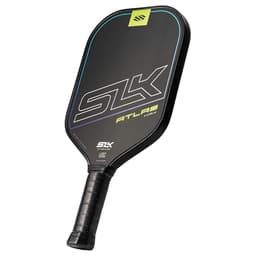
Selkirk SLK Atlas Max

Our pick

Selkirk SLK Atlas Max

A published 4.25 in grip on a short 4.85 in handle, a published 7.6-8.1 oz, a widebody face and a 16 mm core — the smallest-handed paddle we can find that is also light, forgiving and soft, from a maker that prints every one of those numbers. If 4.25 still feels big, the Onix below is the only published 4.0.

$63.99 · View on Amazon

$79.9920% off

Price as of September 17, 2026. #ad How we’re funded

Read the full write-up
By Stephen V.Last updated How we research

Grip size is the paddle spec that decides whether your hand is relaxed or clenched for two hours, and it is the one almost nobody publishes. USA Pickleball’s equipment rules set no grip standard at all — rule 2.E.5 allows changes to grip size via inserts and wraps, and says nothing about what size a paddle must ship with — so most makers quietly fit a medium and print nothing. For a player with small hands, that silence is a real problem, because the fix for a grip that is too big does not exist. You can wrap a small grip up to size with an overgrip in a minute. You cannot take material off a big one without a knife and a ruined paddle.

So this page starts from the only honest place: the paddles whose makers publish a grip circumference of 4.25 inches or less, verified on the maker’s own spec sheet. Of the sixteen paddles in our registry, four do. The rest — including some very good paddles we recommend elsewhere — publish nothing, and “it feels small” in a review is not a spec. Then the rest of the page covers how to measure, why a slightly-too-big grip is often the kinder mistake for an older hand, and what to do if your hands are small and arthritic, which is a different problem.

How this is funded: we earn a commission if you buy through our links, at no extra cost to you. It never changes which product we recommend, and we’ll tell you plainly when to skip one. Full disclosure.

Quick picks

Ranked on published specs, grip and build, and honest buyer fit. Select a row to jump to the full write-up. We have not lab-tested these — here is exactly what we do instead.

#ProductBest forPrice
1
Selkirk SLK Atlas Max

Selkirk SLK Atlas Max

The paddle that makes the sub-$100 argument all by itself. A carbon-fiber face over a 16mm polymer honeycomb core is the same recipe premium comfort paddles use, and Selkirk publishes the whole spec sheet - weight range, grip circumference, handle length - which almost nothing else at this price will do. If you want one paddle under $100 and you want it to feel muted rather than tinny, start here.

Best overall — 4.25 in, short handle
$63.99 · View on Amazon

$79.9920% off

Price as of September 17, 2026. #ad How we’re funded

2
Onix Graphite Z5 MOD

Onix Graphite Z5 MOD

The widebody. At 8.125 inches across it has the broadest face here, which is simply more paddle to hit the ball with - the most forgiving shape on the list for anyone whose contact has become less reliable. It is also the one with the firmest core, so it suits a player chasing forgiveness more than a player chasing softness.

Smallest published grip — 4.0 in
$63.09 · View on Amazon

Price as of September 17, 2026. #ad How we’re funded

3
Selkirk SLK Halo Power XL

Selkirk SLK Halo Power XL

A carbon-fiber Selkirk that still lands under most premium paddles. The XL shape adds reach and a generous sweet spot; the carbon face gives a cleaner, more controlled response than the fiberglass Evo. A strong mid-tier step up.

Best for a long handle — 4.25 in, 5.75 in
$99.99 · View on Amazon

$149.9933% off

Price as of September 17, 2026. #ad How we’re funded

4
JOOLA Ben Johns Hyperion CAS 16

JOOLA Ben Johns Hyperion CAS 16

The performance benchmark on this list — a carbon-surface, 16mm-core paddle with an elongated handle built for spin and reach. It's more paddle than a beginner needs, but for an improving player the extra sweet spot and control are the payoff. Note the elongated handle suits a two-handed backhand.

Best performance pick — 4.25 in
$119.95 · View on Amazon

Price as of September 17, 2026. #ad How we’re funded

The picks in full

#1Best overall — 4.25 in, short handle

Selkirk SLK Atlas Max

The paddle that makes the sub-$100 argument all by itself. A carbon-fiber face over a 16mm polymer honeycomb core is the same recipe premium comfort paddles use, and Selkirk publishes the whole spec sheet - weight range, grip circumference, handle length - which almost nothing else at this price will do. If you want one paddle under $100 and you want it to feel muted rather than tinny, start here.

Easier on the joints: A 16 mm core is the thickest, softest construction in common use, and it does the single most important job for a sore elbow: it slows the impact down. Pair that with a carbon face, which returns a duller, more predictable ball than fiberglass, and you get about the least jarring feel available under $100.

What we like

  • 16 mm Rev-Control polymer honeycomb core - the thick, soft kind that muffles impact
  • Carbon-fiber face gives a muted, predictable response instead of a lively fiberglass ping
  • Selkirk publishes weight, grip circumference and handle length - rare at this price

Skip it if

  • The 4.85-inch handle is short - no room for a two-handed backhand and little to choke up on
  • Selkirk's own product page does not state USA Pickleball approval, so we do not claim it
  • The 4.25-inch grip is fine for most hands but on the small side for arthritic fingers
Face materialRaw carbon fiber (Raw Spin Technology)
Core16 mm Rev-Control polymer honeycomb
Weight7.6-8.1 oz (published range)
Grip circumference4.25 in
Handle length4.85 in
ShapeMax (widebody)
Dimensions16 x 7.85 in
Edge guardEdgeSentry (low-profile)
USA Pickleball approvedNot published

Specs read from the product listing, on September 15, 2026. “Not published” means the maker does not state that figure.

#2Smallest published grip — 4.0 in

Onix Graphite Z5 MOD

The widebody. At 8.125 inches across it has the broadest face here, which is simply more paddle to hit the ball with - the most forgiving shape on the list for anyone whose contact has become less reliable. It is also the one with the firmest core, so it suits a player chasing forgiveness more than a player chasing softness.

Easier on the joints: A wider face means more centered hits, and a centered hit sends far less jarring shock up your arm than a mis-hit off the edge. The trade is the Nomex core, which is stiffer than polymer - so this is the forgiving-shape pick rather than the soft-feel pick.

What we like

  • 8.125-inch widebody face - the largest hitting area of any pick here
  • Onix publishes the full spec sheet and states USA Pickleball approval
  • Perforated cushion grip fitted from the factory

Skip it if

  • Nomex core is the hardest, loudest core type here - more feedback into the arm than polymer
  • 4-inch grip circumference is the smallest on this list, so arthritic hands will want an overgrip or two
  • The wide shape trades reach for forgiveness - less help stretching for a ball at the kitchen line
Face materialGraphite
CoreNomex honeycomb
Weight7.5-8.2 oz (published range)
Grip circumference4 in
Handle length5 in
Dimensions15.5 x 8.125 in (widebody)
USA Pickleball approvedYes

Specs read from the product listing, on August 24, 2026. “Not published” means the maker does not state that figure.

#3Best for a long handle — 4.25 in, 5.75 in

Selkirk SLK Halo Power XL

A carbon-fiber Selkirk that still lands under most premium paddles. The XL shape adds reach and a generous sweet spot; the carbon face gives a cleaner, more controlled response than the fiberglass Evo. A strong mid-tier step up.

Easier on the joints: Carbon faces tend to feel more muted and predictable than fiberglass, so the ball comes off cleanly — easier on the arm than a lively, unpredictable budget face.

What we like

  • Carbon-fiber face for cleaner control than fiberglass
  • XL shape adds reach and forgiveness
  • Priced well below premium carbon paddles

Skip it if

  • The Power build leans toward drive, not pure touch
  • Elongated shape isn't for everyone
Face materialT700 CarbonFusion carbon fiber
Core13 mm Rev-Power polymer honeycomb
ShapeXL (elongated)
Weight7.7-8.0 oz (published range)
Grip circumference4.25 in
Handle length5.75 in
Dimensions16.4 x 7.4 in
USA Pickleball approvedNot published

Specs read from the product listing, on September 18, 2026. “Not published” means the maker does not state that figure.

#4Best performance pick — 4.25 in

JOOLA Ben Johns Hyperion CAS 16

The performance benchmark on this list — a carbon-surface, 16mm-core paddle with an elongated handle built for spin and reach. It's more paddle than a beginner needs, but for an improving player the extra sweet spot and control are the payoff. Note the elongated handle suits a two-handed backhand.

Easier on the joints: The thick 16mm core is the soft, control-oriented kind that muffles impact well — but the elongated head puts a little more weight out front, so it's better for elbows than for a weak wrist.

What we like

  • Carbon abrasion surface generates real spin and control
  • Thick 16mm polypropylene honeycomb core for a soft, muted feel
  • Elongated handle helps two-handed backhands and reach

Skip it if

  • The elongated head can feel heavier in the hand — not ideal for a sore wrist
  • More paddle (and price) than a casual player needs
Face materialCarbon abrasion surface
Core thickness16 mm polypropylene honeycomb
HandleElongated (sure-grip)
Weight8.3 oz average (published)
Grip circumference4.25 in
Handle length5.5 in
Dimensions16.5 x 7.5 in
USA Pickleball approvedYes (per listing)

Specs read from the product listing, on September 18, 2026. “Not published” means the maker does not state that figure.

Measure first: the ruler test

Hold your paddle hand open, palm up, fingers together. Measure from the middle crease of your palm — the one that runs across it where the fingers bend — to the tip of your ring finger. That distance, in inches, is your starting grip circumference; a reading of 4 to 4.25 puts you on this page. The second check is with a paddle in hand: hold it normally, then slide the index finger of your other hand into the gap between your fingertips and the heel of your palm. It should just fit. If there is no gap, the grip is too small; if there is room to spare, it is too big. Our grip-size guide walks through the finger test in more detail.

Why too small is the mistake to avoid

It sounds backwards on a page for small hands, but once the paddle is in your hand the direction to err in is slightly big. A grip that is too small forces your fingers to curl tightly and squeeze to keep the paddle from turning, and that squeeze — held for a whole morning — is the motion that feeds tennis elbow, wakes up an arthritic hand and tires out a wrist. A grip that is a fraction too large lets the hand stay open and the forearm stay relaxed. That is exactly why buying the smaller published size and wrapping it up works so well: you land a fraction over your measurement rather than a fraction under. It is also why this page stops at 4.25 and does not go hunting for anything smaller than the Onix’s 4.0: for most adults with small hands, 4.25 with a relaxed grip is the right answer, and 4.0 is for a genuinely small hand that measures that way.

It is also why the fix runs one direction. Every paddle here can be built up in steps of a fraction of an inch with an overgrip — our overgrip roundup covers the tacky, dry and cushioned options — so a 4.0 or 4.25 is a starting point you can tune. A paddle that ships at 4.5 is a paddle you are stuck with.

The picks in order

Selkirk SLK Atlas Max. Selkirk publishes everything: 4.25 in grip, 4.85 in handle, 7.6-8.1 oz, 16 x 7.85 in widebody, 16 mm Rev-Control core. For a small hand the short handle matters as much as the circumference — a short handle keeps the mass close to the hand, so the wrist is not levering a long paddle around. The widebody face gives a large sweet spot and the 16 mm core is the soft, absorbing kind. Full write-up in the Atlas Max review.

Onix Graphite Z5 MOD. The only paddle in our registry with a published 4.0 in grip, on a 5-inch handle, a 15.5 x 8.125 in widebody and a published 7.5-8.2 oz. Onix states USA Pickleball approval, which not every maker here does. The trade is the Nomex core, which is the firm, loud kind — more feedback into the hand at contact than a polymer core — so for an arthritic hand we would pick the Selkirk and build it up; for a small, healthy hand that measures 4.0, this is the honest first choice.

Selkirk SLK Halo Power XL. Same 4.25 in grip as the Atlas, on Selkirk’s longest handle at 5.75 in, a 16.4 x 7.4 in elongated face and a published 7.7-8.0 oz — the lightest published range on this page. The pick for a small-handed player who wants a two-handed backhand or extra reach, with the usual caution that an elongated shape moves weight away from the hand, which a weak wrist feels. Its 13 mm core is firmer than the Atlas’s. Full write-up in the Halo Power XL review.

JOOLA Ben Johns Hyperion CAS 16. JOOLA publishes a 4.25 in grip (with the note that it may vary slightly), a 5.5 in handle, an 8.3 oz average weight and a 16 mm core on a 16.5 x 7.5 in elongated face. The performance paddle of the four — a textured carbon surface for spin, a soft core — and the heaviest published figure here, which is why it is fourth on a page ranked for a small hand rather than for an improving game. Full write-up in the Hyperion review.

What is not here, and why

The Gamma Obsidian 13, our arthritis roundup winner, has a molded foam handle that many small-handed players like; the listing we link publishes no circumference for that handle, so it is not here. The ProKennex paddles, the HEAD Radical Elite, the Niupipo, the Vulcan V520, the JOOLA Essentials, the Friday Challenger, the Paddletek Bantam EX-L and the Selkirk Evo all publish no grip circumference on any page we could find. Some of them may well ship small. We do not know, the makers will not say, and a page titled “for small hands” that guesses is worse than useless.

The Franklin Signature Pro publishes a grip — 4.5 in, the largest on the site — and is here only as the counter-example: it is the paddle we recommend for arthritic hands precisely because it stops you squeezing, and it is the wrong paddle for this page.

Small hands that are also arthritic

This is the combination that needs a different answer. Arthritic fingers often cannot close fully, which means the “small hand” measurement can mislead: the hand is small, but its comfortable grip is not. If your knuckles are enlarged or your fingers do not curl all the way, try the Selkirk Atlas Max at its stock 4.25 first, and be ready to add a cushioned overgrip rather than hunting for something smaller. Our arthritis roundup and how to hold a paddle cover the relaxed-grip technique that matters more than the number.

Every grip figure above is the maker’s own published spec, read from the maker’s site on the date in each product’s spec table; every price is checked daily and stamped with the date; and we have not tested these paddles.
Frequently asked questions

What grip size is best for small hands in pickleball?

Usually 4 to 4.25 inches in circumference. Measure from the middle crease of your palm to the tip of your ring finger; that figure in inches is your starting grip size. Err slightly large rather than small — a grip that is too small makes you squeeze, which feeds tennis elbow and tires an arthritic hand — and remember you can always build a small grip up with an overgrip, but you can never shrink a big one.

Which pickleball paddles come in a small grip?

Very few makers publish grip circumference at all. Of the sixteen paddles in our registry, four publish 4.25 inches or less: the Onix Graphite Z5 MOD (4.0 in), the Selkirk SLK Atlas Max (4.25 in), the Selkirk SLK Halo Power XL (4.25 in) and the JOOLA Ben Johns Hyperion CAS 16 (4.25 in). The Franklin Signature Pro publishes 4.5 in, which is the wrong direction. Everything else in the registry is unpublished, which we treat as unknown rather than guessing.

Can I make a pickleball grip smaller?

Not in any practical way. Grip size is set by the handle core under the wrap, and removing the stock grip only gains a fraction of an inch before you are cutting into the handle itself. That is why this page only lists paddles that ship at 4.25 in or less: it is far easier to wrap a small grip up in steps with an overgrip than to shrink a large one. USA Pickleball rule 2.E.5 explicitly allows grip-size changes via inserts and wraps.

Is a smaller grip better for arthritis?

Usually not. Arthritic fingers often cannot close fully, so a grip that measures right for the size of your hand can still force a squeeze. For arthritic hands we recommend erring slightly large and using a cushioned grip — our arthritis roundup is built around that — and if your hands are both small and arthritic, start at 4.25 in with the Selkirk Atlas Max rather than hunting for a 4.0.

Does grip size affect tennis elbow?

Yes, and it is one of the most common self-inflicted causes. A grip that is too small forces you to clench to stop the paddle turning, and a clenched forearm held for two hours loads the tendons that tennis elbow lives in. If your elbow flares after playing, check the grip size before you change the paddle; an overgrip is a two-dollar fix.

Why isn't the Gamma Obsidian on this list if it is your arthritis pick?

Because the listing we link publishes no grip circumference for its molded foam handle, and this page only includes paddles with a published figure of 4.25 in or less. Plenty of small-handed players like the Obsidian's handle, and it remains our arthritis pick for its softness — but we will not state a grip size the maker does not.

Sources

  • USA Pickleball — Equipment Standards ManualThe manufacturing specifications and testing (including the PBCoR power test) paddles must meet to be approved (accessed July 22, 2026)
  • Selkirk Sport — SLK Atlas Max product page (manufacturer specifications)Selkirk publishes a full spec sheet: premium carbon fiber face with Raw Spin Technology, 16 mm Rev-Control polymer honeycomb core, 7.6-8.1 oz weight range, 4.25 in grip circumference, 4.85 in handle length, 16 in x 7.85 in, EdgeSentry low-profile edge guard, SLK Ultra-Comfort grip, skill level beginner-intermediate, 1-year limited warranty, designed and quality controlled in the USA and manufactured in China. No USA Pickleball approval statement appears anywhere on the page (accessed September 15, 2026)
  • Selkirk Sport — SLK Halo Power product page (manufacturer specifications, XL and Max variants)Selkirk publishes a full spec sheet for the Halo Power XL: 7.7-8.0 oz weight range, 4.25 in grip circumference, 5.75 in handle length, 16.4 in x 7.4 in, 13 mm Rev-Power polymer honeycomb core, T700 CarbonFusion carbon fiber face, SLK Ultra-Comfort grip. The Max variant on the same page: 7.7-8.0 oz, 4.25 in grip, 4.85 in handle, 16 in x 7.85 in, 16 mm Rev-Control core, 18k UltraWeave carbon face. No USA Pickleball approval statement appears on the page (accessed September 18, 2026)
  • JOOLA — Ben Johns Hyperion CAS 16 product page (manufacturer specifications)JOOLA publishes: average weight 8.3 oz (no range stated), grip circumference 4.25 in ('may vary slightly'), grip length 5.5 in, paddle length 16.5 in, width 7.5 in, 16 mm Response honeycomb polymer core, Carbon Abrasion Surface (CAS) face, Ridge grip, USA Pickleball approved: yes (accessed September 18, 2026)
  • A Review of Physiotherapy Techniques Used in the Treatment of Tennis Elbow — PMC (2023)Lateral epicondylitis is an overuse tendinopathy of the forearm extensors; conservative care — rest, bracing/counterforce straps and graduated loading — is the mainstay (accessed July 22, 2026)

Keep reading