Kitchen & Court

Best Braces for Golfer's Elbow from Pickleball

Golfer's elbow is the inside of the elbow. Almost every brace on the market is sold for the outside - so the question is not which brace is best, it is which braces can be worn the other way round.

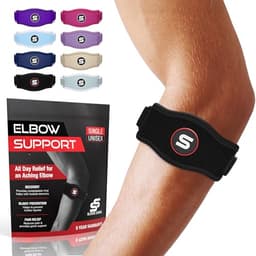
Sleeve Stars Tennis Elbow Brace

Our pick

Sleeve Stars Tennis Elbow Brace

The only elbow support we list whose own listing states it works for golfer’s elbow as well as tennis elbow — and the one with the widest adjustment range, 9 to 23 inches of forearm, which matters because a strap worn on the inside of the arm sits on a different circumference than one worn on the outside.

$16.95 · View on Amazon

Price as of October 20, 2026. #ad How we’re funded

Read the full write-up
By Stephen V.Last updated How we research

The verdict first. For golfer’s elbow from pickleball, buy the Sleeve Stars Tennis Elbow Brace and wear it rotated so the pad sits on the inside of your forearm. It is the only support we list whose own listing says in writing that it works for golfer’s elbow — the inside — as well as tennis elbow. If you want a gel pad rather than a plain band, the Mueller Tennis Elbow Brace with Gel Pad is one size with a hook-and-loop closure, so nothing about it is handed and it rotates just as easily.

Now the thing that makes this page necessary at all. The American Academy of Orthopaedic Surgeons names the two conditions in the same sentence: “Tennis elbow (lateral epicondylitis) and golfer’s elbow (medial epicondylitis) are painful conditions caused by overuse. Over time, the forearm muscles and tendons become damaged from repeating the same motions again and again.” Same mechanism, same overuse, same rehabilitation. Different side of the elbow.

Tennis elbow is the outside— the lateral epicondyle, where the wrist and finger extensors attach. Golfer’s elbow is the inside— the medial epicondyle, where the flexors that curl your fingers around the handle attach. In pickleball the flexors are what grip the paddle, which is why a player who squeezes hard, plays with a handle that is too thin, or spends a season adding topspin can end up with medial pain rather than lateral.

The commercial problem: the entire brace market labels itself tenniselbow. Search “golfer’s elbow brace” and you will mostly be shown the same products with a different photograph. In many cases that is fine — a symmetric adjustable band does not know which side of your arm it is on. In some cases it is not, because the counterforce pressure is built into a sleeve at a fixed position. So here is the gate we rank on:

  1. Can it be positioned on the medial side?A published golfer’s-elbow claim beats an inference; a one-size symmetric strap beats a sized, shaped sleeve with a fixed pad.
  2. Adjustment range. The inside of the forearm is a different circumference from the outside at the same distance down the arm, and the useful position is often slightly further from the elbow. A strap that only just fits in one orientation may not in the other.
  3. Pressure quality. A gel pad concentrates force on the muscle belly; a plain band spreads it. Both work; the gel is more comfortable for most people and more obtrusive for some.
  4. Whether it also gives compression and warmth. A strap changes load. A knitted sleeve keeps a chronic elbow supplied and loose through a two-hour session. Those are different jobs.
  5. Price, last. There is a 10x spread here and the cheapest option is a legitimate way to find out whether the counterforce idea helps your arm at all.

One thing we are not going to do is tell you a brace fixes this. AAOS puts rest first for epicondylitis and is explicit that you will have to “stop or decrease participation in sports… for several weeks.” A brace is what lets you keep playing while the actual treatment — load reduction and graded strengthening — does the work. Nothing on this page is medical advice.

How this is funded: we earn a commission if you buy through our links, at no extra cost to you. It never changes which product we recommend, and we’ll tell you plainly when to skip one. Full disclosure.

Quick picks

Ranked on published specs, grip and build, and honest buyer fit. Select a row to jump to the full write-up. We have not lab-tested these — here is exactly what we do instead.

#ProductBest forPrice
1
Sleeve Stars Tennis Elbow Brace

Sleeve Stars Tennis Elbow Brace

A wide-range adjustable strap that fits forearms from 9 to 23 inches, which is unusually generous — it will fit a slight frame and a heavy one out of the same box. A sensible pick if you've had a brace arrive that wouldn't cinch down far enough, or if you're buying for someone else and don't know their measurements.

Best overall — the only published golfer's-elbow claim
$16.95 · View on Amazon

Price as of October 20, 2026. #ad How we’re funded

2
Mueller Tennis Elbow Brace with Gel Pad

Mueller Tennis Elbow Brace with Gel Pad

The classic counterforce strap, done properly. It wraps below the elbow and presses a gel pad into the forearm muscle so the tendon at the joint takes less of the pull on every hit. One size with a hook-and-loop closure means no sizing chart to get wrong, and Mueller is the name most physical therapy rooms already stock.

Best gel pad, worn rotated
$14.47 · View on Amazon

$15.9910% off

Price as of October 20, 2026. #ad How we’re funded

3
CAMBIVO Tennis Elbow Brace Strap (2-Pack)

CAMBIVO Tennis Elbow Brace Strap (2-Pack)

Two straps for less than the price of one from most brands. There's nothing clever here — it's a basic adjustable counterforce band — but that's the point: if you're not sure a strap will help your elbow at all, this is the cheapest honest way to find out, and the second one lives in the car.

Cheapest way to test the idea
$8.09 · View on Amazon

$15.9949% off

Price as of October 20, 2026. #ad How we’re funded

4
Bauerfeind EpiTrain Elbow Support

Bauerfeind EpiTrain Elbow Support

The elbow equivalent of the GenuTrain knee brace we rate most highly — a medical-grade knitted sleeve with silicone inserts that massage the forearm muscles as you move, rather than a strap that just squeezes. It is by far the most expensive option here, and it is the one to buy if a chronic elbow is the thing keeping you off the court.

Best for a chronic medial elbow
$99.90 · View on Amazon

Price as of October 20, 2026. #ad How we’re funded

The picks in full

#1Best overall — the only published golfer's-elbow claim

Sleeve Stars Tennis Elbow Brace

A wide-range adjustable strap that fits forearms from 9 to 23 inches, which is unusually generous — it will fit a slight frame and a heavy one out of the same box. A sensible pick if you've had a brace arrive that wouldn't cinch down far enough, or if you're buying for someone else and don't know their measurements.

Easier on the joints: Being able to dial the tension down matters more than most buyers expect: a strap cranked tight all session can leave the forearm aching on its own, and the right pressure changes from a sore day to a good one.

What we like

  • Fits 9-23 inch forearms per the listing — the widest range here
  • Adjustable pressure, so you can back it off on a good day
  • Works for golfer's elbow (inside) as well as tennis elbow (outside)

Skip it if

  • A strap only — no warmth or all-round joint compression
  • The wide adjustment range means more excess strap to tuck away
TypeAdjustable counterforce strap
Support levelTargeted pressure
SizingFits 9"-23" forearm (per listing)
Key featureWide adjustment range

Specs read from the product listing, on August 19, 2026. “Not published” means the maker does not state that figure.

#2Best gel pad, worn rotated

Mueller Tennis Elbow Brace with Gel Pad

The classic counterforce strap, done properly. It wraps below the elbow and presses a gel pad into the forearm muscle so the tendon at the joint takes less of the pull on every hit. One size with a hook-and-loop closure means no sizing chart to get wrong, and Mueller is the name most physical therapy rooms already stock.

Easier on the joints: A counterforce strap doesn't support the elbow — it changes where the load lands. By pressing on the muscle belly an inch or two below the sore spot, it gives the forearm tendons a second anchor point, so less of every impact pulls directly on the inflamed attachment at the bone.

What we like

  • Gel pad concentrates the pressure where a counterforce strap actually works
  • One size, adjustable closure — nothing to size wrong
  • Cheap enough to keep one in the bag and one in the car

Skip it if

  • A strap alone gives no warmth or joint compression
  • Too tight and it aches; the tension takes a session or two to dial in
TypeCounterforce strap
Support levelTargeted pressure, no joint compression
SizingOne size, adjustable (per listing)
Key featureGel pressure pad

Specs read from the product listing, on August 19, 2026. “Not published” means the maker does not state that figure.

#3Cheapest way to test the idea

CAMBIVO Tennis Elbow Brace Strap (2-Pack)

Two straps for less than the price of one from most brands. There's nothing clever here — it's a basic adjustable counterforce band — but that's the point: if you're not sure a strap will help your elbow at all, this is the cheapest honest way to find out, and the second one lives in the car.

Easier on the joints: The cheapest way to test the counterforce idea on your own elbow. If a few dollars of strap takes the edge off, you've learned something before spending on a medical-grade support; if it doesn't, you're barely out of pocket.

What we like

  • Two-pack at the lowest price in this list
  • Simple adjustable band — nothing to break
  • Fine for both elbows, or one in the bag and one at home

Skip it if

  • Basic materials compared with the Mueller and Bauerfeind options
  • No gel pad — pressure is spread by the band alone
TypeCounterforce strap
Support levelTargeted pressure
SizingAdjustable (per listing)
Quantity2 per pack (per listing)

Specs read from the product listing, on August 19, 2026. “Not published” means the maker does not state that figure.

#4Best for a chronic medial elbow

Bauerfeind EpiTrain Elbow Support

The elbow equivalent of the GenuTrain knee brace we rate most highly — a medical-grade knitted sleeve with silicone inserts that massage the forearm muscles as you move, rather than a strap that just squeezes. It is by far the most expensive option here, and it is the one to buy if a chronic elbow is the thing keeping you off the court.

Easier on the joints: Compression plus warmth across the whole joint does something a strap can't: it keeps the forearm muscles supplied and loose through a two-hour session, which is when a chronic elbow usually starts complaining.

What we like

  • German medical-grade knit — the same line as the GenuTrain knee brace
  • Targeted compression across the whole joint, not one pressure point
  • Comfortable enough to wear for a full session under a sleeve

Skip it if

  • Costs several times what a counterforce strap does
  • Sized 1-6 by forearm circumference — measure before you order
TypeKnitted compression support
Support levelTargeted compression (per listing)
SizingNumbered sizes 1-6 (per listing)
Key featureAnatomically knitted, medical-grade

Specs read from the product listing, on August 19, 2026. “Not published” means the maker does not state that figure.

The one we left off, and why

We list five elbow supports. Four are above. The missing one is the Mueller Hg80 Premium Tennis Elbow Support, and it is a good product — it is on our elbow brace ranking precisely because it spreads counterforce pressure across a sleeve instead of digging a band into one spot.

That construction is exactly what rules it out here. The pressure element is built into a shaped, sized sleeve (S/M and L/XL), which means it has an intended orientation on the arm. You cannot rotate a fitted sleeve ninety degrees and expect the pad to land where a medial epicondyle is. If you have lateral pain, buy it. For medial pain, we would rather name the problem than sell you a product that happens to be in our list.

This is also the honest answer to the most common question about these products: “is a golfer’s elbow brace different from a tennis elbow brace?” Physically, for the strap types, no — it is the same object worn in a different place. For the sleeve types, yes, and the difference is not something you can work around.

Where the strap actually goes for golfer's elbow

AAOS describes a counterforce brace for tennis elbow as one worn “centered over the back of your forearm” — not on the elbow joint. The back of the forearm is where the extensor muscle bellies sit, an inch or two below the bony point on the outside of the elbow. The principle is that pressing on the muscle belly gives the tendon a second anchor, so less of each impact pulls on the inflamed attachment at the bone.

Flip that for golfer’s elbow. The flexor muscle bellies are on the front and inner face of the forearm, so the pad goes an inch or two down the arm from the bony point you can feel on the inside of your elbow, on the soft muscle, never on the bone itself. The band wraps the whole forearm, which is why a symmetric strap can do either job; only the pad moves.

Three practical notes most listings do not mention. Put it on with the arm relaxed and slightly bent, not braced straight, or it will be too tight when you flex. Snug enough that it does not slide, loose enough to slip a finger under. And take it off between games — a strap cranked tight for three hours leaves the forearm aching on its own. Our step-by-step version of all of this, written for the lateral side but the same method, is in how to wear a tennis elbow brace.

Why pickleball produces medial elbow pain in the first place

The flexor group that attaches at the medial epicondyle is the group you grip with. Everything that makes you grip harder loads it:

  • A handle that is too thin for your hand.The smaller the circumference, the more flexor force it takes to hold the paddle steady through contact. This is the single most fixable item on the list, and the fix costs about twelve dollars — see pickleball grip size.
  • A slippery handle. A grip that moves makes you squeeze to compensate, usually without noticing. Overgrips for sweaty hands covers the dry-feel options.
  • Death-gripping out of nerves or habit. Common in players new to the sport and in anyone returning after an injury.
  • Adding topspin. Brushing up the back of the ball recruits wrist flexion. A player who spends a winter learning to roll their dinks is loading the medial side in a way they were not before.

AAOS lists an equipment check as part of treatment for epicondylitis: stiffer and looser-strung racquets “can reduce the stress on the forearm, which means that the forearm muscles do not have to work as hard.” A paddle has no strings, so the equivalent levers are handle size, grip material and overall weight — which is the whole argument of best pickleball grips for tennis elbow, and it applies identically to the medial side.

Golfer's elbow or something else?

Two conditions are regularly mistaken for medial epicondylitis and both are common after 50. Cubital tunnel syndromeis compression of the ulnar nerve as it passes behind the inside of the elbow, and the tell is not pain but pins and needles or numbness in the ring and little fingers — a brace will not help it and a tight strap can make it worse. The other is referred pain from the neck. If your symptoms include numbness, tingling, weakness that does not come and go, or pain that travels into the hand, that is a reason to see someone rather than to buy a strap. We cover the nerve side in pickleball and carpal tunnel.

What we would buy, in one paragraph

If you want one thing and you want it to be the right side of your arm: the Sleeve Stars brace, because it says golfer’s elbow on its own listing and the 9–23 inch range means it will cinch wherever you need it. If you have used a strap before and liked the gel pad, the Mueller — one size, no handedness, rotate it and go. If you have never tried a strap and are not convinced: the CAMBIVO two-pack, which costs less than a sleeve of balls and answers the question. And if your elbow has been complaining for months rather than weeks, the Bauerfeind EpiTrain is the one that gives whole-joint compression and warmth for a full session — it costs several times what the straps do, and it is the only thing here aimed at a chronic problem rather than a flare-up. Nothing here was tested by us and nothing here is medical advice. Our methodology is here.
Frequently asked questions

What is the best brace for golfer's elbow from pickleball?

The Sleeve Stars Tennis Elbow Brace, worn rotated so the pad sits on the inside of the forearm. It is the only elbow support we list whose own listing states it works for golfer's elbow as well as tennis elbow, and its 9 to 23 inch adjustment range is the widest we stock - useful because the inside of the forearm is a different circumference from the outside. The Mueller Tennis Elbow Brace with Gel Pad is the alternative if you prefer a gel pad: it is one size with an adjustable closure, so it is not handed.

Is a golfer's elbow brace different from a tennis elbow brace?

For the strap types, no - it is the same object worn on the other side of the forearm. A symmetric adjustable band does not know which side of your arm it is on; only the pad position changes. For sleeve types the answer is yes, and it matters: a shaped, sized compression sleeve with counterforce pressure built in has an intended orientation, and rotating it will not put the pressure element over a medial epicondyle. That is why we left the Mueller Hg80 sleeve off this page despite rating it elsewhere.

Where exactly does a golfer's elbow strap go?

On the muscle, not on the bone. Find the bony point on the inside of your elbow, then move one to two inches down your forearm onto the soft flexor muscle belly - that is where the pad sits, with the band wrapping the whole forearm. AAOS describes the tennis elbow version as a brace 'centered over the back of your forearm'; golfer's elbow is the same principle mirrored to the front and inner face. Fit it with the arm relaxed and slightly bent, snug enough not to slide and loose enough to slip a finger under.

Can pickleball cause golfer's elbow?

Yes, and the mechanism is gripping. The muscles that attach at the medial epicondyle are the flexors that curl your fingers around the handle, so anything that makes you squeeze harder loads them: a handle too thin for your hand, a grip that slips, nerves, or learning to brush topspin on your dinks. AAOS defines both tennis and golfer's elbow as overuse conditions where 'the forearm muscles and tendons become damaged from repeating the same motions again and again' - a sport played three mornings a week qualifies.

Should I wear an elbow brace all day for golfer's elbow?

No. A counterforce strap is for the hours you are loading the arm, which means during play and during the other gripping activities that aggravate it. Worn cranked tight for a whole day it leaves the forearm aching on its own, and it does nothing while you sleep. AAOS puts rest first for epicondylitis and says plainly you will have to stop or reduce the activities that hurt for several weeks; the brace is what buys you some of that time back, not a substitute for it. A compression sleeve is a different matter and is more comfortable for longer wear.

How long does golfer's elbow take to settle down?

Longer than most players expect, and we will not put a number on your arm. What AAOS publishes for the lateral version - the same tissue problem on the other side - is that approximately 80 to 95% of patients succeed with nonsurgical treatment, and that surgery is only considered if symptoms have not responded after 6 to 12 months of it. AAOS's own exercise programme for epicondylitis is framed around endurance and 'resistance to repetitive stress' rather than a quick fix, and it says the programme should be done under your doctor's supervision.

What if I have numbness or tingling rather than pain?

Then it may not be golfer's elbow and a strap may make it worse. Pins and needles or numbness in the ring and little fingers points at the ulnar nerve where it passes behind the inside of the elbow, not at the flexor tendon attachment, and compressing the area is the wrong move. Numbness, tingling, constant weakness, or pain that travels into the hand are all reasons to get it looked at rather than to buy a brace.

Sources

  • American Academy of Orthopaedic Surgeons (OrthoInfo) - Therapeutic Exercise Program for Epicondylitis (Tennis Elbow / Golfer's Elbow) — AAOS treats the two conditions as one rehabilitation problem and names them in the same sentence: 'Tennis elbow (lateral epicondylitis) and golfer's elbow (medial epicondylitis) are painful conditions caused by overuse. Over time, the forearm muscles and tendons become damaged from repeating the same motions again and again. This leads to pain and tenderness around the elbow.' On what the exercises are for: 'Specific exercises to stretch and strengthen the muscles attached to the injured tendon will help with the healing process. The early goal of a therapeutic exercise program is to promote muscle endurance and improve resistance to repetitive stress.' AAOS states the program 'should be performed under your doctor's supervision'. Written and/or reviewed by a member of the American Shoulder and Elbow Surgeons (ASES) (accessed October 17, 2026)
  • American Academy of Orthopaedic Surgeons (OrthoInfo) - Tennis Elbow (Lateral Epicondylitis) — AAOS: tennis elbow 'involves the degeneration (wearing down) or, in some cases, microtearing of the tendons that join the forearm muscles on the outside of the elbow', specifically the extensor carpi radialis brevis (ECRB) where it attaches to the lateral epicondyle. Symptoms: 'Pain or burning on the outer part of your elbow', 'Weak grip strength', 'Sometimes, pain at night', 'often worsened with forearm activity, such as holding a racquet, turning a wrench, or shaking hands'. Most people who get it are 'between the ages of 30 and 50'. THE PLACEMENT SENTENCE: 'Using a brace centered over the back of your forearm may also help relieve symptoms of tennis elbow. This can reduce symptoms by resting the muscles and tendons.' AAOS calls this a counterforce brace - it is NOT worn on the elbow joint itself. 'Approximately 80 to 95% of patients have success with nonsurgical treatment', beginning with rest: 'you will have to stop or decrease participation in sports, heavy work activities, and other activities that cause painful symptoms for several weeks'. AAOS also lists an EQUIPMENT CHECK as treatment: 'Stiffer racquets and looser-strung racquets often can reduce the stress on the forearm, which means that the forearm muscles do not have to work as hard.' Steroid injections 'should be used very sparingly for lateral epicondylitis, as excessive use can weaken the lateral epicondyle'. Surgery is considered only 'if your symptoms do not respond after 6 to 12 months of nonsurgical treatments' (accessed October 17, 2026)
  • A Review of Physiotherapy Techniques Used in the Treatment of Tennis Elbow — PMC (2023) — Lateral epicondylitis is an overuse tendinopathy of the forearm extensors; conservative care — rest, bracing/counterforce straps and graduated loading — is the mainstay (accessed July 22, 2026)
  • American Academy of Orthopaedic Surgeons (OrthoInfo) — Carpal Tunnel Syndrome — Carpal tunnel syndrome is compression of the median nerve as it passes through the wrist, causing numbness, tingling and pain in the hand and forearm (thumb, index, middle and ring fingers), often waking people at night. Named risk factors: heredity, 'repeating the same hand and wrist motions or activities over a prolonged period', 'activities that involve extreme flexion or extension of the hand and wrist', pregnancy, diabetes, rheumatoid arthritis and thyroid imbalance; 'women and older people are more likely to develop the condition.' Nonsurgical treatment: a brace or splint worn at night to keep the wrist from bending in sleep, NSAIDs, activity changes, nerve gliding exercises and steroid injection. The page does not mention any sport (accessed September 18, 2026)

Keep reading