Kitchen & Court

Best Pickleball Gloves

Four on-court gloves for a hand that sweats or cannot grip as firmly as it used to, ranked on the one spec that separates them: what the palm is actually made of. Every one is sold as a single glove, which is the first thing most buyers get wrong.

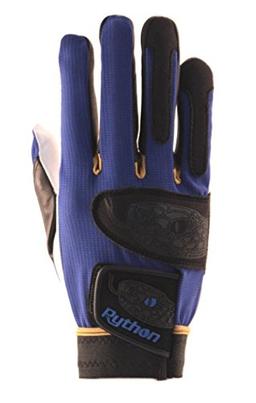
Python Deluxe Racquet/Pickleball Glove

Our pick

Python Deluxe Racquet/Pickleball Glove

The only glove here that names its leather: perforated Cabretta, the thin, tacky sheepskin premium golf gloves are made from, chosen precisely because it keeps its grip as a hand sweats. Listed for either hand in sizes from junior to XXL. If you want padding as well as grip, the Franklin Sports glove is the only listing on this page that publishes both — and it costs about half as much. The cheapest way to find out whether a glove suits you at all is the synthetic Python Vintage. All four are sold as a single glove, not a pair.

$22.95 · View on Amazon

Price as of November 20, 2026. #ad How we’re funded

Read the full write-up
By Stephen V.Last updated How we research

A glove is the cheapest thing in this sport that fixes a real problem, and the problem is not the one most people assume. It is not about warmth, and it is not about protection. It is that a handle slips in a damp hand, and a hand that feels the handle slipping squeezes harder without ever deciding to. That squeeze is what loads the forearm tendons behind tennis elbow, and it is what lights up the joint at the base of an arthritic thumb. A grippy palm lets you hold the paddle loosely, which is the single most useful change an older player can make to how they hold anything.

Four gloves, from three brands that have made racquet-sport gloves for decades. We ranked them by palm material, because that is the only specification any of these four listings publishes with any precision. Not one of them states a palm thickness, a closure type or a care instruction, and two do not describe the fit at all. For a thirteen-dollar accessory that is tolerable in a way it would not be on a paddle — but it does mean the material is the decision, so the material is how the page is organized.

Two warnings before the list, both of which cost people money. Every glove here is sold as one glove, not a pair — you wear it on your paddle hand — and each size and each hand is usually its own listing, so check which one you are putting in the cart. And if what you actually want is warmth and all-day joint support rather than on-court grip, you want a different product altogether: see compression gloves for arthritis.

How this is funded: we earn a commission if you buy through our links, at no extra cost to you. It never changes which product we recommend, and we’ll tell you plainly when to skip one. Full disclosure.

Quick picks

Ranked on published specs, grip and build, and honest buyer fit. Select a row to jump to the full write-up. We have not lab-tested these — here is exactly what we do instead.

#ProductBest forPrice
1
Python Deluxe Racquet/Pickleball Glove

Python Deluxe Racquet/Pickleball Glove

The only glove here whose palm material is named precisely: perforated Cabretta leather, the same thin, tacky sheepskin premium golf gloves are made from, chosen because it holds its grip as the hand sweats. Sold for either hand in sizes from junior to XXL. If the reason you are buying a glove is that the paddle turns slick by the third game, this is the one to try first.

Best overall — named Cabretta leather palm
$22.95 · View on Amazon

Price as of November 20, 2026. #ad How we’re funded

2
Franklin Sports Pickleball Single Glove (Right Hand)

Franklin Sports Pickleball Single Glove (Right Hand)

The only glove here whose listing names a leather palm AND padding, and it is the cheapest leather option on the page — from the brand that makes the X-40, the ball most outdoor leagues play with. A left-hand version is listed separately. For a first glove at a price that does not sting if gloves turn out not to be for you, this is the pick.

Best value — the only leather plus padding
$12.99 · View on Amazon

Price as of November 20, 2026. #ad How we’re funded

3
Python Vintage Synthetic Racquet/Pickleball Glove

Python Vintage Synthetic Racquet/Pickleball Glove

The cheapest glove we list and the only one with a published synthetic palm rather than leather, with an elasticized mesh back for airflow. Synthetic gives up some of the tacky feel Cabretta is bought for, and gives back the ability to rinse a glove out without worrying about it. The sensible trial glove if you are not sure a glove is for you.

Budget pick — synthetic, easiest to rinse
$12.99 · View on Amazon

Price as of November 20, 2026. #ad How we’re funded

4
HEAD Leather Racquetball Glove (Web Extra Grip)

HEAD Leather Racquetball Glove (Web Extra Grip)

A leather racquetball glove from HEAD, listed for both hands, sitting between the cheap synthetic and the Cabretta option on price. It is honestly a crossover: HEAD makes no pickleball claim for it, and racquetball is a sweatier indoor sport with a thinner handle. The grip problem is the same one, though, and so is the fix.

Leather alternative from a familiar brand
$15.95 · View on Amazon

Price as of November 20, 2026. #ad How we’re funded

The picks in full

#1Best overall — named Cabretta leather palm

Python Deluxe Racquet/Pickleball Glove

The only glove here whose palm material is named precisely: perforated Cabretta leather, the same thin, tacky sheepskin premium golf gloves are made from, chosen because it holds its grip as the hand sweats. Sold for either hand in sizes from junior to XXL. If the reason you are buying a glove is that the paddle turns slick by the third game, this is the one to try first.

Easier on the joints: A glove that stays grippy when wet lets you hold the paddle loosely. That matters because the squeeze — not the swing — is what loads the forearm tendons behind tennis elbow, and a slick handle makes you squeeze harder without noticing.

What we like

  • Perforated Cabretta leather palm — the only glove here that names its leather, and the grade used for premium golf gloves
  • Perforation is published as being for breathability and sweat resistance, which is the problem this product exists to solve
  • Listed for right OR left hand across men's, women's and junior sizes, so a left-handed player is not an afterthought

Skip it if

  • Sold as a single glove, not a pair
  • The most expensive glove we list, at roughly twice the cheapest
  • No padding, no palm thickness and no care instructions published — and leather is the material least tolerant of being thrown in a machine
Palm materialPerforated Cabretta leather (per listing)
VentilationPerforated palm (per listing)
HandRight or left, sold singly (per listing)
SizesMen's, women's and junior listed; the linked listing is a right-hand XXL
PaddingNot published
Palm thicknessNot published
ClosureNot published

Specs read from the product listing, on November 15, 2026. “Not published” means the maker does not state that figure.

#2Best value — the only leather plus padding

Franklin Sports Pickleball Single Glove (Right Hand)

The only glove here whose listing names a leather palm AND padding, and it is the cheapest leather option on the page — from the brand that makes the X-40, the ball most outdoor leagues play with. A left-hand version is listed separately. For a first glove at a price that does not sting if gloves turn out not to be for you, this is the pick.

Easier on the joints: Padding in the palm sits between the handle and the small joints at the base of your fingers — the ones that ache first with hand arthritis — and it is the only glove feature on this page that does anything about impact rather than grip.

What we like

  • Names both a sweat-wicking leather palm and padding — no other listing here claims both
  • Pickleball-specific rather than a racquetball crossover
  • A left-hand version is sold separately, so either hand is covered

Skip it if

  • Sold as a single glove, not a pair
  • Every size and each hand is its own listing — check which one you are adding to the cart
  • No padding thickness, no closure type and no care instructions published
Palm materialSweat-wicking leather (per listing)
PaddingPadded (per listing; no thickness published)
HandRight hand on this listing; a left-hand version is listed separately
SizesAdult medium, large and XL (separate listings)
VentilationNot published
Palm thicknessNot published
ClosureNot published

Specs read from the product listing, on November 15, 2026. “Not published” means the maker does not state that figure.

#3Budget pick — synthetic, easiest to rinse

Python Vintage Synthetic Racquet/Pickleball Glove

The cheapest glove we list and the only one with a published synthetic palm rather than leather, with an elasticized mesh back for airflow. Synthetic gives up some of the tacky feel Cabretta is bought for, and gives back the ability to rinse a glove out without worrying about it. The sensible trial glove if you are not sure a glove is for you.

Easier on the joints: A snug elasticized back stops the glove shifting on the hand, and a glove that shifts is one you grip harder to compensate for — the opposite of what a sore wrist or elbow needs.

What we like

  • The lowest price of any glove here, from a maker that specializes in racquet-sport gloves
  • Elasticized network back published for a snug fit and airflow
  • A synthetic palm takes a rinse-and-air-dry far better than leather does

Skip it if

  • Synthetic does not have the tacky, second-skin feel that makes Cabretta leather worth paying for
  • No padding published at all, so it does nothing for impact
  • Sold as a single glove, and each size is its own listing
Palm materialSynthetic (per listing)
BackElasticized network back (per listing)
HandRight or left, sold singly (per listing)
SizesMultiple; the linked listing is a right-hand medium
PaddingNot published
Palm thicknessNot published
ClosureNot published

Specs read from the product listing, on November 15, 2026. “Not published” means the maker does not state that figure.

#4Leather alternative from a familiar brand

HEAD Leather Racquetball Glove (Web Extra Grip)

A leather racquetball glove from HEAD, listed for both hands, sitting between the cheap synthetic and the Cabretta option on price. It is honestly a crossover: HEAD makes no pickleball claim for it, and racquetball is a sweatier indoor sport with a thinner handle. The grip problem is the same one, though, and so is the fix.

Easier on the joints: Racquetball players buy a leather glove for the same reason an older pickleball player should consider one: it keeps the handle from turning in a damp hand, so the hand can stay relaxed.

What we like

  • Leather palm with HEAD's 'Web Extra Grip' breathable construction published on the listing
  • Listed for right and left hand
  • Cheaper than the Cabretta option while still being leather

Skip it if

  • A racquetball glove, not a pickleball one — HEAD publishes no pickleball-specific claim for it
  • The listing publishes no padding, no thickness and no closure type
  • Sold as a single glove, and the linked listing is one size
Palm materialLeather (per listing)
Feature'Web Extra Grip' breathable construction (per listing)
HandRight and left listed, sold singly (per listing)
SizesMultiple; the linked listing is a right-hand medium
PaddingNot published
Palm thicknessNot published
ClosureNot published

Specs read from the product listing, on November 15, 2026. “Not published” means the maker does not state that figure.

What a glove actually does for an older hand

Three things, in descending order of how much they matter.

  • It lets you stop squeezing. The AAOS description of tennis elbow lists “weak grip strength” among its symptoms and names holding a racquet as one of the activities that worsens the pain — and its treatment guidance includes an equipment check, on the logic that gear which reduces stress on the forearm means “the forearm muscles do not have to work as hard”. A tacky palm is the cheapest possible version of that check. It does not strengthen anything; it removes the reason you were gripping hard in the first place. Pair it with a properly relaxed grip on the handle.
  • It takes sweat out of the equation. Perforated leather and mesh backs exist for this and nothing else. If your hands sweat enough that the paddle turns by the third game, you have two real options — a glove or a moisture-wicking overgrip — and they are not mutually exclusive. We compare the grip-only route on best overgrips for sweaty hands.
  • Padding, on the one glove that publishes it. Only the Franklin listing names padding. A padded palm sits between the handle and the small joints at the base of the fingers, which is where impact is felt by a hand with osteoarthritis. It is a modest effect compared with a thicker paddle core, and we would not buy a glove for padding alone — but if two gloves cost the same and one publishes padding, that is a tiebreak.

Palm material: the whole decision, in one section

Cabretta leather is the premium option and the only material named precisely on any of these listings. It is a thin sheepskin used for high-end golf gloves because it behaves like a second skin: tacky, close-fitting, and it holds grip as it dampens. Perforation is published on the Python Deluxe for breathability and sweat resistance. The cost is care — leather wants to air-dry, and none of these listings publishes a washing instruction, so treat it the way you would a golf glove.

Unnamed leather is what the Franklin and HEAD listings publish: “sweat-wicking leather” and “leather” respectively, with no grade. That is not a reason to avoid either — the Franklin is the only glove here that pairs leather with published padding, and it is the cheapest leather option — but it is a reason not to expect Cabretta feel at a third of the price.

Synthetic is the Python Vintage, and its advantage is practical rather than tactile: you can rinse it out and let it dry without worrying about what you have done to it. It gives up the second-skin tack that makes Cabretta worth paying for. For a first glove bought to settle the question of whether you even like playing in one, that is the right trade.

The sizing problem nobody warns you about

Gloves in this category are sold one hand and one size at a time, as separate listings from the same brand. The Franklin glove exists as an adult medium, large and XL, each its own page, plus a separately listed left-hand version. The two Python gloves are listed for right or left hand across a range from junior to XXL. The HEAD glove is listed for both hands. The practical consequence: the product you land on from a search result is one specific combination, and the size shown is not necessarily yours.

None of the four publishes a hand-measurement chart we could read, which is why there is no sizing table on this page — we are not going to invent one. What we can tell you is the rule the whole category runs on: a glove should feel snug with no loose material across the palm, because a glove that slides is one you grip harder to compensate for. If you are between sizes and buying leather, size down, since leather relaxes with wear and synthetic does not.

One more thing specific to this sport: you wear the glove on your paddle hand, unlike golf, where the glove goes on the lead hand. A left-handed player needs the left-hand listing, and the fact that all four of these products list a left-hand option is one of the reasons they are on the page.

What a glove will not fix

It is not a brace. If the pain is in the joint rather than in your ability to hold on, the glove is the wrong product and you want a wrist support or an elbow strap — the AAOS guidance on tennis elbow is explicit that a counterforce brace belongs on the forearm, not the elbow or the hand. Start from wrist supports for pickleball or elbow braces and straps instead.

It is also not a substitute for a handle that fits. If your grip is a size too small you will keep over-squeezing in any glove, and the fix costs a few dollars: wrap an overgrip or two and read how to find your grip size. A glove also slightly increases effective grip circumference, which helps a hand that cannot curl far — and hurts if your handle was already too fat.

And it is not sun protection. None of these four publishes a UPF rating, so we make no claim about any of them on that front. If sun exposure on the hands and forearms is your concern, the garments that do publish a rating are on best sun sleeves for pickleball.

How we ranked these, and what we do not claim

We own no units and have worn none of these gloves. Every row in every table above is read from the Amazon listing named in that product’s source row, on the date shown there, and each ASIN was confirmed in stock on that date through Amazon’s own Creators API. Franklin’s own site and the Python retail pages both refused an automated fetch on the day we wrote this, so the listing is the only published source we could actually read.

Where a listing publishes nothing, the cell says “Not published”. On this page that is most of every table, and it is the honest state of a category where the products are cheap and the disclosure is thin. The ranking follows published material and buyer fit, not price, so a discount does not reorder it — and prices come from the live price layer with an “as of” date attached.
Frequently asked questions

Do you need a glove to play pickleball?

No. Most players over 55 never wear one, and nothing about the sport requires it. A glove earns its place if one of two specific things is true: your hands sweat enough that the handle turns during a session, or your grip is weakening and you find yourself clamping the paddle to feel secure. Both of those are real problems with a cheap fix. If neither applies, spend the money on court shoes or a better paddle instead.

Which hand do you wear a pickleball glove on?

Your paddle hand — the opposite convention to golf, where the glove goes on the lead hand. That means a left-handed player needs a left-hand glove, and every glove on this page is sold one hand at a time rather than as a pair. Two-glove players exist, usually people who also play racquetball, but the standard purchase is a single glove for the hand that holds the paddle.

What is the best pickleball glove for sweaty hands?

The Python Deluxe, because it is the only glove here whose palm material is named precisely: perforated Cabretta leather, the same thin sheepskin used for premium golf gloves, with the perforation published as being for breathability and sweat resistance. Cabretta is bought specifically because it keeps its grip as it dampens. The cheaper route is a moisture-wicking overgrip, which solves the same problem from the handle side and can be used alongside a glove.

Are pickleball gloves good for arthritis?

They help with one part of it. A tacky palm means you can hold the paddle loosely, and AAOS lists gripping and pinching as the activities that aggravate arthritis at the base of the thumb, so reducing how hard you have to grip is genuinely useful. What a playing glove does not do is provide warmth or all-day compression, which is what arthritis compression gloves are for. Those are a separate product class and we cover them on our arthritis gloves page.

Are fingerless or half-finger pickleball gloves better?

They are more popular than full-finger gloves in this sport, because they keep fingertip feel on the handle and run cooler. We list none of them here for a specific reason: the half-finger gloves we found in stock were from sellers that publish no palm material at all, and material is the only spec this category reliably discloses. If you prefer half-finger, look for a named palm material and a snug elasticized back, which are the two things worth paying for either way.

How long does a pickleball glove last?

Nobody on this page publishes a figure, so we will not invent one. What we can say is where they fail: the palm wears at the base of the index finger and the heel of the hand, and leather stiffens if it is dried fast or washed hot. Treat a leather glove like a golf glove — air-dry it flat, never in a bag — and expect a synthetic one to survive rinsing better while feeling less tacky from the start.

Sources

  • American Academy of Orthopaedic Surgeons (OrthoInfo) - Tennis Elbow (Lateral Epicondylitis) — AAOS: tennis elbow 'involves the degeneration (wearing down) or, in some cases, microtearing of the tendons that join the forearm muscles on the outside of the elbow', specifically the extensor carpi radialis brevis (ECRB) where it attaches to the lateral epicondyle. Symptoms: 'Pain or burning on the outer part of your elbow', 'Weak grip strength', 'Sometimes, pain at night', 'often worsened with forearm activity, such as holding a racquet, turning a wrench, or shaking hands'. Most people who get it are 'between the ages of 30 and 50'. THE PLACEMENT SENTENCE: 'Using a brace centered over the back of your forearm may also help relieve symptoms of tennis elbow. This can reduce symptoms by resting the muscles and tendons.' AAOS calls this a counterforce brace - it is NOT worn on the elbow joint itself. 'Approximately 80 to 95% of patients have success with nonsurgical treatment', beginning with rest: 'you will have to stop or decrease participation in sports, heavy work activities, and other activities that cause painful symptoms for several weeks'. AAOS also lists an EQUIPMENT CHECK as treatment: 'Stiffer racquets and looser-strung racquets often can reduce the stress on the forearm, which means that the forearm muscles do not have to work as hard.' Steroid injections 'should be used very sparingly for lateral epicondylitis, as excessive use can weaken the lateral epicondyle'. Surgery is considered only 'if your symptoms do not respond after 6 to 12 months of nonsurgical treatments' (accessed October 17, 2026)
  • American Academy of Orthopaedic Surgeons (OrthoInfo) - Arthritis of the Thumb — AAOS: 'in the thumb, the most common site for arthritis to develop is the joint at the base of the thumb - also known as the thumb carpometacarpal (CMC) joint', and the type that most often affects it is osteoarthritis ('degenerative, or wear-and-tear, arthritis'). The joint 'enables the thumb to swivel, pivot, and pinch so that you can grip things in your hand. This joint is highly vulnerable to arthritis as people age, and arthritis at the base of the thumb is very common.' Risk factors named: 'being female: women are 2 to 3 times more likely to get this condition', 'being over the age of 50', family history, being overweight, 'having a past injury to the thumb or wrist', 'having loose joints', 'doing jobs or activities that involve a lot of gripping, pinching, or heavy lifting', and smoking. Symptoms: 'pain at the base of the thumb, especially with gripping, pinching, or turning activities (e.g., turning a key or opening a jar)', 'pain or aching after using the thumb for a long time', 'pain at night', 'weakness when gripping or pinching', swelling and tenderness at the base of the thumb, 'a bump or bony growth at the base of the thumb', and limited motion. Doctors 'may also check for signs of carpal tunnel syndrome, since many people with thumb CMC arthritis have both'. Nonsurgical options: ice 'for 5 to 15 minutes several times a day'; ACTIVITY MODIFICATION - 'avoid both activities that make symptoms worse and using tools and equipment' that do; SPLINTING - 'a splint that supports the base of the thumb can reduce pain during activities or overnight'; gentle range-of-motion and strengthening exercises with a hand therapist; NSAIDs including a topical NSAID gel such as diclofenac, which 'may have fewer side effects than oral medications'; and steroid injections, whose 'effect may wear off over time'. AAOS also notes reassurance is itself part of treatment: 'some people have no symptoms despite X-rays that show advanced arthritis', and some find 'their pain may go away' with or without treatment (accessed October 11, 2026)
  • American Academy of Orthopaedic Surgeons (OrthoInfo) - De Quervain's Tenosynovitis — AAOS: de Quervain's tenosynovitis occurs when 'the tendons that control thumb movement become irritated inside the narrow tunnel they pass through to get from the wrist to the thumb', causing 'pain and tenderness along the thumb side of the wrist'. It is 'especially noticeable when you move the thumb, make a fist, grasp or grip something, turn the wrist', or lift something with the thumbs pointed up and movement occurring at the wrist. The two tendons involved are the abductor pollicis longus (APL) and extensor pollicis brevis (EPB); in de Quervain's 'these tendons become irritated, and the sheath thickens. When this happens, the tendons no longer fit well or glide freely inside the tunnel. The result is increased friction and pain with certain thumb and wrist movements.' Cause: 'the exact cause is not completely understood, though the condition can be worsened by movements of the wrist and thumb (e.g., typing, texting, or lifting)'. Risk factors named: association with pregnancy and the postpartum period, rheumatoid arthritis, and 'it is most common in people in their 40s and 50s' and 'affects more females than males' (accessed October 11, 2026)
  • Non-fatal senior pickleball and tennis injuries in US EDs, 2010–2019 — Injury Epidemiology (2021) — For players 60+: strains/sprains 31.0%, fractures 30.4%; the wrist is the single most-injured body part (13.2%); women 3.7x more likely to fracture (accessed July 22, 2026)

Keep reading