Kitchen & Court

Best ProKennex Pickleball Paddles

ProKennex is the only paddle brand whose entire positioning is your arm, and the three models we can price live all pair a Toray T700 carbon face with the same cushioned Comfort Pro grip. It is also the brand that publishes the least — and on paddles costing over a hundred dollars, that is worth saying out loud.

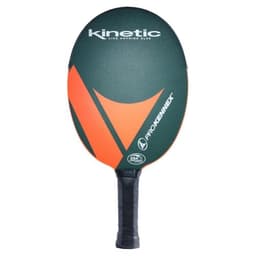
ProKennex Ovation Speed II

Our pick

ProKennex Ovation Speed II

If you are buying ProKennex because your arm hurts — and that is the only sensible reason to buy ProKennex — the one to get is the Kinetic Ovation Speed II. It is the brand’s most balanced arm-first build: a Toray T700 carbon fiber face, the cushioned Comfort Pro grip that runs across the whole line, and listed USA Pickleball approval. If you still want some drive out of an arm-friendly paddle, the Pro Flight is the harder-hitting sibling. The budget pick is the Black Ace Ovation — the cheapest way into the same face and the same grip, at a little over a hundred dollars, and the paddle we would hand a player trying the brand for the first time.

$159.99 · View on Amazon

Price as of November 23, 2026. #ad How we’re funded

Read the full write-up
By Stephen V.Last updated How we research

Every paddle brand says something about feel. ProKennex is the only one whose whole identity is built on it: the company’s positioning, its product names and its marketing are organised around taking shock out of the handle, and it is the brand a physio or a pro at open play is most likely to name when you say the words “tennis elbow”.

We need to be careful about how we say that, so here it is plainly. Vibration control is ProKennex’s stated design intent, not a result we have measured. We own no paddles, run no lab, and nobody here has hit a ball with any of these. There is no published decibel figure, no published vibration figure and no independent test in our sources. What we can tell you is what the brand builds and what it publishes — and on this page what it does not publish turns out to be the most useful finding of all.

Published work on lateral epicondylitis is clear that the mechanism is repeated impact loading of the forearm tendons, so a paddle designed to reduce what arrives at the hand is a reasonable thing to shop for if yours is complaining. Just do not shop for it on faith alone: read tennis elbow from pickleball first, because technique, grip size and how often you play matter at least as much as which paddle you hold.

How this is funded: we earn a commission if you buy through our links, at no extra cost to you. It never changes which product we recommend, and we’ll tell you plainly when to skip one. Full disclosure.

Quick picks

Ranked on published specs, grip and build, and honest buyer fit. Select a row to jump to the full write-up. We have not lab-tested these — here is exactly what we do instead.

#ProductBest forPrice
1
ProKennex Ovation Speed II

ProKennex Ovation Speed II

ProKennex built its whole reputation on arm comfort, and the Ovation Speed II is the clearest expression of it — a Toray carbon face and the brand's cushioned Comfort Pro grip, aimed squarely at players whose elbow or wrist flares up. If a paddle has ever left your arm sore, this is the brand to try first.

Best overall for a sore arm — T700 carbon, Comfort Pro grip
$159.99 · View on Amazon

Price as of November 23, 2026. #ad How we’re funded

2
ProKennex Pro Flight

ProKennex Pro Flight

A slightly more all-court ProKennex than the Ovation, with the same Toray carbon face and Comfort Pro grip. You keep the brand's arm-friendly feel but get a touch more reach and drive, which suits players who want comfort without giving up the ability to put a ball away.

Best for drive while still protecting the arm
$189.95 · View on Amazon

Price as of November 23, 2026. #ad How we’re funded

3
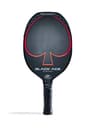
ProKennex Black Ace Ovation

ProKennex Black Ace Ovation

The most affordable way into ProKennex's comfort-first design. It carries the Toray carbon face and Comfort Pro grip at a price closer to a mainstream paddle, so it's the one to pick if the brand appeals but the flagship prices don't.

Budget pick — cheapest route into the same face and grip
$104.99 · View on Amazon

Price as of November 23, 2026. #ad How we’re funded

The picks in full

#1Best overall for a sore arm — T700 carbon, Comfort Pro grip

ProKennex Ovation Speed II

ProKennex built its whole reputation on arm comfort, and the Ovation Speed II is the clearest expression of it — a Toray carbon face and the brand's cushioned Comfort Pro grip, aimed squarely at players whose elbow or wrist flares up. If a paddle has ever left your arm sore, this is the brand to try first.

Easier on the joints: ProKennex designs its comfort line around vibration control, and pairs it with an extra-cushioned grip — the two things that most reduce the shock and squeeze your elbow and hand feel on every hit.

What we like

  • Toray T700 carbon-fiber face — a controlled, muted feel rather than a harsh pop
  • Cushioned Comfort Pro grip takes pressure off the palm and fingers
  • ProKennex is the brand arm-sensitive players reach for — that following is real

Skip it if

  • Among the pricier paddles here for its category
  • Exact weight and grip circumference are not published on the listing
Face materialToray T700 carbon fiber
CoreNot published
GripComfort Pro (cushioned)
WeightNot published
USA Pickleball approvedYes (per listing)

Specs read from the product listing, on July 22, 2026. “Not published” means the maker does not state that figure.

#2Best for drive while still protecting the arm

ProKennex Pro Flight

A slightly more all-court ProKennex than the Ovation, with the same Toray carbon face and Comfort Pro grip. You keep the brand's arm-friendly feel but get a touch more reach and drive, which suits players who want comfort without giving up the ability to put a ball away.

Easier on the joints: The carbon face plus ProKennex's cushioned grip is the same arm-friendly recipe as the Ovation — a good option if you want comfort but don't want a pure control paddle.

What we like

  • Same Toray T700 carbon face and cushioned grip as the Ovation
  • A bit more all-court than the pure-comfort models
  • USA Pickleball approved

Skip it if

  • The most expensive paddle in this roundup
  • Weight is not published, so you're buying on feel and reputation
Face materialToray T700 carbon fiber
CoreNot published
GripComfort Pro (cushioned)
WeightNot published
USA Pickleball approvedYes (per listing)

Specs read from the product listing, on July 22, 2026. “Not published” means the maker does not state that figure.

#3Budget pick — cheapest route into the same face and grip

ProKennex Black Ace Ovation

The most affordable way into ProKennex's comfort-first design. It carries the Toray carbon face and Comfort Pro grip at a price closer to a mainstream paddle, so it's the one to pick if the brand appeals but the flagship prices don't.

Easier on the joints: Same comfort recipe as the flagship ProKennex paddles — carbon face, cushioned grip — for players who want the arm-friendly feel on a smaller budget.

What we like

  • ProKennex comfort design at a mid-market price
  • Toray carbon face and cushioned Comfort Pro grip
  • Good bridge from a beginner paddle to a comfort-focused one

Skip it if

  • Fewer published specs than the pricier ProKennex models
  • Still costs more than a budget fiberglass paddle
Face materialToray 700 carbon fiber
CoreNot published
GripComfort Pro (cushioned)
WeightNot published
USA Pickleball approvedNot published

Specs read from the product listing, on July 22, 2026. “Not published” means the maker does not state that figure.

What all three ProKennex paddles share

This is a tight line, and the overlap is the point. Every paddle on this page publishes the same two things:

  • A Toray T700 carbon fiber face. T700 is a specific carbon grade, and naming it is more disclosure than most brands offer (plenty just write “carbon”). A carbon face is firmer and more textured than fiberglass, which is why it holds spin; it is not in itself an arm-comfort feature.
  • A cushioned Comfort Pro grip. This is the part we would actually point an arthritic or elbow-sore reader at, because it is the one shock-reducing feature on these paddles that you can see and feel in a shop rather than take on trust. A thicker, softer grip does two things at once: it damps what travels into the palm, and it enlarges the handle so you clamp down less. Clamping is what loads the tendons.

So the choice between these three is not face material and it is not grip. It is how much drive you want, and how much you are willing to pay for the brand’s top build.

The three paddles, and who each one is for

  • Kinetic Ovation Speed II — the balanced one. Our pick, and the paddle we would put in the hands of a 55-plus player whose arm has started to complain after sessions. USA Pickleball approval is listed on it, which matters if you play anything sanctioned.
  • Pro Flight — the one with drive. The most expensive paddle in our entire registry, and positioned for a player who wants to hit through the ball rather than only absorb it. Also listed as USA Pickleball approved. Buy it if you have an arm problem and refuse to give up pace; do not buy it expecting it to be gentler than the Ovation Speed, because nothing published says it is.
  • Black Ace Ovation — the way in. Same T700 face, same Comfort Pro grip, roughly a third less money than the Ovation Speed II. The honest caveat: its listing does not state USA Pickleball approval, where the other two do. For recreational and league play that is usually irrelevant; for a sanctioned tournament it is the first thing to check against the official equipment list.

The disclosure problem, stated bluntly

Here is the finding we would most want a reader to take away, and it is not flattering. ProKennex publishes no weight and no core thickness for any of these three paddles. Not a figure, not a range. On paddles that cost between a hundred and nearly two hundred dollars, and that are specifically sold to people with arm problems, those are the two specifications that matter most:

  • Weight is the number that decides how much your shoulder and elbow have to work for every swing, and swing after swing it is the dominant variable for a sore arm. Selkirk publishes a range on its SLK paddles. JOOLA publishes an average. Franklin publishes a range. ProKennex publishes nothing.
  • Core thickness is the amount of polymer between your hand and the ball — 16 mm cushions and slows, 13 mm is faster and firmer. It is the most consequential single spec in paddle design for impact comfort, and the brand that sells impact comfort does not state it.

We are not accusing ProKennex of hiding a bad number. We have no idea what the numbers are, which is exactly the problem: a maker that will not state a weight is asking you to buy its claim instead of its specification. Our tables say “Not published” in those cells rather than carrying a guess, and we would rather tell you that than quietly fill the gap. If published weight and core thickness are what you want to shop on, the brand page to read instead is best Selkirk pickleball paddles, and the head-to-head is ProKennex vs Selkirk.

Is ProKennex worth the money for an older player?

Honestly: sometimes, and it depends on what is actually wrong. Our position is that the cushioned grip is a real, visible shock-reducing feature, that a T700 carbon face is a good face, and that the brand’s focus on arm comfort is genuine rather than cosmetic. It is also true that none of these paddles is the cheapest route to a joint-friendly build. A 16 mm core on a raw carbon face can be had for under sixty dollars elsewhere, with a published weight range attached — the comparison is on best carbon fiber pickleball paddles under $100, and the question itself gets a full answer on are expensive pickleball paddles worth it.

Where we would spend the ProKennex premium: a player who has already tried a thick-core budget paddle, is still sore, and wants the cushioned-grip platform from the brand that specialises in it. Where we would not: a first paddle, or a player whose real problem is grip size or playing six days a week. If you are shopping around a specific joint, the pages that rank the entire field on that constraint are best paddles for tennis elbow, best paddles for shoulder pain and best paddles for wrist pain.

How this page is ranked, and what we do not claim

No scores, no tests, no awards. We have not measured vibration, weighed a sample or hit a ball. Every specification above is read from ProKennex’s own Black Ace Ovation product page or from the Amazon listing each product’s own source row points at, on the date shown there. Anything framed as shock or vibration reduction is the brand’s design intent, described as such, and never as a result.

The order is: arm-first balance, then drive, then price of entry. The budget pick is the Black Ace Ovation because it is the cheapest paddle here that carries the same face and the same cushioned grip as the flagship — not because it is a lesser version of something, but because it is the least you can spend and still be buying the thing the brand is actually good at. Prices come from the live price layer with an “as of” date attached, so a discount cannot reorder the page.
Frequently asked questions

What is the best ProKennex paddle for tennis elbow?

The Kinetic Ovation Speed II, of the three we can price live. It pairs a Toray T700 carbon face with the cushioned Comfort Pro grip that runs across the line, and it is listed as USA Pickleball approved. Be clear on what that recommendation rests on, though: shock reduction is ProKennex's stated design intent, not a result we have measured, and no decibel or vibration figure is published anywhere we could read. The cushioned grip is the part you can verify yourself — it damps what reaches the palm and it stops you clamping down, which is what loads the tendons.

Are ProKennex paddles worth the price?

Sometimes. The cushioned Comfort Pro grip is a real, visible shock-reducing feature and a T700 carbon face is a good face, so for a player who has already tried a thick-core budget paddle and is still sore, the premium buys the platform from the brand that specialises in it. But none of these is the cheapest route to a joint-friendly build: a 16 mm core with a raw carbon face and a published weight range can be had for under sixty dollars from other brands. For a first paddle, spend less.

How much does a ProKennex paddle weigh?

ProKennex does not publish a weight for any of the three paddles on this page, so our tables say 'Not published'. That is a genuine criticism rather than a formatting note: weight is the number that decides how hard your elbow and shoulder work on every swing, it is the specification an arm-conscious buyer most needs, and the brand selling arm comfort does not state it. Selkirk, JOOLA and Franklin all publish a figure or a range on comparable paddles.

Ovation Speed II or Pro Flight?

Take the Ovation Speed II unless you specifically want pace. It is the more balanced arm-first build and the one we recommend for most players over 55. The Pro Flight is the most expensive paddle in our registry and is positioned for a player who wants to drive through the ball while still buying into the brand's arm-comfort platform. Nothing published says the Pro Flight is gentler, so do not pay the difference expecting more comfort — pay it for drive.

Is the ProKennex Black Ace USA Pickleball approved?

Its listing does not say so, which is why our table reads 'Not published'. The Kinetic Ovation Speed II and the Pro Flight are both listed as approved. That absence is not evidence the Black Ace is illegal — sanctioned play is decided by USA Pickleball's official approved-equipment list rather than by a product page — but if you play tournaments, look the exact model up there before you buy.

What core thickness do ProKennex paddles use?

Not published, on any of the three. Core thickness is the amount of polymer between your hand and the ball and it is the most consequential spec in paddle design for impact comfort — 16 mm cushions and slows the ball, 13 mm is faster and firmer. If you want to shop on that number, our 13 mm vs 16 mm guide explains what it changes, and the Selkirk brand page lists paddles that state it.

Sources

  • ProKennex — Black Ace Ovation product page (manufacturer) — Read 2026-09-13: listed at $100.00 against a $250.00 original price, marked 'Final Sale' (no returns or exchanges), with no seasonal promotion named — an example of a brand clearing a prior-generation paddle outside the holiday window (accessed September 13, 2026)
  • A Review of Physiotherapy Techniques Used in the Treatment of Tennis Elbow — PMC (2023) — Lateral epicondylitis is an overuse tendinopathy of the forearm extensors; conservative care — rest, bracing/counterforce straps and graduated loading — is the mainstay (accessed July 22, 2026)
  • American Academy of Orthopaedic Surgeons (OrthoInfo) - Tennis Elbow (Lateral Epicondylitis) — AAOS: tennis elbow 'involves the degeneration (wearing down) or, in some cases, microtearing of the tendons that join the forearm muscles on the outside of the elbow', specifically the extensor carpi radialis brevis (ECRB) where it attaches to the lateral epicondyle. Symptoms: 'Pain or burning on the outer part of your elbow', 'Weak grip strength', 'Sometimes, pain at night', 'often worsened with forearm activity, such as holding a racquet, turning a wrench, or shaking hands'. Most people who get it are 'between the ages of 30 and 50'. THE PLACEMENT SENTENCE: 'Using a brace centered over the back of your forearm may also help relieve symptoms of tennis elbow. This can reduce symptoms by resting the muscles and tendons.' AAOS calls this a counterforce brace - it is NOT worn on the elbow joint itself. 'Approximately 80 to 95% of patients have success with nonsurgical treatment', beginning with rest: 'you will have to stop or decrease participation in sports, heavy work activities, and other activities that cause painful symptoms for several weeks'. AAOS also lists an EQUIPMENT CHECK as treatment: 'Stiffer racquets and looser-strung racquets often can reduce the stress on the forearm, which means that the forearm muscles do not have to work as hard.' Steroid injections 'should be used very sparingly for lateral epicondylitis, as excessive use can weaken the lateral epicondyle'. Surgery is considered only 'if your symptoms do not respond after 6 to 12 months of nonsurgical treatments' (accessed October 17, 2026)
  • American Academy of Orthopaedic Surgeons (OrthoInfo) - Therapeutic Exercise Program for Epicondylitis (Tennis Elbow / Golfer's Elbow) — AAOS treats the two conditions as one rehabilitation problem and names them in the same sentence: 'Tennis elbow (lateral epicondylitis) and golfer's elbow (medial epicondylitis) are painful conditions caused by overuse. Over time, the forearm muscles and tendons become damaged from repeating the same motions again and again. This leads to pain and tenderness around the elbow.' On what the exercises are for: 'Specific exercises to stretch and strengthen the muscles attached to the injured tendon will help with the healing process. The early goal of a therapeutic exercise program is to promote muscle endurance and improve resistance to repetitive stress.' AAOS states the program 'should be performed under your doctor's supervision'. Written and/or reviewed by a member of the American Shoulder and Elbow Surgeons (ASES) (accessed October 17, 2026)
  • USA Pickleball — Approved Paddles list — The searchable database of paddles that have passed USA Pickleball certification testing (accessed July 22, 2026)
  • USA Pickleball - Official Rulebook (paddle dimensions) — USA Pickleball caps paddle size in the rulebook's equipment section, and repeats it as 2.E.3 ('Size') of the Equipment Standards Manual: the combined length and width of the paddle, INCLUDING any edge guard and butt cap, shall not exceed 24 inches (60.96 cm), and the paddle length alone shall not exceed 17 inches (43.18 cm). No restriction is placed on paddle thickness. This is the rule that makes face width and face length a zero-sum trade - a maker cannot add width without taking away length - and it is why no legal paddle is both long and wide (accessed October 18, 2026)
  • Pickleball Studio — How Thick Should Your Pickleball Paddle Be? (Chris Olson, Aug 31, 2022) — Thicker cores (16 mm and above) are for control: 'less power but usually improves your blocks, resets, and drop shots', 'helps absorb more of the pace from the ball', and they 'usually feel like they have a better sweet spot'. Thinner cores (13 mm and below) 'feel stiffer when the ball hits the paddle', the core 'doesn't absorb as much energy, so the ball comes off faster', and 'thinner paddles usually provide more vibration and worse off-center shot performance'. Recommendation: 'If you are a new player up to about 3.5, I would usually tell you to opt for a thicker paddle.' The article does not address arm pain or older players specifically (accessed September 18, 2026)

Keep reading