Kitchen & Court

Best Carbon Fiber Pickleball Paddles Under $100

Four of the carbon-faced paddles we list sat under $100 at the live price when we wrote this — and three of them put that carbon on a 16 mm core, which is the single most joint-friendly build in paddle design. Raw carbon stopped being a premium feature, and this is the page that proves it.

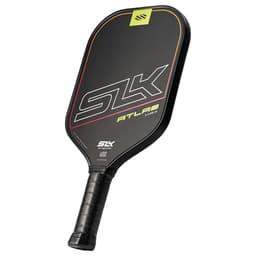
Selkirk SLK Atlas Max

Our pick

Selkirk SLK Atlas Max

The best carbon paddle under a hundred dollars, for a player over 55, is the Selkirk SLK Atlas Max. It is a raw carbon fiber face on a 16 mm Rev-Control polymer honeycomb core, in a forgiving widebody shape (16 x 7.85 in, short 4.85 in handle), and Selkirk publishes both a 7.6–8.1 oz weight range and a 4.25 in grip circumference — the two figures that decide whether a paddle will aggravate a wrist or an elbow. If you want the most modern construction in the band instead, the Friday Challenger is thermoformed with foam-injected walls at a dollar under the ceiling. The budget pick is the JOOLA Graf Edge 16mm, which gets you textured carbon on a 16 mm core for barely over fifty dollars — the cheapest paddle here that does the whole job. Prices are live, with the “as of” date on every row.

Read the full write-up
By Stephen V.Last updated How we research

Three years ago a carbon-faced paddle meant two hundred dollars. It does not any more, and that is the only reason this page exists. Four of the paddles in our registry carried a carbon face and a live price under $100 when we wrote this, and three of those four put the carbon on a 16 mm core — the combination we recommend above everything else to a player shopping around a sore arm.

Be clear about what a carbon face does and does not buy you, because the marketing is loud. A carbon face is firmer and grittier than fiberglass, which is why it bites the ball and holds spin, and why it feels more precise on a soft dink. It is not in itself a comfort feature. The comfort comes from the core behind it: more polymer between your hand and the ball means a softer, slower, more muffled contact and less impact arriving at your elbow. Carbon face plus thick core is the build worth buying. Carbon face plus thin core is a performance paddle, and it will not be kind to a tendon.

So this page ranks on core thickness and published weight first, and face material second — even though face material is what you came here for. Where a maker does not publish a figure the table says “Not published” rather than carrying a guess, and on one of the four picks that absence covers most of the sheet. We own no paddles and have tested nothing.

How this is funded: we earn a commission if you buy through our links, at no extra cost to you. It never changes which product we recommend, and we’ll tell you plainly when to skip one. Full disclosure.

Quick picks

Ranked on published specs, grip and build, and honest buyer fit. Select a row to jump to the full write-up. We have not lab-tested these — here is exactly what we do instead.

#ProductBest forPrice
1
Selkirk SLK Atlas Max

Selkirk SLK Atlas Max

The paddle that makes the sub-$100 argument all by itself. A carbon-fiber face over a 16mm polymer honeycomb core is the same recipe premium comfort paddles use, and Selkirk publishes the whole spec sheet - weight range, grip circumference, handle length - which almost nothing else at this price will do. If you want one paddle under $100 and you want it to feel muted rather than tinny, start here.

Best overall — raw carbon, 16 mm core, published weight range
2
Friday Challenger

Friday Challenger

Friday's Gen 2 paddle, and the cheapest way into the brand's thermoformed carbon build. Two layers of T700 raw carbon over a 16mm honeycomb core with foam-injected walls give a stiff, stable, big-sweet-spot feel that flatters a developing game — and unlike most makers here, Friday actually publishes what the paddle weighs.

Best construction — thermoformed with foam-injected walls
$99.99 · View on Amazon

Price as of November 23, 2026. #ad How we’re funded

3
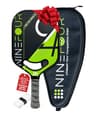
NineFour Apex Pro Series 3k

NineFour Apex Pro Series 3k

The only paddle on USA Pickleball's Quiet Category list we could find for sale at the retailer we link to: seventeen paddles are certified, and the others we searched for on 2026-10-25 returned no matching listing and appear to be sold direct by their makers. It is a conventional 3k carbon face over a polypropylene honeycomb core, which is to say it is not a strange-feeling paddle; the quiet is engineered in rather than stuck on.

Best for a court under a noise restriction
$85.00 · View on Amazon

Price as of November 23, 2026. #ad How we’re funded

4
JOOLA Graf Edge 16mm

JOOLA Graf Edge 16mm

The only paddle we could find under $50 with a 16 mm polypropylene core AND a carbon face AND a published weight - the three things this site tells arm-sore players to buy first, at a price where you normally get none of them. JOOLA's spec sheet puts it at 7.6-8.0 oz with a small 4 1/8 in grip on a 5.5 in handle. The catch is the shape: 16.5 in long and elongated, which is the one thing a weak wrist does not want.

Budget pick — textured carbon on a 16 mm core, just over $50
$42.46 · View on Amazon

$49.9515% off

Price as of November 23, 2026. #ad How we’re funded

The picks in full

#1Best overall — raw carbon, 16 mm core, published weight range

Selkirk SLK Atlas Max

The paddle that makes the sub-$100 argument all by itself. A carbon-fiber face over a 16mm polymer honeycomb core is the same recipe premium comfort paddles use, and Selkirk publishes the whole spec sheet - weight range, grip circumference, handle length - which almost nothing else at this price will do. If you want one paddle under $100 and you want it to feel muted rather than tinny, start here.

Easier on the joints: A 16 mm core is the thickest, softest construction in common use, and it does the single most important job for a sore elbow: it slows the impact down. Pair that with a carbon face, which returns a duller, more predictable ball than fiberglass, and you get about the least jarring feel available under $100.

What we like

  • 16 mm Rev-Control polymer honeycomb core - the thick, soft kind that muffles impact
  • Carbon-fiber face gives a muted, predictable response instead of a lively fiberglass ping
  • Selkirk publishes weight, grip circumference and handle length - rare at this price

Skip it if

  • The 4.85-inch handle is short - no room for a two-handed backhand and little to choke up on
  • Selkirk's own product page does not state USA Pickleball approval, so we do not claim it
  • The 4.25-inch grip is fine for most hands but on the small side for arthritic fingers
Face materialRaw carbon fiber (Raw Spin Technology)
Core16 mm Rev-Control polymer honeycomb
Weight7.6-8.1 oz (published range)
Grip circumference4.25 in
Handle length4.85 in
ShapeMax (widebody)
Dimensions16 x 7.85 in
Edge guardEdgeSentry (low-profile)
USA Pickleball approvedNot published

Specs read from the product listing, on September 15, 2026. “Not published” means the maker does not state that figure.

#2Best construction — thermoformed with foam-injected walls

Friday Challenger

Friday's Gen 2 paddle, and the cheapest way into the brand's thermoformed carbon build. Two layers of T700 raw carbon over a 16mm honeycomb core with foam-injected walls give a stiff, stable, big-sweet-spot feel that flatters a developing game — and unlike most makers here, Friday actually publishes what the paddle weighs.

Easier on the joints: Foam-injected walls stiffen the paddle's edges, which widens the area that answers the same way on contact — and more centered-feeling contact is the single biggest thing you can do to keep harsh off-center vibration out of your elbow.

What we like

  • Double-layer T700 raw carbon face with a gritty surface for spin
  • Thermoformed Gen 2 build with foam-injected walls — a stable, large sweet spot
  • USA Pickleball approved, and Friday publishes the weight when most brands won't

Skip it if

  • Thermoformed paddles feel stiffer, which not every sore arm loves
  • At 16.5 in it's an elongated shape, which sits heavier in the hand than a standard head
Face materialDouble-layer T700 raw carbon fiber
ConstructionThermoformed (Gen 2), foam-injected walls
Core16 mm polypropylene honeycomb
Weight8.0 oz average (published)
USA Pickleball approvedYes (per listing)

Specs read from the product listing, on August 24, 2026. “Not published” means the maker does not state that figure.

#3Best for a court under a noise restriction

NineFour Apex Pro Series 3k

The only paddle on USA Pickleball's Quiet Category list we could find for sale at the retailer we link to: seventeen paddles are certified, and the others we searched for on 2026-10-25 returned no matching listing and appear to be sold direct by their makers. It is a conventional 3k carbon face over a polypropylene honeycomb core, which is to say it is not a strange-feeling paddle; the quiet is engineered in rather than stuck on.

Easier on the joints: A paddle engineered to put out less sound energy is, by conservation of energy, a paddle doing something different with the energy of the hit - but NineFour publishes no vibration figure, so we will not claim your elbow benefits. If arm comfort is the actual goal, buy on published core thickness instead; this paddle does not publish one.

What we like

  • Named on USA Pickleball's Quiet Category paddle list - an independent check, not the seller's adjective
  • 3k raw carbon face over a polypropylene honeycomb core: ordinary, well-understood construction
  • USAPA approved per the listing, so it is a legal paddle as well as a quiet one
  • Thermoformed with an open throat, which is current mid-price construction rather than a budget build

Skip it if

  • No decibel or hertz figure is published for THIS paddle - certification is a list entry, not a number
  • Core thickness, weight and grip circumference are all absent from the listing
  • The Amazon listing title omits the brand name, which makes it easy to mistake for a generic
  • Stock has been thin on this listing
  • Priced like a mid-range paddle, with no published spec table to justify it
Face material3k carbon fiber (per listing)
CorePolypropylene honeycomb (per listing)
Core thicknessNot published
ConstructionThermoformed, open throat (per listing)
WeightNot published
GripNot published
USA Pickleball Quiet CategoryListed (quiet paddles)
Published decibel / hertz figureNot published
USA Pickleball approvedYes (per listing)

Specs read from the product listing, on October 25, 2026. “Not published” means the maker does not state that figure.

#4Budget pick — textured carbon on a 16 mm core, just over $50

JOOLA Graf Edge 16mm

The only paddle we could find under $50 with a 16 mm polypropylene core AND a carbon face AND a published weight - the three things this site tells arm-sore players to buy first, at a price where you normally get none of them. JOOLA's spec sheet puts it at 7.6-8.0 oz with a small 4 1/8 in grip on a 5.5 in handle. The catch is the shape: 16.5 in long and elongated, which is the one thing a weak wrist does not want.

Easier on the joints: A 16 mm core flexes more on contact and returns less of the ball's energy, so less shock reaches your elbow - and a carbon face mutes the rest. That combination is the reason our tennis-elbow and low-vibration lists cost more; here it is at a beginner price. Just size the small grip up so you are not clenching it.

What we like

  • 16 mm polypropylene honeycomb core - the thick, absorbing kind, rare at this price
  • Textured carbon fiber face for a muted, controlled feel
  • Published 7.6-8.0 oz weight and 4 1/8 in grip - you know what you are buying
  • USA Pickleball and UPA-A approved

Skip it if

  • Elongated 16.5 x 7.5 in shape with a 5.5 in handle - moves mass away from the hand, so a sore wrist should choose a standard shape instead
  • 4 1/8 in grip is small; most adult hands will want an overgrip or two
  • Retail list is around double the Amazon price we see, so check the live price before assuming
Face materialTextured carbon fiber
Core16 mm polypropylene honeycomb
Weight7.6-8.0 oz (published range; 7.8 oz average)
Grip circumference4.125 in (small)
Handle length5.5 in
Dimensions16.5 x 7.5 in (elongated)
USA Pickleball approvedYes (USAP and UPA-A)

Specs read from the product listing, on September 20, 2026. “Not published” means the maker does not state that figure.

What $100 buys in carbon, and what it does not

The good news first. At this ceiling you can now get a genuinely modern paddle: raw carbon faces (the unpainted, deliberately rough kind that grips the ball, rather than a carbon-look finish), 16 mm polymer honeycomb cores on three of the four picks, and on two of them a published weight. The Friday Challenger even gets you a thermoformed build with foam-injected walls — the construction method that was exclusive to flagship paddles two seasons ago — with a published 8.0 oz average weight attached.

Now the limits, because they are real. You do not get the brand-flagship build quality or the five-year warranty culture of a two-hundred-dollar paddle. You do not get a cushioned comfort grip of the kind the arm-focused brands sell — for that you are looking at ProKennex at a hundred dollars and up. And on the NineFour Apex Pro, you do not get much of a spec sheet at all: no core thickness, no weight, no grip figure. We have ranked it fourth-from-top on the strength of one thing itdoes publish, which we will come to.

Core thickness is the specification that matters here

If you read one section, read this one. 16 mm is the joint-friendly core thickness, and three of our four picks publish it: the SLK Atlas Max (Rev-Control polymer honeycomb), the JOOLA Graf Edge 16mm and the Friday Challenger (16 mm polypropylene honeycomb).

Thicker core, softer contact. The polymer honeycomb between the face and the ball deforms on impact, which slows the ball, muffles the shock and holds it on the face a fraction longer. That is what people are describing when they say a paddle “feels controlled”, and it is also why a 16 mm paddle sends less into a complaining elbow than a 13 mm one. Published work on lateral epicondylitis points at repeated impact loading as the mechanism, so reducing the impact per shot is not a marketing idea, it is the lever you have. The whole trade-off — what you give up in pace, what you gain in forgiveness — is argued on 13 mm vs 16 mm pickleball paddles.

The fourth pick, the NineFour Apex Pro Series 3k, publishes no core thickness. We say so in its table and we are not going to assume one from the price or the shape.

Shape: the second decision, and the one people get wrong

Two of these paddles are elongated and one is a widebody, and for an older player that is not a style preference.

  • Widebody — SLK Atlas Max, 16 x 7.85 in, 4.85 in handle. Short handle, wide face, sweet spot closer to your hand. Off-centre hits twist the paddle less, so less shock reaches the wrist. This is the forgiving arrangement and the reason it is our top pick.
  • Elongated — JOOLA Graf Edge, 16.5 x 7.5 in, 5.5 in handle. More reach and more leverage, and a longer handle if you use two hands on the backhand. The cost is a sweet spot further from your hand, which asks more of the joint holding it when you miss the middle. Note also its 4.125 in grip circumference — a small grip, which is excellent if your hands are small and a problem if they are not, because a grip you have to clamp is a grip that loads the forearm.

If you want the shape question settled before you shop, the pages that do it are pickleball paddle shapes explained and paddles with the largest sweet spot.

The quiet paddle in the band, and why it is here

The NineFour Apex Pro Series 3k earns its place on one published fact rather than a spec sheet: it is listed by USA Pickleball in the Quiet Category. If your community, HOA or club is under a noise complaint — and a great many are, because the sound of this sport is the single most common objection neighbours raise — a paddle on the official quiet list is not a nice-to-have, it is the condition of keeping the courts open.

Two caveats we insist on. There is no published decibel or hertz figure for it, so we cannot tell you how much quieter it is, only that it is listed. And a quiet paddle is only half the job: the ball matters at least as much, which is covered on best quiet pickleball balls and gear. Buy it for the listing, not for a number nobody has published.

Where this band sits against the rest of the site

This page is deliberately narrow: carbon faces only, one hundred dollars only. Three neighbours are more useful if your constraint is different. Best carbon fiber pickleball paddles removes the price ceiling and brings in the premium arm-first builds. Best pickleball paddles under $100 keeps the ceiling and drops the face requirement, which lets fiberglass paddles with bigger grips and bigger faces back in — and for an arthritic hand one of those may genuinely beat everything here. If fifty dollars is the real ceiling, the band below is best pickleball paddles under $75.

One timing note, stated as calendar rather than advice: Amazon’s own newsroom puts its 2026 Black Friday Week and Cyber Monday deal events from 12:01 a.m. PST on November 19 through November 30. We have no idea whether any paddle on this page will be discounted and we are not going to pretend otherwise — but every price on this page is read live, with its “as of” date shown, so the numbers you see move when the market does.

How this page is ranked

We own no paddles, run no lab and have hit no balls with any of these. Every figure is read from the maker’s own page or the listing named in each product’s source row, on the date shown there. There are no scores, because a score implies a test. The order is core thickness, then published weight and grip, then construction, then face material — which is the priority that serves a 55-plus arm, and is argued above rather than asserted. The budget pick is the JOOLA Graf Edge 16mm because it is the cheapest paddle on the page that still carries a carbon face, a 16 mm core and a published weight range: the least you can spend without giving up the thing that makes the build worth having.
Frequently asked questions

What is the best carbon fiber pickleball paddle under $100?

The Selkirk SLK Atlas Max, for a player over 55. It puts a raw carbon fiber face on a 16 mm Rev-Control polymer honeycomb core in a forgiving widebody shape (16 x 7.85 in with a short 4.85 in handle), and Selkirk publishes a 7.6-8.1 oz weight range and a 4.25 in grip circumference — figures most of the industry omits. If you want the most modern construction in the band, the Friday Challenger is thermoformed with foam-injected walls and publishes an 8.0 oz average. The cheapest paddle here that still does the whole job is the JOOLA Graf Edge 16mm.

Is a carbon fiber paddle better for tennis elbow?

Not by itself, and this is the most common mistake in paddle shopping. A carbon face is firmer and grittier than fiberglass, which is why it holds spin — it is not a shock-absorbing feature. What reduces what reaches your elbow is the core: a 16 mm polymer honeycomb puts more deformable material between your hand and the ball than a 13 mm one. Buy carbon face plus thick core. Carbon face plus thin core is a performance paddle and will feed more impact into the tendon, not less.

Is $100 enough for a good carbon paddle in 2026?

Yes, and that is genuinely new. At this ceiling you can now get raw carbon faces, 16 mm polymer cores on three of our four picks, published weight ranges on two of them, and on the Friday Challenger a thermoformed, foam-injected build that was flagship-only two seasons ago. What you do not get is a cushioned comfort grip of the kind the arm-focused brands sell, or flagship warranty treatment — and on one pick, the NineFour Apex Pro, you do not get much of a spec sheet at all.

Which carbon paddle under $100 has the biggest sweet spot?

Of the paddles on this page, the Selkirk SLK Atlas Max — it is the only widebody, at 16 x 7.85 in with a short 4.85 in handle, which puts the sweet spot closer to your hand and reduces how much an off-centre hit twists the paddle. The JOOLA Graf Edge is elongated at 16.5 x 7.5 in with a 5.5 in handle, so it trades forgiveness for reach and leverage. If a forgiving face is your priority above all else, our largest-sweet-spot page ranks the whole field on shape rather than face material.

Are these paddles USA Pickleball approved?

It varies, and the tables say which is which rather than generalising. The JOOLA Graf Edge 16mm is listed as approved by both USAP and UPA-A, the Friday Challenger and the NineFour Apex Pro are listed as approved per their listings, and the Selkirk SLK Atlas Max does not state approval on the pages we read. An absence is not evidence a paddle is illegal — sanctioned play is decided by USA Pickleball's official equipment list, not a product page — so check your exact model there before a tournament.

I need a quiet paddle for my community courts. Which one?

The NineFour Apex Pro Series 3k is the only pick here listed by USA Pickleball in the Quiet Category, which is what most HOAs and clubs under a noise complaint actually ask for. Two honest limits: no decibel or hertz figure is published for it, so we cannot tell you how much quieter it is, and a quiet paddle is only half the problem — the ball matters at least as much. Our quiet-gear page covers both sides.

Sources

  • Selkirk Sport — SLK Atlas Max product page (manufacturer specifications) — Selkirk publishes a full spec sheet: premium carbon fiber face with Raw Spin Technology, 16 mm Rev-Control polymer honeycomb core, 7.6-8.1 oz weight range, 4.25 in grip circumference, 4.85 in handle length, 16 in x 7.85 in, EdgeSentry low-profile edge guard, SLK Ultra-Comfort grip, skill level beginner-intermediate, 1-year limited warranty, designed and quality controlled in the USA and manufactured in China. No USA Pickleball approval statement appears anywhere on the page (accessed September 15, 2026)
  • Pickleball Studio — How Thick Should Your Pickleball Paddle Be? (Chris Olson, Aug 31, 2022) — Thicker cores (16 mm and above) are for control: 'less power but usually improves your blocks, resets, and drop shots', 'helps absorb more of the pace from the ball', and they 'usually feel like they have a better sweet spot'. Thinner cores (13 mm and below) 'feel stiffer when the ball hits the paddle', the core 'doesn't absorb as much energy, so the ball comes off faster', and 'thinner paddles usually provide more vibration and worse off-center shot performance'. Recommendation: 'If you are a new player up to about 3.5, I would usually tell you to opt for a thicker paddle.' The article does not address arm pain or older players specifically (accessed September 18, 2026)
  • USA Pickleball - USA Pickleball Announces Quiet Category for Pickleball Products — The governing body's own description of the program, announced September 25, 2023. The initiative 'aims to reduce the sport's sound output during recreational play'. The qualifying bar is stated as a relative one, not an absolute decibel number: qualifying equipment should deliver 'essentially 50 percent or less of the acoustic footprint of equipment commonly sourced and used in community parks'. The category covers 'paddles, balls, paddle covers, and noise mitigation screens for pickleball courts'. USA Pickleball says it 'will provide test fixture requirements and procedures to manufacturers during development' and that the category includes specific acoustic thresholds given to manufacturers - which is why those thresholds are not published for buyers to read (accessed October 25, 2026)
  • USA Pickleball - Quiet Category Acoustic Pickleball Equipment (approved list) — The live list, read on this date. QUIET PADDLES: OWL Founders Edition, OWL CX, CXE, PX, PXE, Diadem Hush Black and Purple, NineFour Apex Pro Series 3k, Gearbox Pro Ultimate Power 14mm / Elongated / Hyper, ProXR Quiet Luxury, Silent Storm SS1, Stafford Blackbird 67db, Stafford Nighthawk 66db, Whisper Silencer, Whisper The Saint Paddle System. COVERS AND SLEEVES: Bloop Pickleball Paddle Pads, PB Muffler slip cover + foam inlay, Quiet Strike Acoustic Pads, Whisper removable AcousticPads. QUIET BALLS: Accel Digital Sports DigiPro 3.0, Accel DigiPro 3.1 FastPlay, Gamma Librarian Foam Pickleball, Selkirk Q1 Quiet Ball. A separate LOWER ACOUSTIC PROFILE section carries the only two absolute figures on the page: Onix Fuse at 83.3 dBA and Monarch Outdoor at 81.6 dBA. The page states NO certification criteria, no decibel threshold and no hertz threshold - a product is either on the list or it is not (accessed October 25, 2026)
  • USA Pickleball - Official Rulebook (paddle dimensions) — USA Pickleball caps paddle size in the rulebook's equipment section, and repeats it as 2.E.3 ('Size') of the Equipment Standards Manual: the combined length and width of the paddle, INCLUDING any edge guard and butt cap, shall not exceed 24 inches (60.96 cm), and the paddle length alone shall not exceed 17 inches (43.18 cm). No restriction is placed on paddle thickness. This is the rule that makes face width and face length a zero-sum trade - a maker cannot add width without taking away length - and it is why no legal paddle is both long and wide (accessed October 18, 2026)
  • USA Pickleball — Approved Paddles list — The searchable database of paddles that have passed USA Pickleball certification testing (accessed July 22, 2026)
  • A Review of Physiotherapy Techniques Used in the Treatment of Tennis Elbow — PMC (2023) — Lateral epicondylitis is an overuse tendinopathy of the forearm extensors; conservative care — rest, bracing/counterforce straps and graduated loading — is the mainstay (accessed July 22, 2026)
  • About Amazon — Black Friday and Cyber Monday 2026: a first look at Amazon's best deals — Amazon's own newsroom, published November 9, 2026: its 2026 Black Friday Week and Cyber Monday deal events 'kick off at 12:01 a.m. PST on November 19 and run through November 30' — a twelve-day window, the same shape as 2025's November 20 to December 1. The release also describes daily themed deal drops, with double drops at midnight and 8 a.m. on Black Friday itself and on Cyber Monday, and says Today's Big Deals will carry savings of up to 60% off for the first time. It names no pickleball brand and no paddle, shoe or support product, so it is evidence of the CALENDAR only, not of any discount this site recommends (accessed November 10, 2026)

Keep reading