Kitchen & Court

Best Pickleball Shoes for Ankle Support

Sprains are a third of senior pickleball injuries, and a low-cut court shoe prevents them with a heel frame, a wide base and a grippy sole — not a high top. The shoes that publish that structure.

ASICS Gel-Resolution X (Women's)

Our pick

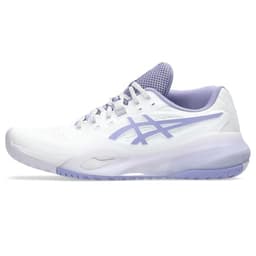
ASICS Gel-Resolution X (Women's)

ASICS’ DYNAWALL frame extends around the heel, and a higher medial collar resists the inward roll that starts most sprains — the most rigid platform we can find sold for court sport, and the maker says so on the spec sheet. The men’s version is the same shoe; see the note on its listing below.

$98.97 · View on Amazon

$165.0040% off

Price as of September 17, 2026. #ad How we’re funded

Read the full write-up
By Stephen V.Last updated How we research

Ask a player over 60 what they are afraid of on a pickleball court and the answer is usually a fall, and the thing that happens just before a lot of falls is an ankle going over. The published numbers back the instinct: in a decade of US emergency-department data on players 60 and older, strains and sprains were 31.0% of injuries, neck and neck with fractures. The American Academy of Orthopaedic Surgeons says about 90% of ankle sprains are inversion injuries — the foot rolling inward, tearing the ligaments on the outside — and names cutting sports, uneven surfaces, and two footwear failures as causes: shoes that do not provide enough foot and ankle support, and shoes with slippery soles.

Here is the part that surprises people. “Ankle support” in a court shoe does not mean a high top. A basketball-style collar is not what any of the shoes serious court-sport players wear looks like, and there is no high-top pickleball shoe we would recommend. What actually keeps an ankle from rolling is below it: a firm heel counter that holds the rearfoot upright, a frame or chassis that stops the midfoot twisting, a wide, low platform so the foot cannot tip over its own edge, and an outsole that grips when you plant sideways. So this page is ranked on which makers publish that structure, and then on what to do about the ankle itself — because AAOS’s prevention list starts with the ankle, not the shoe.

How this is funded: we earn a commission if you buy through our links, at no extra cost to you. It never changes which product we recommend, and we’ll tell you plainly when to skip one. Full disclosure.

Quick picks

Ranked on published specs, grip and build, and honest buyer fit. Select a row to jump to the full write-up. We have not lab-tested these — here is exactly what we do instead.

#ProductBest forPrice
1
ASICS Gel-Resolution X (Women's)

ASICS Gel-Resolution X (Women's)

The same heavily-structured platform as the men's, on a women's last and nearly two ounces lighter. Plantar fasciitis is more common in women than men and this is the strongest women's option we could verify: DYNAWALL wrapping the heel, a softer heel foam than the forefoot, and the same higher medial collar. If your heel pain has outlasted a couple of shoe changes, start here.

Best overall, women's — heel frame
$98.97 · View on Amazon

$165.0040% off

Price as of September 17, 2026. #ad How we’re funded

2
ASICS Gel-Resolution X (Tennis)

ASICS Gel-Resolution X (Tennis)

The most structured shoe on this page by some distance. ASICS' DYNAWALL frame now wraps the heel, the midsole is built in two pieces so the heel can be softer than the forefoot, and a higher medial collar fights the ankle roll that ends up loading the fascia. This is the shoe for someone whose heel pain has gone past annoying. It is heavy and it is expensive, and both of those are the price of the support.

Best overall, men's — heel frame
3
K-Swiss Ultrashot 4 Pickleball

K-Swiss Ultrashot 4 Pickleball

The one shoe here that was designed around the two things a sore plantar fascia actually needs, and says so on the spec sheet: a molded TPU support chassis that stops the midfoot folding, and a shock frame sitting under the heel. It is also a genuine pickleball shoe rather than a tennis shoe pressed into service, which shows in the outsole. If you want one recommendation and no further reading, this is it.

Best pickleball-specific — chassis + shock frame
$89.00 · View on Amazon

$129.9432% off

Price as of September 17, 2026. #ad How we’re funded

4
New Balance Fresh Foam X 1007 (Men's, 4E)

New Balance Fresh Foam X 1007 (Men's, 4E)

The honest pick for two specific people: anyone with a wide foot, and anyone who has already been told to wear an orthotic. New Balance lists this in a 4E extra-wide, which almost no court shoe offers, and it has the internal volume to swallow a real insert without squashing your toes. Read the con about the arch before you buy — it changes who this shoe is for.

Best wide — integrated stabilizers (4E)
$119.95 · View on Amazon

Price as of September 17, 2026. #ad How we’re funded

5
New Balance FuelCell 996 V6 (Tennis)

New Balance FuelCell 996 V6 (Tennis)

A tennis shoe that crosses over well to pickleball, built on New Balance's FuelCell foam for a springy, cushioned ride with tennis-grade lateral stability. Buy it for the cushioning and the stable platform, not for room: the standard width runs narrow (the shoe's most common owner complaint), and New Balance's July 2026 successor, the 996v7, was redesigned with a roomier toe box. If width is your problem, order a wide or look at the v7.

Best cushioned lateral-stability shoe, men's
$106.48 · View on Amazon

$134.9921% off

Price as of September 17, 2026. #ad How we’re funded

The picks in full

#1Best overall, women's — heel frame

ASICS Gel-Resolution X (Women's)

The same heavily-structured platform as the men's, on a women's last and nearly two ounces lighter. Plantar fasciitis is more common in women than men and this is the strongest women's option we could verify: DYNAWALL wrapping the heel, a softer heel foam than the forefoot, and the same higher medial collar. If your heel pain has outlasted a couple of shoe changes, start here.

Easier on the joints: Structure does the work your arch is currently doing on its own. For a fascia that is already irritated, taking even part of that job away for two hours is the difference between a session that sets you back and one that does not.

What we like

  • DYNAWALL extends into the heel — the most rigid women's court platform we could verify
  • FF BLAST PLUS ECO in the heel with FLYTEFOAM in the forefoot
  • 13.2 oz in a size 8, meaningfully lighter than the men's version
  • Higher medial collar to limit the inward ankle roll that stretches the fascia

Skip it if

  • Still a heavy, stiff shoe by women's court-shoe standards
  • Premium price, and no wide width is listed
  • A tennis shoe, so the outsole is not optimized for a pickleball toe drag
  • No published heel-to-toe drop
TypeTennis / court shoe (women's)
Midfoot supportDYNAWALL frame, extends around the heel
HeelFF BLAST PLUS ECO foam
MidsoleTwo-piece: FLYTEFOAM forefoot, FF BLAST PLUS ECO heel
OutsoleAHARPLUS rubber
Weight13.2 oz (women's size 8, per listing)
Heel-to-toe dropNot published
Width optionsNot published

Specs read from the product listing, on August 31, 2026. “Not published” means the maker does not state that figure.

#2Best overall, men's — heel frame

ASICS Gel-Resolution X (Tennis)

The most structured shoe on this page by some distance. ASICS' DYNAWALL frame now wraps the heel, the midsole is built in two pieces so the heel can be softer than the forefoot, and a higher medial collar fights the ankle roll that ends up loading the fascia. This is the shoe for someone whose heel pain has gone past annoying. It is heavy and it is expensive, and both of those are the price of the support.

Easier on the joints: Every degree your arch collapses inward is extra stretch on an already-irritated band of tissue. A frame this rigid simply does not let the foot do that, which is why the stiff, heavy shoe is often the one that lets a stubborn heel settle down.

What we like

  • DYNAWALL frame extends around the heel — among the most rigid platforms sold for court sport
  • Two-piece midsole: FF BLAST PLUS ECO under the heel, FLYTEFOAM in the forefoot
  • Higher medial collar resists the ankle roll that overloads the arch
  • AHARPLUS outsole rubber, so a heavy shoe still lasts

Skip it if

  • 15.0 oz in a men's size 9 — the heaviest shoe here, and you feel it late in a session
  • The stiffest shoe here, which some players simply find uncomfortable
  • Premium price, and it is a tennis shoe rather than a pickleball-specific one
  • ASICS does not publish a heel-to-toe drop for it
TypeTennis / court shoe (men's)
Midfoot supportDYNAWALL frame, extends around the heel
HeelFF BLAST PLUS ECO foam
MidsoleTwo-piece: FLYTEFOAM forefoot, FF BLAST PLUS ECO heel
OutsoleAHARPLUS rubber
Weight15.0 oz (men's size 9, per listing)
Heel-to-toe dropNot published
Width optionsNot published

Specs read from the product listing, on August 31, 2026. “Not published” means the maker does not state that figure.

#3Best pickleball-specific — chassis + shock frame

K-Swiss Ultrashot 4 Pickleball

The one shoe here that was designed around the two things a sore plantar fascia actually needs, and says so on the spec sheet: a molded TPU support chassis that stops the midfoot folding, and a shock frame sitting under the heel. It is also a genuine pickleball shoe rather than a tennis shoe pressed into service, which shows in the outsole. If you want one recommendation and no further reading, this is it.

Easier on the joints: The plantar fascia is a band under your arch that gets loaded every time the midfoot flattens and spreads. A shoe with a rigid chassis under that arch takes some of that load before your fascia has to, which is the entire mechanical argument for buying a supportive court shoe instead of a soft one.

What we like

  • Molded TPU support chassis — the midfoot resists the twisting that loads the fascia
  • Shock frame under the heel, which is where plantar fasciitis actually hurts
  • Surge 7.0 CMEVA midsole is cushioned without going soft and unstable
  • DragGuard 7.0 reinforcement in the drag zones, so it survives a pickleball toe drag

Skip it if

  • K-Swiss does not publish a heel-to-toe drop, so we cannot tell you what it is
  • No wide width listed for this model — a real problem if you need 2E or 4E
  • Mid-pack weight; it is a supportive shoe, not a light one
TypePickleball court shoe (men's)
Midfoot supportMolded TPU support chassis
HeelShock frame
MidsoleSurge 7.0 CMEVA
OutsoleDragGuard 7.0 rubber
Heel-to-toe dropNot published
Width optionsNot published

Specs read from the product listing, on August 31, 2026. “Not published” means the maker does not state that figure.

#4Best wide — integrated stabilizers (4E)

New Balance Fresh Foam X 1007 (Men's, 4E)

The honest pick for two specific people: anyone with a wide foot, and anyone who has already been told to wear an orthotic. New Balance lists this in a 4E extra-wide, which almost no court shoe offers, and it has the internal volume to swallow a real insert without squashing your toes. Read the con about the arch before you buy — it changes who this shoe is for.

Easier on the joints: A wide shoe with a low arch and a removable liner is a chassis, not a finished product. Pair it with a supportive insert and you get arch support shaped to your foot plus room your toes are not fighting for — which for a wide-footed player is a better answer than cramming into a narrower shoe that has the arch built in.

What we like

  • Listed in 4E extra wide — genuinely rare in a court shoe
  • Fresh Foam midsole for shock absorption, with a plush heel and ankle area
  • NDurance rubber outsole with a six-month outsole durability guarantee
  • No break-in period, which matters when your foot already hurts

Skip it if

  • Tennis Warehouse lists it as a LOW arch design — on its own it gives you little arch support, which is exactly what plantar fasciitis wants
  • 15.6 oz in a size 10.5 — heavy
  • The stability comes from integrated stabilizers rather than a rigid chassis, so it is less locked-down than the ASICS
  • Realistically a two-part purchase: the shoe plus an insert
TypeTennis / court shoe (men's)
Midfoot supportIntegrated stabilizers
ArchLow arch design (per Tennis Warehouse)
MidsoleFresh Foam
OutsoleNDurance rubber, six-month durability guarantee
Weight15.6 oz (size 10.5, per listing)
Width options4E extra wide
Heel-to-toe dropNot published

Specs read from the product listing, on August 31, 2026. “Not published” means the maker does not state that figure.

#5Best cushioned lateral-stability shoe, men's

New Balance FuelCell 996 V6 (Tennis)

A tennis shoe that crosses over well to pickleball, built on New Balance's FuelCell foam for a springy, cushioned ride with tennis-grade lateral stability. Buy it for the cushioning and the stable platform, not for room: the standard width runs narrow (the shoe's most common owner complaint), and New Balance's July 2026 successor, the 996v7, was redesigned with a roomier toe box. If width is your problem, order a wide or look at the v7.

Easier on the joints: FuelCell cushioning plus a tennis-grade stable platform means soft landings and a foot that doesn't roll — the combination that protects sore knees and weak ankles at once. Just don't buy it to solve a width problem.

What we like

  • FuelCell foam gives a cushioned, energetic feel
  • Tennis-grade lateral support handles pickleball's cuts easily
  • The same FuelCell midsole and tennis platform the v7 keeps — the update was about fit, not cushioning

Skip it if

  • Standard width runs narrow — the shoe's most common owner complaint, and the reason the newer v7 got a roomier toe box
  • Superseded by the FuelCell 996v7 (July 2026); still sold, but no longer the current model
  • A tennis last is a touch heavier than a minimal court shoe
TypeTennis / court shoe
Cushioning techFuelCell foam
Width optionsNot published
Key featuresLateral stability, FuelCell cushioning
Successor modelFuelCell 996v7 (July 2026) — roomier toe box

Specs read from the product listing, on July 22, 2026. “Not published” means the maker does not state that figure.

What to look for, in the order it matters

  1. A heel counter you cannot fold. Pinch the back of the shoe. Most sprains begin with the heel tipping outward; a stiff cup around it is the single most important piece of structure. ASICS goes further and wraps a frame around it.
  2. A midfoot frame or chassis the maker names. A shoe that twists through the middle lets the foot roll off the platform. Look for words like chassis, frame, stabilizer or wall on the spec sheet; if there is nothing there, assume there is nothing there.
  3. Low and wide. The higher the stack of foam under your foot and the narrower the base, the easier it is to tip. Court shoes are built low and wide for exactly this reason; running shoes are built tall and narrow, which is why they are the wrong shoe.
  4. Grip that is still there. AAOS names slippery soles as a sprain risk. A court outsole goes slick long before it looks worn, and a worn sole is a roll you have not had yet. Replace on grip, not on looks.
  5. A wide width if you need one. A foot squeezed into a narrow shoe sits on the edge of its platform. Only the New Balance here publishes a wide.

The picks in order

ASICS Gel-Resolution X, women’s and men’s. The most structured platform we can find sold for court sport. The DYNAWALL frame extends around the heel, a higher medial collar fights the inward roll, the midsole is two-piece with FF BLAST PLUS foam under the heel and firmer FLYTEFOAM in the forefoot, and the AHARPLUS outsole is built to last. It is heavy — 13.2 oz in a women’s 8, 15.0 oz in a men’s 9 — and it is stiff, and for a player whose ankle has gone over before, both of those are the point. One note on the men’s listing: it has had no live price for several days as we write, so its button reads “Check price” rather than showing a number. We would rather list it honestly than drop the men’s version of our top pick.

K-Swiss Ultrashot 4. The pickleball-specific pick: a molded TPU support chassis under the midfoot and a shock frame under the heel, on a DragGuard outsole built for the toe-drag this sport produces. A little less locked-down than the ASICS, a good deal lighter, and the shoe we would hand to a player who wants real structure without feeling like they are wearing a boot. No wide width, and no published heel-to-toe drop.

New Balance Fresh Foam X 1007 in 4E. Integrated stabilizers through the midfoot rather than a rigid chassis, so it is the least rigid shoe here, but it is the only one offered in an extra wide, and a wide foot crammed into a narrow shoe is an ankle waiting to roll. It has the depth for an orthotic and an NDurance outsole with a six-month durability guarantee. If width is part of your ankle problem, start here; our wide-feet roundup covers the rest of that question.

New Balance FuelCell 996 V6, men’s. A tennis shoe with lateral stability built into the platform and FuelCell cushioning on top — the pick for a player who wants the ankle held but finds the ASICS too stiff. Standard width only; the V6 was widely criticized as narrow and the 996v7 successor was redesigned with a roomier toe box, so a wide foot should look at the two shoes above instead. Full write-up in the 996 review.

Why not a high top, and why not a brace

A high collar feels supportive in the store and does very little on the court. The forces that roll an ankle act at the heel and the edge of the sole, and a soft fabric collar an inch higher up does not resist them; it mostly adds weight and heat. Court-sport shoe design settled on the low-cut, wide, framed platform decades ago for that reason, and every shoe on this page follows it.

A lace-up ankle brace is a different matter. It does restrict the roll, and for a player with a genuinely unstable ankle — one that has sprained badly more than once — a doctor or physical therapist may well recommend one. We do not currently list ankle braces; our supports hub covers knees, wrists, elbows and hands, and we would rather say that than recommend something we have not vetted. If you have been told to wear one, it goes inside a court shoe with a firm heel counter, and most of the shoes here have the volume for it.

The part that is not a purchase: the ankle itself

AAOS’s prevention list for sprains reads, in order: warm up thoroughly, do strengthening exercises for ankle stability, choose footwear with appropriate support for your activity, and train balance — often on a balance board. Three of those four are about you, not the shoe. Calf raises, single-leg stands while the kettle boils, and slow heel-to-toe walking do more for a wobbly ankle over a month than any shoe does in an afternoon, and the CDC folds balance work into its activity guideline for adults 65 and over for the same reason. Our balance guide has a routine, and our warm-up covers the first item on the list.

On court, the two habits that roll the most senior ankles are backpedaling for a lob and reaching sideways for a ball that was already past. Turn and run for the first; let the second go. A point is not worth a season.

After a sprain

AAOS grades sprains from a mild stretch with no pain bearing weight, through partial tearing with moderate swelling, to a complete tear with severe pain and instability. The first kind settles with rest; the other two are a doctor visit, and an ankle that keeps going over after a bad sprain has often been left with lax ligaments that need a therapist’s program more than a new shoe. Nothing here is medical advice. Every spec on this page is read from the maker’s listing, every price is checked daily and stamped with the date, and we own none of these shoes.
Frequently asked questions

What pickleball shoes are best for weak ankles?

Low-cut court shoes with real structure below the ankle: a firm heel counter, a midfoot frame or chassis the maker names, a wide low platform and an outsole that still grips. Our top pick is the ASICS Gel-Resolution X, whose DYNAWALL frame extends around the heel with a higher medial collar against the inward roll; the K-Swiss Ultrashot 4 is the pickleball-specific alternative with a molded TPU chassis. Pair the shoe with ankle strengthening and balance work, which AAOS lists ahead of footwear for preventing sprains.

Do high-top shoes prevent ankle sprains in pickleball?

Not in any useful way. The forces that roll an ankle act at the heel and the edge of the sole, and a soft collar an inch higher does not resist them — it adds weight and heat. Court-sport shoes are low-cut, wide and framed for that reason, and there is no high-top pickleball shoe we would recommend. If you have a genuinely unstable ankle, a lace-up brace inside a structured court shoe is the combination a physical therapist is more likely to suggest.

How common are ankle injuries in senior pickleball?

Strains and sprains were 31.0% of injuries in a decade of US emergency-department data on pickleball players 60 and older — essentially level with fractures at 30.4%. AAOS says about 90% of ankle sprains are inversion injuries, the foot rolling inward, and names cutting sports, uneven surfaces, unsupportive shoes and slippery soles as causes. Falls are the mechanism behind most of the serious ones, which is why grip and a stable platform matter more than anything above the ankle.

Can I play pickleball with a sprained ankle?

AAOS grades sprains from a mild stretch with no pain on weight-bearing to a complete ligament tear with severe pain and instability. A mild sprain settles with rest; anything with real swelling, bruising or instability is a doctor visit before you play again. An ankle that keeps rolling after a bad sprain has often been left with lax ligaments and needs a therapist's strengthening program, not a new shoe. Nothing here is medical advice.

Why is the men's ASICS Gel-Resolution X showing 'Check price'?

Because its Amazon listing has had no live buyable price for several days as we write, and this site never shows a number it did not pull from a live check that day. The shoe is still listed and the women's version is priced normally. We kept the men's listing on the page rather than drop the men's version of our top pick; the button will show a price again as soon as the daily check finds one.

Are running shoes bad for ankles in pickleball?

Yes, and specifically for this reason. A running shoe is tall, soft and narrow through the midfoot because it only has to move you forward. Step sideways hard in one and the foot rolls off the platform, which is the sprain mechanism AAOS describes. A court shoe is low, wide and firm through the middle. If you are playing in running shoes, that change matters more than which court shoe you pick.

Sources

  • American Academy of Orthopaedic Surgeons (OrthoInfo) — Sprained AnkleAn ankle sprain is 'an injury to one or more of the ligaments that stabilize the ankle'; about 90% are inversion injuries to the lateral ligaments (ATFL and CFL). Causes named: walking or exercising on an uneven surface, falling or tripping, and 'high-risk sports that require cutting or jumping actions, such as trail running, basketball, tennis, football, and soccer'. Footwear risk factors: 'wearing shoes that do not provide enough foot and ankle support' and 'shoes with slippery soles'. Prevention: 'warm up thoroughly before exercise and physical activity', strengthening exercises for ankle stability, 'choose footwear with appropriate support for your activity', and balance (proprioception) training, often on a balance board (accessed September 18, 2026)
  • Non-fatal senior pickleball and tennis injuries in US EDs, 2010–2019 — Injury Epidemiology (2021)For players 60+: strains/sprains 31.0%, fractures 30.4%; the wrist is the single most-injured body part (13.2%); women 3.7x more likely to fracture (accessed July 22, 2026)
  • Pickleball-Related Geriatric Fractures — Arthroscopy, Sports Medicine & Rehabilitation (2025)Adults 60+ account for 74.1% of pickleball ED visits and are 1.6x more likely to fracture; 56.1% of geriatric injuries are ground-level falls; women 3x higher fracture odds (accessed July 22, 2026)
  • CDC — Older Adult Activity: An OverviewCDC guideline: 150 min/week moderate aerobic activity plus 2 days of muscle-strengthening and balance work for adults 65+ (accessed July 22, 2026)
  • Style Rave — New Balance FuelCell 996v7 debuts ahead of the US Open (Aug 7, 2026)On the outgoing 996v6: 'the previous version received recurring criticism across online communities for its incredibly restrictive, narrow internal proportions.' On the v7: 'The revised design officially features a considerably roomier toe box to enhance overall playing comfort.' Lists a standard 10 mm heel-to-toe drop and a $134.99 adult price (accessed September 15, 2026)

Keep reading