Kitchen & Court

Best Skechers Pickleball Shoes

Three Skechers court shoes we can price live, and one of them is the only shoe in our whole registry that publishes both a removable podiatrist-certified insole and a wide width. For an older foot, that combination outranks every other number on the page.

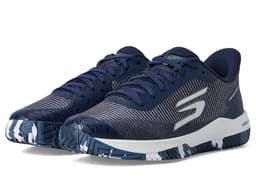
Skechers Pickleball Viper Court Pro 2.0 (Men's)

Our pick

Skechers Pickleball Viper Court Pro 2.0 (Men's)

The Skechers to buy if you are over 55 is the Pickleball Viper Court Pro 2.0, and the reason is two published lines rather than a performance claim: a removable Arch Fit EVA insole with podiatrist-certified arch support and Medium and Wide widths. If you wear a custom orthotic or your feet have broadened, that is the whole decision. Women should buy the women’s Viper Court Pro 2.0, which is the same published build. The budget pick is the Viper Court Smash at roughly half the money — a real court shoe, but one whose listing publishes no insole, no midsole, no outsole and no width, so buy it knowing you are buying on brand rather than on spec.

$94.90 · View on Amazon

$120.0021% off

Price as of November 23, 2026. #ad How we’re funded

Read the full write-up
By Stephen V.Last updated How we research

Skechers is not the brand a serious player names first, and that is exactly why it keeps turning up on our rankings for readers over 55. The company has spent a decade selling comfort to people whose feet hurt, and when it built a pickleball line it carried over the one feature almost nobody else in court footwear publishes: an insole you are allowed to take out.

That matters more than it sounds. If you already wear a prescribed orthotic, a shoe with a glued-in footbed is not a shoe you can play in — you either leave the orthotic at home or you lift your heel out of the heel counter. Across our whole registry only a handful of court shoes state that the insole comes out, and the Viper Court Pro 2.0 is the only one that states it alongside a published wide width. That is the finding this page is built on.

A note on what we can and cannot tell you. Skechers publishes a decent amount about the Pro 2.0 — the Arch Fit insole, the ULTRA GO foam midsole, the Goodyear Gold outsole compound, the mesh-and-overlay upper, the rubber toe guard, a 1 1/4 in heel height and the Medium/Wide width run. It publishes almost nothing about the Smash. And on both shoes the words “non-marking” appear nowhere, which matters if your venue inspects soles. Where a figure is not published the table below says so rather than carrying a number we would have had to invent. We own no units and have tested nothing.

How this is funded: we earn a commission if you buy through our links, at no extra cost to you. It never changes which product we recommend, and we’ll tell you plainly when to skip one. Full disclosure.

Quick picks

Ranked on published specs, grip and build, and honest buyer fit. Select a row to jump to the full write-up. We have not lab-tested these — here is exactly what we do instead.

#ProductBest forPrice
1
Skechers Pickleball Viper Court Pro 2.0 (Men's)

Skechers Pickleball Viper Court Pro 2.0 (Men's)

Skechers has quietly become a favorite of the 55+ pickleball crowd for one reason: comfort straight out of the box. The Viper Court Pro is a proper court shoe — lateral support and a grippy outsole — with the plush, forgiving feel Skechers is known for. No break-in misery.

Best overall — removable Arch Fit insole, Medium and Wide
$94.90 · View on Amazon

$120.0021% off

Price as of November 23, 2026. #ad How we’re funded

2
Skechers Pickleball Viper Court Pro 2.0 (Women's)

Skechers Pickleball Viper Court Pro 2.0 (Women's)

The women's cut of the shoe that's become a 55+ favorite. Same plush, no-break-in comfort and court-ready support in a women's-specific fit — the easy default for a woman who wants a comfortable, dependable pickleball shoe.

Best women's — the same published build
$89.99 · View on Amazon

$120.0025% off

Price as of November 23, 2026. #ad How we’re funded

3
Skechers Viper Court Smash (Men's)

Skechers Viper Court Smash (Men's)

The older, cheaper Viper Court tier, and the honest answer to “do I really need the Pro 2.0?” for some players. It is still a purpose-built pickleball shoe at roughly half the price, and if you play a couple of times a month indoors and your arches never complain, it is enough. What you give up is the two things the Pro 2.0 publishes and this one does not: a removable Arch Fit insole and the Goodyear Gold outsole.

Budget pick — cheapest Skechers court shoe we can price
$52.38 · View on Amazon

Price as of November 23, 2026. #ad How we’re funded

The picks in full

#1Best overall — removable Arch Fit insole, Medium and Wide

Skechers Pickleball Viper Court Pro 2.0 (Men's)

Skechers has quietly become a favorite of the 55+ pickleball crowd for one reason: comfort straight out of the box. The Viper Court Pro is a proper court shoe — lateral support and a grippy outsole — with the plush, forgiving feel Skechers is known for. No break-in misery.

Easier on the joints: Two of its published features matter more than the comfort it is famous for. The Arch Fit insole is removable, so this is a shoe you can put your own orthotic into — and the Goodyear Gold outsole is grip, which for a player over 60 is fall prevention rather than performance. A cushioned shoe that needs no break-in also keeps your gait normal, and a normal gait keeps load off your knees and hips.

What we like

  • Cushioned, forgiving feel with little to no break-in
  • A real court shoe with lateral support, not a walking sneaker
  • Popular with older players for all-day comfort

Skip it if

  • Not as low and locked-in as a racing-style court shoe
  • Some players want more lateral stiffness for aggressive play
TypePickleball court shoe (men's)
InsoleRemovable Arch Fit EVA (podiatrist-certified shape)
MidsoleULTRA GO foam
OutsoleGoodyear Gold compound, for “controlled slides”
Non-markingNot published
UpperMesh with synthetic overlays, rubber toe guard
Heel height1 1/4 in
Width optionsMedium and Wide
Heel-to-toe dropNot published

Specs read from the product listing, on September 6, 2026. “Not published” means the maker does not state that figure.

#2Best women's — the same published build

Skechers Pickleball Viper Court Pro 2.0 (Women's)

The women's cut of the shoe that's become a 55+ favorite. Same plush, no-break-in comfort and court-ready support in a women's-specific fit — the easy default for a woman who wants a comfortable, dependable pickleball shoe.

Easier on the joints: The Arch Fit insole comes out, which makes this one of the easier court shoes to fit an orthotic into — worth knowing if you already wear one. Comfortable, supportive footing also keeps your stride natural, which keeps your knees and hips tracking correctly instead of compensating for a pinching shoe.

What we like

  • Women's-specific fit and colorways
  • Cushioned comfort with minimal break-in
  • Genuine court support, not a fashion sneaker

Skip it if

  • Softer feel than a locked-in performance shoe
  • Availability by size varies
TypePickleball court shoe (women's)
InsoleRemovable Arch Fit EVA (podiatrist-certified shape)
MidsoleULTRA GO foam
OutsoleGoodyear Gold compound
UpperMesh with synthetic overlays, rubber toe guard
Heel height1 1/4 in
Width optionsMedium and Wide
Heel-to-toe dropNot published

Specs read from the product listing, on September 6, 2026. “Not published” means the maker does not state that figure.

#3Budget pick — cheapest Skechers court shoe we can price

Skechers Viper Court Smash (Men's)

The older, cheaper Viper Court tier, and the honest answer to “do I really need the Pro 2.0?” for some players. It is still a purpose-built pickleball shoe at roughly half the price, and if you play a couple of times a month indoors and your arches never complain, it is enough. What you give up is the two things the Pro 2.0 publishes and this one does not: a removable Arch Fit insole and the Goodyear Gold outsole.

Easier on the joints: We would not choose this one to protect a joint, and we would rather say so. The two Pro 2.0 features that actually matter to an older player — an arch-supporting insole you can swap for an orthotic, and a grippier outsole — are precisely the two this model does not publish. If your feet are fine and you play indoors, that may not matter. If you have heel or arch pain, spend the extra.

What we like

  • Roughly half the price of the Pro 2.0 and still a real court shoe
  • Relaxed Fit cut is roomy through the toes, which suits a broad forefoot

Skip it if

  • Skechers has retired its own spec page for it (HTTP 410), so nothing about its insole, midsole or outsole can be verified first-hand — every spec cell below reads “Not published” for that reason
  • No published Arch Fit insole, so no stated arch support and no confirmation the liner comes out for an orthotic
  • No published Goodyear outsole — grip is the one spec we would not economize on for a player worried about falls
  • A discontinued model: no restocks to count on and no width support to assume
TypePickleball court shoe (men's)
InsoleNot published
MidsoleNot published
OutsoleNot published
Width optionsNot published
Heel-to-toe dropNot published

Specs read from the product listing, on September 6, 2026. “Not published” means the maker does not state that figure.

The two Skechers platforms, and the gap between them

Skechers sells these as one family, but in terms of what you can actually verify before paying they are two different propositions.

  • Viper Court Pro 2.0 — the specified one. Skechers’ own product page names a patented Arch Fit EVA insole system with podiatrist-certified arch support, states that the insole is removable, names an ULTRA GO foam midsole, and names a Goodyear Gold compound outsole built for “controlled slides specifically on the court surface”. The upper is breathable mesh with synthetic overlays and a rubber toe guard, the heel height is published at 1 1/4 in, and the width run is Medium and Wide. Sold in men’s and women’s cuts on the same platform.
  • Viper Court Smash — the cheap one. A genuine pickleball court shoe at around half the Pro 2.0’s price, and that is the end of what we can say with a source behind it. The listing publishes no insole description, no midsole, no outsole compound, no width options and no heel-to-toe drop. Every one of those cells reads “Not published” in the table above, which is itself the information: you are buying the shape of a court shoe without the detail that would let you match it to your foot.

For most readers of this site the gap between those two listings is worth the price difference. Published senior-injury data makes falls and sprains the dominant pickleball problem after 60 — strains and sprains at 31.0% of emergency visits, fractures at 30.4%, with ground-level falls behind more than half of geriatric pickleball injuries. A footbed that holds your arch where your podiatrist wants it, in a width that does not squeeze a broadened forefoot, is the kind of boring equipment choice that quietly removes a stumble.

The orthotic question, answered properly

This is the reason to buy Skechers rather than the brands with better reputations. The Pro 2.0’s insole is published as removable, in both the men’s and the women’s cut. That means the volume your orthotic needs is already in the shoe, and you are not stacking a custom device on top of a fixed footbed.

Two honest caveats. First, Skechers does not publish the insole’s thickness, so we cannot tell you how much room comes back when you pull it out — if your orthotic is a thick rigid shell, take it to the fitting. Second, “podiatrist-certified” is Skechers’ own program language for the stock Arch Fit shape. It is not a clinical endorsement of the shoe for your foot and it is not a substitute for a device somebody measured you for. If you are buying around plantar fasciitis specifically, read our best pickleball shoes for plantar fasciitis page, where the choice is argued against the published heel structure of the whole field rather than inside one brand.

Width: what Skechers offers that the rest of the field does not

Court footwear is notoriously single-width, and the brands most associated with pickleball are the worst offenders: both men’s K-Swiss models we list come in one width, and across four ASICS court shoes we could find exactly one published width option in total. Skechers publishes Medium and Wide on the Viper Court Pro 2.0.

It is not the widest shoe we list — the only published 4E in our registry is the New Balance 1007, and that comparison belongs on best pickleball shoes for wide feet along with the rest of the brand-by-brand width picture on best New Balance pickleball shoes. But a Wide you can buy for under a hundred dollars, in a shoe whose insole comes out, covers most broad-footed players without sending them into a tennis shoe.

What Skechers does not publish, and why it matters here

Three absences are worth your attention before you buy.

  • No non-marking claim. The phrase does not appear on the Pro 2.0’s page, and the Smash publishes nothing about its outsole at all. We are not claiming either shoe marks a floor — we have no idea. We are telling you that if your gym, church hall or community center has a written non-marking rule, neither of these is a shoe you can prove compliance with. The shoes in our registry that do publish a non-marking outsole are the K-Swiss Express Light and the Fila Volley Zone, both covered on best indoor pickleball shoes.
  • No published weight. Not for any of the three. Weight is the spec we lean on hardest for older players, because a shoe you can still place precisely in the third game is a fall-prevention feature, and we cannot rank these on it. If weight is your priority, the published figures live on best lightweight pickleball shoes.
  • No heel-to-toe drop. True of essentially the whole court-shoe category, so this is not a Skechers failing — but it does mean that if a clinician has told you to look for a particular drop, court shoes are not where that number is published.

How this page is ranked, and the budget pick stated plainly

We own no units, run no lab and have worn none of these shoes. Every figure above is read from Skechers’ own product page for the Viper Court Pro 2.0, or from the Amazon listing each product’s own source row points at, on the date shown there. There are no scores on this page because a score would dress spec-reading up as testing.

The budget pick is the Viper Court Smash, and we want to be exact about what that recommendation is: it is the cheapest shoe here that is genuinely built for a court rather than a treadmill, and for a casual indoor player with no arch complaint that is enough. It is not a quiet downgrade of the Pro 2.0 — it is a different purchase, made on brand and shape instead of published detail. If your feet already hurt, spend the extra and get the insole you can remove.

Prices come from the live price layer with an “as of” date attached, so a discount cannot silently reorder the page: the ranking is on published specs and buyer fit. If you would rather compare across brands than inside one, the brand-agnostic versions of this page are best pickleball shoes for seniors and best pickleball shoes under $100.
Frequently asked questions

Are Skechers good for pickleball?

The Pickleball Viper Court Pro 2.0 is, and for a specific reason: Skechers publishes a removable Arch Fit EVA insole with podiatrist-certified arch support, an ULTRA GO foam midsole, a Goodyear Gold outsole built for controlled slides on court, and both Medium and Wide widths. That removable-insole-plus-wide combination is unique in our registry, and it is what an older foot or an orthotic wearer actually needs. Ordinary Skechers walking or lifestyle shoes are not court shoes and will not hold your foot through a sideways push.

Viper Court Pro 2.0 or Viper Court Smash?

Spend up on the Pro 2.0 if your feet hurt, if you wear an orthotic, or if you need a wide. Skechers publishes the insole, midsole, outsole compound, heel height and width run on the Pro 2.0 and publishes none of those on the Smash. The Smash is about half the price and is a genuine court shoe, so it is a reasonable buy for a casual indoor player with no arch complaint who wants to stop playing in running shoes. You are just buying it on brand rather than on specification.

Can you put orthotics in Skechers pickleball shoes?

Skechers publishes the Viper Court Pro 2.0's EVA insole as removable, which is what makes room for a custom device. It does not publish the insole's thickness, so we cannot tell you exactly how much depth you get back — if your orthotic is a thick rigid shell, try the combination before committing. The Viper Court Smash publishes nothing about its insole either way, so do not assume it comes out.

Do Skechers pickleball shoes come in wide widths?

The Viper Court Pro 2.0 is published in Medium and Wide, in both the men's and the women's cut. That is better than most of the field: both men's K-Swiss models we list are single-width, and across four ASICS court shoes we found one published width option in total. If you need more than a Wide, the only court shoe in our registry sold in a published 4E is the New Balance 1007.

Are Skechers pickleball shoes non-marking and gym legal?

Not provably. The words 'non-marking' do not appear on the Viper Court Pro 2.0's own product page, and the Viper Court Smash's listing publishes nothing about its outsole at all. We are not saying they mark floors — nobody publishes either answer. If your venue has a written non-marking rule, buy a shoe whose claim you can point at, such as the K-Swiss Express Light or the Fila Volley Zone.

How much do Skechers pickleball shoes weigh?

Skechers does not publish a weight for any of the three shoes on this page, so our table says 'Not published' rather than carrying a figure. That is a genuine gap for our readers, because weight is one of the few court-shoe specs with a direct line to fall risk in older players. If weight is your deciding factor, the shoes in our registry that do publish one are listed on our lightweight page.

Sources

  • Skechers - Pickleball Viper Court Pro 2.0 (maker's product page) — Outsole: 'Goodyear Gold compound, built for increased durability to allow the elite player to perform controlled slides specifically on the court surface.' The words 'non-marking' do NOT appear anywhere on this model's page. Insole: 'Patented Skechers Arch Fit EVA insole system with podiatrist-certified arch support', 'Removable EVA insole'. Midsole: 'Lightweight, responsive ULTRA GO Foam midsole cushioning'. Upper: 'Innovative durable yet breathable mesh technology with synthetic overlays and a lace-up front' plus a 'Rubber toe guard for lasting durability'. Width shown: Medium Wide. Described as 'Built for the elite pickleball athlete' and also suitable for 'padel and tennis game play'; no indoor-vs-outdoor distinction is stated (accessed October 11, 2026)
  • Non-fatal senior pickleball and tennis injuries in US EDs, 2010–2019 — Injury Epidemiology (2021) — For players 60+: strains/sprains 31.0%, fractures 30.4%; the wrist is the single most-injured body part (13.2%); women 3.7x more likely to fracture (accessed July 22, 2026)
  • Pickleball-Related Geriatric Fractures — Arthroscopy, Sports Medicine & Rehabilitation (2025) — Adults 60+ account for 74.1% of pickleball ED visits and are 1.6x more likely to fracture; 56.1% of geriatric injuries are ground-level falls; women 3x higher fracture odds (accessed July 22, 2026)
  • American Academy of Orthopaedic Surgeons (OrthoInfo) — Plantar Fasciitis and Bone Spurs — AAOS: plantar fasciitis is most common between ages 40 and 60, and repetitive high-impact activity is a named risk factor; more than 90% of patients improve within 10 months of starting simple treatment. Footwear guidance: 'Shoes with thick soles and extra cushioning can reduce pain with standing and walking', soft silicone heel pads work by elevating and cushioning the heel, pre-made or custom shoe inserts are also helpful, and old athletic shoes should be replaced before they wear out (accessed August 31, 2026)
  • American Academy of Orthopaedic Surgeons (OrthoInfo) — Progressive Collapsing Foot Deformity (Adult Acquired Flatfoot / Posterior Tibial Tendon Dysfunction) — Adult flatfoot typically begins with dysfunction of the posterior tibial tendon, which supports the arch. Causes include midfoot arthritis or loose ligaments, injury, overuse from 'high-impact sports, such as basketball, tennis, or soccer', and non-supportive footwear such as sandals. Risk factors: women, age over 40, obesity, diabetes, hypertension. Symptoms: 'pain in the arch or along the inside of the foot and ankle', 'pain and weakness with activity', pain worse in non-supportive footwear, and pain on the outside of the ankle as it progresses. Nonsurgical care: switching to low-impact exercise, weight loss, ice, NSAIDs, physical therapy, immobilization for flare-ups, and orthotics — 'an orthotic is a shoe insert designed to support and position the foot', over-the-counter for mild cases, custom for moderate-to-severe (accessed September 18, 2026)
  • American Academy of Orthopaedic Surgeons (OrthoInfo) — Bunions — 'A bunion is a painful bony bump that develops on the inside of the foot at the big toe joint.' More common in women than men and in adulthood; up to 70% of people with bunions have a family history; narrow, pointed toe boxes that force the toes into an unnatural position are a contributor. Footwear advice: 'Choose shoes with wide insteps, broad toe boxes, soft soles, and plenty of stability' and 'avoid shoes that are too short, tight, or sharply pointed, and shoes with heels higher than a couple of inches'; shoe stretchers, silicone pads, over-the-counter or custom orthotics and toe spacers are listed as nonsurgical measures (accessed September 18, 2026)

Keep reading