Kitchen & Court

Bauerfeind EpiTrain Alternatives

The EpiTrain is a medical-grade knitted elbow support in six numbered sizes, and it is the most seriously made elbow brace we list. It also costs five to ten times what the rest of the category does. Four registry alternatives, each matched to the specific reason people go looking.

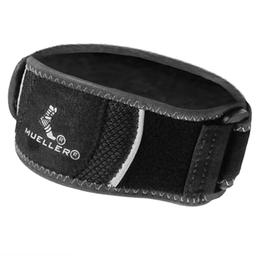
Mueller Hg80 Premium Tennis Elbow Support

Our pick

Mueller Hg80 Premium Tennis Elbow Support

The closest alternative to the EpiTrain is the Mueller Hg80 Premium Tennis Elbow Support, because it is the only one here that keeps the EpiTrain’s basic form: a compression sleeve with targeted counterforce pressure built in, rather than a bare strap, and sold in two fitted sizes (S/M and L/XL) rather than one-size-fits-all. That combination — compression around the joint plus pressure on the tendon, in a size you choose — is what you were paying Bauerfeind for, at a small fraction of the money. If the sleeve is the part you did not want, the Mueller gel-pad strap is the best pure counterforce strap we list; if you do not know your forearm measurement, the Sleeve Stars brace fits a 9–23 in range. The budget pick is the CAMBIVO two-pack, which is the cheapest honest way to find out whether a strap helps you at all. Prices are live, with the “as of” date on every row.

$18.97 · View on Amazon

Price as of November 23, 2026. #ad How we’re funded

Read the full write-up
By Stephen V.Last updated How we research

First, the fair case for the brace you are thinking of replacing, because it is a good one and this page is not an argument against it.

The Bauerfeind EpiTrain is the most seriously made elbow support in our registry. It is an anatomically knitted, medical-grade compression support — which means the fabric is engineered to compress harder in some zones than others and to sit against specific landmarks around the joint, rather than squeezing the whole arm the same amount the way a neoprene sleeve does. And it is sold in six numbered sizes, which matters more than it sounds: for a brace, fitis function, and a support that slides out of position twice a game is doing nothing at the bottom of the third. Nothing else in this category we can buy offers either of those things. It tops our best elbow braces for pickleball list for chronic, long-running elbow pain for exactly those reasons, and it is a pick on best pickleball braces under $100.

So why does anyone need alternatives? Price, overwhelmingly. The EpiTrain sits at the top of its category while the rest of the elbow aisle sits in single and low double digits — it is a five-to-tenfold step, not a small premium. Two other reasons come up often enough to design this page around:

  • You have to measure and order a numbered size. Six sizes is a feature when you get it right and a returns problem when you do not, and plenty of people would rather buy something adjustable.
  • You do not know yet whether a brace helps you at all. This is the honest one. If your elbow has been sore for three weeks, spending the EpiTrain’s money before you know whether external support does anything for your particular arm is the wrong order of operations.

Each pick below answers one of those. We own none of these braces, have worn nothing, and nothing on this page treats anything — a brace supports, and an elbow that keeps hurting belongs in front of a clinician. Published orthopaedic guidance on tennis elbow is consistent that the mechanism is repeated impact and grip loading of the forearm tendons, and that an equipment check sits alongside rest and strengthening in the non-surgical options. That shapes the whole page: the cheapest fix is often not a brace at all.

How this is funded: we earn a commission if you buy through our links, at no extra cost to you. It never changes which product we recommend, and we’ll tell you plainly when to skip one. Full disclosure.

Quick picks

Ranked on published specs, grip and build, and honest buyer fit. Select a row to jump to the full write-up. We have not lab-tested these — here is exactly what we do instead.

#ProductBest forPrice
1
Mueller Hg80 Premium Tennis Elbow Support

Mueller Hg80 Premium Tennis Elbow Support

The middle path: a fitted sleeve that adds warmth and compression, with the counterforce pressure built into it rather than strapped on separately. If a bare strap has always felt like it was digging in, this spreads the same job over more of the forearm — for a few dollars more than the plain strap.

Closest alternative — sleeve plus counterforce, in fitted sizes
$18.97 · View on Amazon

Price as of November 23, 2026. #ad How we’re funded

2
Mueller Tennis Elbow Brace with Gel Pad

Mueller Tennis Elbow Brace with Gel Pad

The classic counterforce strap, done properly. It wraps below the elbow and presses a gel pad into the forearm muscle so the tendon at the joint takes less of the pull on every hit. One size with a hook-and-loop closure means no sizing chart to get wrong, and Mueller is the name most physical therapy rooms already stock.

Best pure counterforce strap — gel pressure pad
$14.47 · View on Amazon

Price as of November 23, 2026. #ad How we’re funded

3
Sleeve Stars Tennis Elbow Brace

Sleeve Stars Tennis Elbow Brace

A wide-range adjustable strap that fits forearms from 9 to 23 inches, which is unusually generous — it will fit a slight frame and a heavy one out of the same box. A sensible pick if you've had a brace arrive that wouldn't cinch down far enough, or if you're buying for someone else and don't know their measurements.

Best if you don't know your measurement — fits 9-23 in
$16.95 · View on Amazon

Price as of November 23, 2026. #ad How we’re funded

4
CAMBIVO Tennis Elbow Brace Strap (2-Pack)

CAMBIVO Tennis Elbow Brace Strap (2-Pack)

Two straps for less than the price of one from most brands. There's nothing clever here — it's a basic adjustable counterforce band — but that's the point: if you're not sure a strap will help your elbow at all, this is the cheapest honest way to find out, and the second one lives in the car.

Budget pick — the cheapest way to find out if a strap helps
$7.19 · View on Amazon

$15.9955% off

Price as of November 23, 2026. #ad How we’re funded

The picks in full

#1Closest alternative — sleeve plus counterforce, in fitted sizes

Mueller Hg80 Premium Tennis Elbow Support

The middle path: a fitted sleeve that adds warmth and compression, with the counterforce pressure built into it rather than strapped on separately. If a bare strap has always felt like it was digging in, this spreads the same job over more of the forearm — for a few dollars more than the plain strap.

Easier on the joints: Spreading the counterforce pressure across a sleeve rather than a single band means less of a hot spot on the forearm, which is usually why players abandon a plain strap halfway through a session.

What we like

  • Sleeve plus targeted pressure in one piece — nothing to slip out of position
  • Warmth and compression a strap alone doesn't give
  • Mueller's premium line, still under twenty dollars

Skip it if

  • Sized S/M and L/XL — check your forearm measurement
  • A full sleeve is warmer than a strap on a hot day
TypeCompression sleeve with counterforce support
Support levelCompression + targeted pressure
SizingS/M and L/XL (per listing)
Key featureHg80 premium construction

Specs read from the product listing, on August 19, 2026. “Not published” means the maker does not state that figure.

#2Best pure counterforce strap — gel pressure pad

Mueller Tennis Elbow Brace with Gel Pad

The classic counterforce strap, done properly. It wraps below the elbow and presses a gel pad into the forearm muscle so the tendon at the joint takes less of the pull on every hit. One size with a hook-and-loop closure means no sizing chart to get wrong, and Mueller is the name most physical therapy rooms already stock.

Easier on the joints: A counterforce strap doesn't support the elbow — it changes where the load lands. By pressing on the muscle belly an inch or two below the sore spot, it gives the forearm tendons a second anchor point, so less of every impact pulls directly on the inflamed attachment at the bone.

What we like

  • Gel pad concentrates the pressure where a counterforce strap actually works
  • One size, adjustable closure — nothing to size wrong
  • Cheap enough to keep one in the bag and one in the car

Skip it if

  • A strap alone gives no warmth or joint compression
  • Too tight and it aches; the tension takes a session or two to dial in
TypeCounterforce strap
Support levelTargeted pressure, no joint compression
SizingOne size, adjustable (per listing)
Key featureGel pressure pad

Specs read from the product listing, on August 19, 2026. “Not published” means the maker does not state that figure.

#3Best if you don't know your measurement — fits 9-23 in

Sleeve Stars Tennis Elbow Brace

A wide-range adjustable strap that fits forearms from 9 to 23 inches, which is unusually generous — it will fit a slight frame and a heavy one out of the same box. A sensible pick if you've had a brace arrive that wouldn't cinch down far enough, or if you're buying for someone else and don't know their measurements.

Easier on the joints: Being able to dial the tension down matters more than most buyers expect: a strap cranked tight all session can leave the forearm aching on its own, and the right pressure changes from a sore day to a good one.

What we like

  • Fits 9-23 inch forearms per the listing — the widest range here
  • Adjustable pressure, so you can back it off on a good day
  • Works for golfer's elbow (inside) as well as tennis elbow (outside)

Skip it if

  • A strap only — no warmth or all-round joint compression
  • The wide adjustment range means more excess strap to tuck away
TypeAdjustable counterforce strap
Support levelTargeted pressure
SizingFits 9"-23" forearm (per listing)
Key featureWide adjustment range

Specs read from the product listing, on August 19, 2026. “Not published” means the maker does not state that figure.

#4Budget pick — the cheapest way to find out if a strap helps

CAMBIVO Tennis Elbow Brace Strap (2-Pack)

Two straps for less than the price of one from most brands. There's nothing clever here — it's a basic adjustable counterforce band — but that's the point: if you're not sure a strap will help your elbow at all, this is the cheapest honest way to find out, and the second one lives in the car.

Easier on the joints: The cheapest way to test the counterforce idea on your own elbow. If a few dollars of strap takes the edge off, you've learned something before spending on a medical-grade support; if it doesn't, you're barely out of pocket.

What we like

  • Two-pack at the lowest price in this list
  • Simple adjustable band — nothing to break
  • Fine for both elbows, or one in the bag and one at home

Skip it if

  • Basic materials compared with the Mueller and Bauerfeind options
  • No gel pad — pressure is spread by the band alone
TypeCounterforce strap
Support levelTargeted pressure
SizingAdjustable (per listing)
Quantity2 per pack (per listing)

Specs read from the product listing, on August 19, 2026. “Not published” means the maker does not state that figure.

The form decision, which comes before the brand decision

Elbow supports come in two shapes and they do genuinely different jobs. Getting this right matters more than which logo is on it, and it is the reason the picks above are ordered the way they are.

  • A compression sleeve wraps the joint, holds it warm and delivers even or zoned compression around it. That is the EpiTrain’s family. It suits an elbow that aches persistently, that stiffens between sessions, and that you want held all day rather than only while you play.
  • A counterforce strap sits on the forearm muscle an inch or two below the joint and presses into it, diverting grip load away from the tendon attachment. It suits pain that appears during play and settles afterwards. It is cheap, adjustable, and does nothing for stiffness.

Three of our four alternatives are straps. One — the Hg80 — is a sleeve that also carries counterforce pressure, which is why it is our pick: it is the only listing here that stays in the EpiTrain’s category rather than substituting a different tool and hoping you do not notice. If you are not sure which form your elbow wants, we have written that decision up on its own at elbow strap vs elbow sleeve, and how to position either one is on how to wear an elbow brace.

Mueller Hg80 Premium Tennis Elbow Support: the closest match

Mueller publishes this as a compression sleeve with counterforce support — so compression plus targeted pressure, both — in S/M and L/XL sizes, under its Hg80 premium construction. On the two things that make the EpiTrain worth its money, this is the only alternative here that scores at all: it keeps the sleeve form, and it is sold in more than one size so the fit is a choice rather than an accident.

It is also the pick for a specific and common complaint: players who find a bare strap uncomfortable. A counterforce strap works by pressing hard into the muscle, and some arms simply will not tolerate that for two hours. A sleeve that distributes some of the work around the joint is the answer for those readers, and the Hg80 does it for a fraction of the EpiTrain’s price.

Honest cons. Two sizes is not six, so the fit is coarser than Bauerfeind’s — if your arm sits near a size boundary, that is a real risk. Mueller publishes no compression class and no mmHg figure, so “compression” here is a description rather than a measurement, where the EpiTrain’s whole proposition is engineered, zoned knitting. And it is a sleeve, so it is warmer and bulkier on court than a strap — which is the point in cold weather and a nuisance in July.

Mueller Tennis Elbow Brace with Gel Pad: the best pure strap

If what you actually want is a counterforce strap — cheap, light, invisible under a sleeve, on and off in five seconds — this is the one we rank first in that form, and it is our top pick on best elbow braces for pickleball for the same reason. Mueller publishes it as a counterforce strap delivering targeted pressure with no joint compression, in one adjustable size, and the feature that earns it the ranking is the gel pressure pad: the pad is what concentrates force into the muscle belly instead of letting a flat band squeeze the whole forearm.

For pain that flares up during play and settles afterwards, this is the right tool and the EpiTrain is arguably the wrong one — not a cheaper substitute but a better match to that pattern.

Honest cons. It is a strap, so it does nothing for stiffness between sessions, nothing for warmth, and nothing for an elbow that aches at rest. One size, adjustable, means no fitted option at all if your forearm is unusually large or small. And it delivers no joint compression by design, which is the honest line between this and the EpiTrain: they are not competing products so much as different answers.

Sleeve Stars Tennis Elbow Brace: the one to buy sight-unseen

This is the pick for a very specific situation, and it is a common one: you are buying online, you do not have a tape measure to hand, and you do not want to discover the sizing was wrong a week later. Sleeve Stars publishes a fit range of 9–23 in of forearm circumference on an adjustable counterforce strap — a span wide enough that almost nobody falls outside it.

Against the EpiTrain that is the exact inverse trade. Bauerfeind asks you to measure and commit to one of six numbered sizes, and rewards you with a fit nothing else matches. Sleeve Stars asks you to measure nothing. If the measuring step is what has stopped you buying, start here.

Honest cons. A wide adjustment range is a different thing from a good fit — a brace that can be cinched onto any arm is not tailored to yours, and at the extremes of that 9–23 in span the geometry of the pad relative to the muscle will not be ideal. It is a strap, so all the strap limitations above apply. And like every budget brace here it publishes no compression figure and no material breakdown.

CAMBIVO two-pack: the budget pick, and the one we would try first

This is the cheapest elbow support we list, it is a counterforce strap with adjustable sizing, and it comes two to a pack. We have made it the budget pick for a reason that has nothing to do with it being the best brace on the page, because it is not.

It answers the question you should answer before spending EpiTrain money: does external support help my elbow at all? For the price of a couple of coffees you find out, and if the answer is yes you then know what to buy properly. If the answer is no — and for some arms it is — you have saved yourself the better part of a hundred dollars and you can put it toward the thing that more often works, which we come to below.

The two-pack has a second practical use worth naming: one in the bag and one at home, so the brace is never the reason you skipped it. Braces get left in the car.

Honest cons. It is the thinnest spec sheet here — a type, a support level, an adjustable size and a quantity, with no published materials, no compression figure and no measured fit range. It is a bare strap, so it does the least of anything on this page: no warmth, no joint compression, no help with stiffness. And a two-pack of the cheapest option is a diagnostic purchase, not a long-term one. Treat it as a test, not as the answer.

What the EpiTrain does that none of these do

We would rather be straight about this than sell you a downgrade as an equal. Two things are genuinely missing from every alternative above:

  • Zoned, anatomically knitted medical-grade compression. Every alternative here delivers either flat pressure from a pad or undifferentiated squeeze from a sleeve. None is engineered to compress differently in different places around the joint. If a clinician has specifically pointed you at a medical-grade knitted support, none of these is that.
  • Six numbered sizes. The best any alternative manages is two, and the rest are one-size-adjustable. For an arm at the far end of the size distribution, that difference is the difference between a brace that works and one that migrates.

So if your elbow pain is chronic rather than recent, if it aches at rest and stiffens between sessions, and if cheap straps have already failed you, the EpiTrain is a defensible purchase and we say so on the pages where it appears. This page is for everyone else.

Before you buy any brace, the cheaper fix

The most useful thing on this page might be the suggestion to spend the money somewhere else entirely. Published orthopaedic guidance lists an equipment check among the non-surgical approaches to tennis elbow, and in this sport the equipment that loads your forearm tendons is the paddle in your hand.

Two changes do more for most players than any brace. First, a thicker paddle core: a 16 mm polymer honeycomb puts more deformable material between your hand and the ball than a 13 mm one, so less impact arrives at the tendon on every single shot. Second, a grip you do not have to clench: squeezing is what loads the forearm, and a handle that is too thin forces you to clamp. An overgrip costs a few dollars and each wrap adds roughly a sixteenth of an inch to the circumference.

Both are covered properly on best pickleball paddles for tennis elbow, best grips for tennis elbow and tennis elbow from pickleball, which also covers technique and playing frequency — the two factors that matter at least as much as anything you can buy. If your pain is on the inside of the elbow rather than the outside, that is a different problem: see best braces for golfer’s elbow.

How this page is ranked, and what we do not claim

We own none of these braces, run no lab and have worn nothing. There are no scores, because a score would imply a test we did not run, and no awards we invented. Every published figure above is read from the maker’s own page or from the Amazon listing named in each product’s source row, on the date shown there. Where a maker publishes no compression class, no materials or no measured fit range — which in this category is the norm below the medical brands — our tables say “Not published” rather than carrying a figure we would have had to invent.

The ordering is by how closely each alternative matches what the EpiTrain actually does: form first (sleeve versus strap), then fitted sizing, then published detail, then price. The EpiTrain itself is deliberately not a pick on this page — you arrived here having already considered it, so the comparison you need is between the things you could buy instead. Its own ranking sits on best elbow braces for pickleball and best pickleball braces under $100. Prices come from the live price layer with an “as of” date attached, so a discount cannot silently reorder the page. Nothing here is medical advice.
Frequently asked questions

What is the best alternative to the Bauerfeind EpiTrain?

The Mueller Hg80 Premium Tennis Elbow Support, because it is the only one that keeps the EpiTrain's form: a compression sleeve that also carries targeted counterforce pressure, sold in two fitted sizes (S/M and L/XL) rather than one-size-adjustable. Compression around the joint plus pressure on the tendon, in a size you choose, is what the EpiTrain's price mostly buys — and the Hg80 delivers a coarser version of it for a small fraction of the money. If you wanted a strap rather than a sleeve, the Mueller gel-pad strap is the better pick.

What is the Bauerfeind EpiTrain known for?

Two things nothing else in the category offers. It is an anatomically knitted, medical-grade compression support, which means the fabric is engineered to compress harder in some zones than others and to sit against specific landmarks around the joint, rather than squeezing the whole arm evenly. And it is sold in six numbered sizes, where the best alternative we list manages two. It is the most seriously made elbow support in our registry and it tops our elbow ranking for chronic, long-running pain.

Is there a cheap alternative to the EpiTrain that actually works?

Start with the CAMBIVO two-pack, which is the cheapest elbow support we list and comes two to a pack. We rank it last on quality and name it the budget pick anyway, because it answers the question you should answer before spending EpiTrain money: does external support help your elbow at all? If yes, buy something better — the Mueller Hg80 or the Mueller gel-pad strap. If no, you have saved most of a hundred dollars. A two-pack also means one in the bag and one at home, so the brace is never the reason you skipped it.

Should I buy a strap or a sleeve for tennis elbow?

It depends on when the pain shows up. A counterforce strap sits on the forearm muscle an inch or two below the joint and presses into it, diverting grip load away from the tendon attachment — right for pain that appears during play and settles afterwards. A compression sleeve wraps the joint, holds it warm and delivers compression around it — right for an elbow that aches persistently and stiffens between sessions. The EpiTrain is a sleeve; three of our four alternatives are straps, and the Mueller Hg80 is both.

I don't know my forearm measurement. Which should I buy?

The Sleeve Stars brace, which publishes a fit range of 9-23 in of forearm circumference on an adjustable counterforce strap — wide enough that almost nobody falls outside it. That is the exact inverse of the EpiTrain's trade: Bauerfeind asks you to measure and commit to one of six numbered sizes and rewards you with a fit nothing else matches; Sleeve Stars asks you to measure nothing. Be aware that a wide adjustment range is not the same as a good fit, and at the extremes of that span the pad will not sit ideally.

Is a brace the best thing to spend money on for pickleball elbow pain?

Often not, and we would rather say so. Published orthopaedic guidance lists an equipment check among the non-surgical approaches to tennis elbow, and in this sport the equipment loading your forearm tendons is the paddle. Two changes do more for most players than any brace: a thicker paddle core — 16 mm of polymer honeycomb puts more deformable material between your hand and the ball than 13 mm, so less impact reaches the tendon on every shot — and a grip you do not have to clench, which an overgrip fixes for a few dollars. Our tennis-elbow paddle and grip pages cover both.

Sources

  • A Review of Physiotherapy Techniques Used in the Treatment of Tennis Elbow — PMC (2023) — Lateral epicondylitis is an overuse tendinopathy of the forearm extensors; conservative care — rest, bracing/counterforce straps and graduated loading — is the mainstay (accessed July 22, 2026)
  • American Academy of Orthopaedic Surgeons (OrthoInfo) - Tennis Elbow (Lateral Epicondylitis) — AAOS: tennis elbow 'involves the degeneration (wearing down) or, in some cases, microtearing of the tendons that join the forearm muscles on the outside of the elbow', specifically the extensor carpi radialis brevis (ECRB) where it attaches to the lateral epicondyle. Symptoms: 'Pain or burning on the outer part of your elbow', 'Weak grip strength', 'Sometimes, pain at night', 'often worsened with forearm activity, such as holding a racquet, turning a wrench, or shaking hands'. Most people who get it are 'between the ages of 30 and 50'. THE PLACEMENT SENTENCE: 'Using a brace centered over the back of your forearm may also help relieve symptoms of tennis elbow. This can reduce symptoms by resting the muscles and tendons.' AAOS calls this a counterforce brace - it is NOT worn on the elbow joint itself. 'Approximately 80 to 95% of patients have success with nonsurgical treatment', beginning with rest: 'you will have to stop or decrease participation in sports, heavy work activities, and other activities that cause painful symptoms for several weeks'. AAOS also lists an EQUIPMENT CHECK as treatment: 'Stiffer racquets and looser-strung racquets often can reduce the stress on the forearm, which means that the forearm muscles do not have to work as hard.' Steroid injections 'should be used very sparingly for lateral epicondylitis, as excessive use can weaken the lateral epicondyle'. Surgery is considered only 'if your symptoms do not respond after 6 to 12 months of nonsurgical treatments' (accessed October 17, 2026)
  • American Academy of Orthopaedic Surgeons (OrthoInfo) - Therapeutic Exercise Program for Epicondylitis (Tennis Elbow / Golfer's Elbow) — AAOS treats the two conditions as one rehabilitation problem and names them in the same sentence: 'Tennis elbow (lateral epicondylitis) and golfer's elbow (medial epicondylitis) are painful conditions caused by overuse. Over time, the forearm muscles and tendons become damaged from repeating the same motions again and again. This leads to pain and tenderness around the elbow.' On what the exercises are for: 'Specific exercises to stretch and strengthen the muscles attached to the injured tendon will help with the healing process. The early goal of a therapeutic exercise program is to promote muscle endurance and improve resistance to repetitive stress.' AAOS states the program 'should be performed under your doctor's supervision'. Written and/or reviewed by a member of the American Shoulder and Elbow Surgeons (ASES) (accessed October 17, 2026)
  • Non-fatal senior pickleball and tennis injuries in US EDs, 2010–2019 — Injury Epidemiology (2021) — For players 60+: strains/sprains 31.0%, fractures 30.4%; the wrist is the single most-injured body part (13.2%); women 3.7x more likely to fracture (accessed July 22, 2026)
  • USA Pickleball — Equipment Standards Manual — The manufacturing specifications and testing (including the PBCoR power test) paddles must meet to be approved (accessed July 22, 2026)

Keep reading