Kitchen & Court

Best Pickleball Braces Under $100

The $50-to-$100 band is where a brace stops being a compression sleeve and starts being a structure — knitted medical-grade knee and elbow supports, a guarded ankle brace with a strong rating, a hinged knee brace. Five we can price live, ranked by what the maker actually publishes.

Bauerfeind GenuTrain Knee Brace

Our pick

Bauerfeind GenuTrain Knee Brace

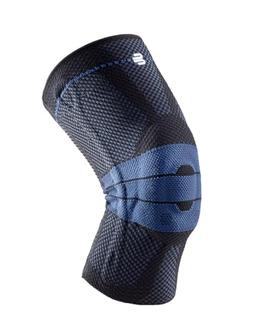
If one brace under a hundred dollars has to be the answer, it is the Bauerfeind GenuTrain — because the knee is what stops older pickleball players, and this is a knitted medical-grade brace with a patella support and measured sizing rather than a one-size tube of neoprene. If your trouble is the elbow instead, buy its sibling the EpiTrain; if it is a rolled ankle, the Zamst A2-DX is the strongest support we list at any price. The budget pick in this band is the Med Spec ASO at around a third of the ceiling — the cheapest brace here that is genuinely structural rather than merely snug. Prices are live, with the “as of” date on every row.

$79.92 · View on Amazon

$99.9020% off

Price as of November 23, 2026. #ad How we’re funded

Read the full write-up
By Stephen V.Last updated How we research

We already have a page for braces under fifty dollars, and for most readers that is the right page. This one exists because something specific happens to braces between fifty and a hundred dollars: they stop being compression and start being construction. Below fifty you are buying elastic, warmth and a little proprioceptive feedback. In this band you are buying contoured viscoelastic pads, moulded guards, hinges, numbered size runs and knitting engineered to pull in different directions in different places.

Four of the five braces here are over the fifty-dollar line, so this is not the same list with the prices moved — it is the step up, and the question it answers is “I have tried a sleeve and it is not enough”. That is a very common sentence on a 55-plus court. Published senior-injury data makes strains and sprains 31.0% of pickleball emergency visits in older adults, with fractures at 30.4% and ground-level falls behind more than half of geriatric injuries. A joint that has already given way once is the joint worth spending real money on.

Two things we will not do. We will not tell you a brace treats anything — braces support, and a joint that hurts without a clear cause belongs in front of a clinician before it goes in a brace. And we will not invent a figure: where a maker publishes no sizing, no compression class or no material breakdown, the table says “Not published”. We own none of these and have tested nothing.

How this is funded: we earn a commission if you buy through our links, at no extra cost to you. It never changes which product we recommend, and we’ll tell you plainly when to skip one. Full disclosure.

Quick picks

Ranked on published specs, grip and build, and honest buyer fit. Select a row to jump to the full write-up. We have not lab-tested these — here is exactly what we do instead.

#ProductBest forPrice
1
Bauerfeind GenuTrain Knee Brace

Bauerfeind GenuTrain Knee Brace

The medical-grade choice. Bauerfeind's GenuTrain is a proper knitted brace with a silicone ring around the kneecap for targeted support and stabilization — a real step up from a plain compression sleeve if your knee genuinely needs help, not just warmth.

Best knee — medical-grade knit with a patella support
$79.92 · View on Amazon

$99.9020% off

Price as of November 23, 2026. #ad How we’re funded

2
Bauerfeind EpiTrain Elbow Support

Bauerfeind EpiTrain Elbow Support

The elbow equivalent of the GenuTrain knee brace we rate most highly — a medical-grade knitted sleeve with silicone inserts that massage the forearm muscles as you move, rather than a strap that just squeezes. It is by far the most expensive option here, and it is the one to buy if a chronic elbow is the thing keeping you off the court.

Best elbow — anatomically knitted, numbered sizes 1-6
$79.92 · View on Amazon

$99.9020% off

Price as of November 23, 2026. #ad How we’re funded

3
Zamst A2-DX

Zamst A2-DX

The most brace on this page. Zamst rates the A2-DX at its 'Strong' support level and builds it around protective guards plus a dual X-strap stabilizer giving three-way (anterior, lateral, medial) support, and it applies from the rear so you are not threading laces. It is specified for Grade III high ankle sprains and chronic ankle instability - which is more than a recreational player needs unless that description is you.

Best ankle — the strongest support we list anywhere
$80.00 · View on Amazon

Price as of November 23, 2026. #ad How we’re funded

4
NEENCA Hinged Knee Brace

NEENCA Hinged Knee Brace

A middle path between a soft sleeve and a rigid medical brace. NEENCA adds a patella gel pad and side stabilizers with an X-strap system, so you get real side-to-side stability for the cutting movements pickleball demands — at a fraction of the premium-brace price.

Best hinged knee brace for the money
$48.34 · View on Amazon

$59.8919% off

Price as of November 23, 2026. #ad How we’re funded

5
Med Spec ASO Ankle Stabilizer

Med Spec ASO Ankle Stabilizer

The one to buy first. Med Spec's ASO is the lace-up-plus-figure-eight design athletic trainers have strapped on for decades, and it is the only brace here that is bilateral - one unit fits either foot, so you cannot order the wrong side. Med Spec publishes what it is for in clinical terms (inversion and eversion sprains, medial or lateral instability, subtalar instability), and it is built to be worn inside a shoe, which is the test any brace has to pass before it is any use to you on a Tuesday morning.

Budget pick — the cheapest genuinely structural brace here
$35.77 · View on Amazon

$44.9520% off

Price as of November 23, 2026. #ad How we’re funded

The picks in full

#1Best knee — medical-grade knit with a patella support

Bauerfeind GenuTrain Knee Brace

The medical-grade choice. Bauerfeind's GenuTrain is a proper knitted brace with a silicone ring around the kneecap for targeted support and stabilization — a real step up from a plain compression sleeve if your knee genuinely needs help, not just warmth.

Easier on the joints: The silicone ring cradles and offloads the kneecap while the knit compresses — useful if your knee pain is about tracking and stability, not just needing a bit of warmth and support.

What we like

  • Medical-grade knit with targeted patella support
  • Stabilizes as well as compresses — more than a basic sleeve
  • Sized properly rather than one-size-fits-all

Skip it if

  • Several times the price of a compression sleeve
  • Requires measuring for the correct size
TypeKnitted knee brace with patella support
Support levelTargeted support + stabilization
SizingMeasured sizes (per listing)
Targeted forWeak, swollen or injured knees

Specs read from the product listing, on July 22, 2026. “Not published” means the maker does not state that figure.

#2Best elbow — anatomically knitted, numbered sizes 1-6

Bauerfeind EpiTrain Elbow Support

The elbow equivalent of the GenuTrain knee brace we rate most highly — a medical-grade knitted sleeve with silicone inserts that massage the forearm muscles as you move, rather than a strap that just squeezes. It is by far the most expensive option here, and it is the one to buy if a chronic elbow is the thing keeping you off the court.

Easier on the joints: Compression plus warmth across the whole joint does something a strap can't: it keeps the forearm muscles supplied and loose through a two-hour session, which is when a chronic elbow usually starts complaining.

What we like

  • German medical-grade knit — the same line as the GenuTrain knee brace
  • Targeted compression across the whole joint, not one pressure point
  • Comfortable enough to wear for a full session under a sleeve

Skip it if

  • Costs several times what a counterforce strap does
  • Sized 1-6 by forearm circumference — measure before you order
TypeKnitted compression support
Support levelTargeted compression (per listing)
SizingNumbered sizes 1-6 (per listing)
Key featureAnatomically knitted, medical-grade

Specs read from the product listing, on August 19, 2026. “Not published” means the maker does not state that figure.

#3Best ankle — the strongest support we list anywhere

Zamst A2-DX

The most brace on this page. Zamst rates the A2-DX at its 'Strong' support level and builds it around protective guards plus a dual X-strap stabilizer giving three-way (anterior, lateral, medial) support, and it applies from the rear so you are not threading laces. It is specified for Grade III high ankle sprains and chronic ankle instability - which is more than a recreational player needs unless that description is you.

Easier on the joints: Chronic ankle instability is the state an untreated sprain leaves behind - an ankle that rolls on nothing. This is the brace that mechanically stops the roll rather than reminding you about it, and the honest trade is bulk, price and having to order the correct side.

What we like

  • Zamst's own 'Strong' support rating - the highest tier in its ankle range
  • Protective guards that 'prevent excessive inward and outward movements' of the high ankle
  • A dual X-strap giving three-way support: anterior, lateral and medial
  • Rear application 'enables easy application and adjustment' - no lace threading

Skip it if

  • Left and right specific AND size specific, so the linked ASIN is one side in one size
  • Specified for Grade III sprains and chronic instability - overkill for a merely achy ankle
  • Costs several times the ASO and is the bulkiest fit inside a court shoe
  • Zamst markets it for basketball and quick-turnaround sports; it publishes no pickleball guidance
TypeGuarded ankle brace, rear application
Support level'Strong' (Zamst's own rating)
StabilizersProtective guards + dual X-strap (anterior/lateral/medial)
FitsLeft/right specific design
SizingSmall, Medium, Large, Extra Large
Indicated forHigh ankle sprains (Grade III) and chronic ankle instability

Specs read from the product listing, on October 4, 2026. “Not published” means the maker does not state that figure.

#4Best hinged knee brace for the money

NEENCA Hinged Knee Brace

A middle path between a soft sleeve and a rigid medical brace. NEENCA adds a patella gel pad and side stabilizers with an X-strap system, so you get real side-to-side stability for the cutting movements pickleball demands — at a fraction of the premium-brace price.

Easier on the joints: The side stabilizers resist the sideways forces of a lateral cut — the exact movement that makes an unstable knee feel like it might give way on the court.

What we like

  • Side stabilizers and X-strap add lateral stability
  • Patella gel pad cushions and centers the kneecap
  • Much cheaper than a medical-grade brace

Skip it if

  • Bulkier than a simple compression sleeve
  • More brace than a mild, achy knee needs
TypeHinged / stabilized knee support
Support levelPatella pad + side stabilizers (X-strap)
SizingNot published
Targeted forArthritis, meniscus, ACL/PCL/MCL, sport

Specs read from the product listing, on July 22, 2026. “Not published” means the maker does not state that figure.

#5Budget pick — the cheapest genuinely structural brace here

Med Spec ASO Ankle Stabilizer

The one to buy first. Med Spec's ASO is the lace-up-plus-figure-eight design athletic trainers have strapped on for decades, and it is the only brace here that is bilateral - one unit fits either foot, so you cannot order the wrong side. Med Spec publishes what it is for in clinical terms (inversion and eversion sprains, medial or lateral instability, subtalar instability), and it is built to be worn inside a shoe, which is the test any brace has to pass before it is any use to you on a Tuesday morning.

Easier on the joints: A sprain is a ligament injury, and a stretched ligament does not tighten back up on its own - which is why one rolled ankle makes the next one likelier. The figure-eight strap does the job the ligament stopped doing: it resists the inward roll at the moment you plant and change direction, which on a pickleball court is every third shot.

What we like

  • Bilateral - the same brace fits your left or right foot, so there is no side to get wrong
  • Angled straps that 'form a complete figure-eight', the strapping pattern that resists the roll
  • Eight published sizes, from XX-Small (9-10 in ankle circumference) up to 3X-Large (16 in+)
  • Med Spec states the clinical indications outright, including subtalar joint instability

Skip it if

  • Laces plus two straps plus an elastic cuff is a three-step routine every time you play
  • Low-profile but not invisible - you will want a roomier shoe, or the next size up
  • The listing we link is one size (MD); check the size chart against your own ankle first
TypeLace-up ankle stabilizing orthosis
Support levelFigure-eight straps + circumferential elastic cuff
FitsBilateral - either left or right foot
Sizing8 sizes, XX-Small (9-10 in) to 3X-Large (16 in+)
MaterialsCoolFlex padding with spandex; spacer mesh tongue and Achilles panel
Indicated forInversion/eversion sprains, medial or lateral instability, subtalar instability

Specs read from the product listing, on October 4, 2026. “Not published” means the maker does not state that figure.

What the second fifty dollars actually buys

Four concrete differences, each of which you can read on a maker’s own page rather than take on trust.

  • Measured sizing instead of “one size fits most”. The GenuTrain is sold in measured sizes; the EpiTrain in numbered sizes 1–6; the Zamst A2-DX in S/M/L/XL and in left and right specific builds. Under fifty dollars the norm is a single size and “Not published” in the sizing cell. For a brace, fit is function: a support that slides down your calf twice a game is doing nothing at the bottom of the third.
  • Targeted structure rather than uniform squeeze. A knitted medical-grade support is engineered to compress harder in some zones than others and to hold a pad against a specific landmark. A neoprene sleeve squeezes everything the same amount.
  • Guards, straps and hinges. The Zamst A2-DX publishes protective guards plus a dual X-strap across the front, side and inside of the ankle, and Zamst rates its own support level “Strong” — the only brace in our registry with a maker-published support rating at that level. The NEENCA publishes a patella pad with side stabilisers and an X-strap.
  • Left/right specific design. Both the Zamst and the Bauerfeind ankle and knee supports are built for one side, which lets the padding sit where the anatomy actually is. Cheap braces are bilateral because bilateral is cheaper to make.

Pick by the joint, not by the price

A brace is the one category where cross-shopping is pointless: you have the problem you have. So, briefly, by joint.

  • Knee, and it swells or feels unstable. The GenuTrain is our pick in the band — knitted, with patella support, in measured sizes. If the instability is specifically side-to-side, the NEENCA’s hinges and side stabilisers do something the knit cannot, for about forty dollars less. Full field on best knee braces for pickleball, and the sleeve-versus-brace question on knee sleeve vs knee brace.
  • Elbow, and it has been going on for months. The EpiTrain is the chronic-pain option: anatomically knitted compression in numbered sizes, which is a different proposition from a counterforce strap. A strap is the cheap first thing to try and it works for a lot of people, so do not skip straight here — the comparison is on elbow strap vs elbow sleeve, and the whole field is on best elbow braces for pickleball. If the EpiTrain is the brace you were considering and its price is what stopped you, Bauerfeind EpiTrain alternatives matches four cheaper supports to the reason you went looking.
  • Ankle, and it has rolled before. The Zamst A2-DX, which Zamst publishes as indicated for high ankle sprains and chronic instability, is the most support available in this band. The ASO is the budget pick and genuinely structural — a lace-up orthosis with figure-eight straps across eight published sizes. The full field, including the arthritis-and-swelling option, is on best ankle braces for pickleball.

When not to spend this much

We would rather talk you out of a hundred dollars than sell you the wrong brace, so three cases where the cheaper page is the right page.

If you have not tried compression yet, start there. A twenty-dollar sleeve answers the question “does holding this joint warm and snug help me?” for a tenth of the money, and if the answer is yes you may never need more. That is the argument of best pickleball braces under $50.

If your problem is hands rather than a hinge joint, none of these is for you — compression gloves are a different product at a quarter of the price, on best arthritis gloves for pickleball.

If what you actually need is a shoe, buy the shoe. A great deal of what gets blamed on a knee or an ankle is a foot with nothing under it, and the money is better spent on pickleball shoes for ankle support or insoles for pickleball than on strapping the joint above it.

How to buy a brace in this band without wasting the money

Three practical rules, all of which come from what the makers themselves publish.

  • Measure before you order. Bauerfeind sizes the MalleoTrain by ankle circumference across six sizes (17–29 cm), the GenuTrain by measurement, and Med Spec publishes an eight-size ASO chart by ankle circumference from 9–10 in up to 16 in and over. A tape measure costs nothing and a returned brace costs a week of play.
  • Check it fits in your shoe. This catches more people than any other mistake. A lace-up ankle orthosis adds real bulk inside the shoe, and Med Spec’s own page publishes nothing at all about wearing the brace inside footwear or about adjusting shoe sizing — which is itself worth knowing before you buy both at once. If a brace is in your plan, buy the shoe with the brace on your foot.
  • Decide whether you want to play in it or recover in it. A knitted medical-grade support is designed for wear through the day; a guarded, strapped brace is designed to stop a joint moving where it should not. They are not interchangeable, and the one you can actually tolerate for two hours is the one that helps.

How this page is ranked

We own none of these braces, run no lab, and have worn nothing. Every published figure above is read from the maker’s own page — medspec.com, zamst.us, bauerfeind.co.uk — or from the listing named in each product’s source row, on the date shown there. There are no scores, because a score implies a test. The ordering is by how much structure the maker documents, weighted toward the knee and ankle because that is where published senior-injury data concentrates. Nothing here is medical advice, and no brace on this page treats a condition.

Prices come from the live price layer with an “as of” date attached, so a discount cannot silently reorder the page. The budget pick is the ASO because it is the cheapest brace in the band that is still a real orthosis — eight published sizes, a figure-eight strap system and a PDAC-verified HCPCS code — rather than a sleeve with ambitions.
Frequently asked questions

What is the best pickleball brace under $100?

The Bauerfeind GenuTrain, if the joint in question is a knee — which for older pickleball players it usually is. It is a knitted medical-grade brace with a patella support, sold in measured sizes rather than one-size-fits-most. For an elbow, buy its sibling the EpiTrain; for an ankle that has rolled before, the Zamst A2-DX is the strongest support we list anywhere. All three are in this band, and the choice is decided by your joint, not by price.

Is a $100 brace actually better than a $20 sleeve?

It is different, and only better for a specific problem. Under fifty dollars you are buying elastic, warmth and a little proprioceptive feedback, and for a mildly achy joint that is often enough. In this band you are buying measured sizing, targeted knitting, moulded guards, hinges and left/right specific construction. If you have not tried compression yet, start cheap — our under-$50 page exists precisely so you can answer that question for a tenth of the money.

GenuTrain or NEENCA for a knee?

The GenuTrain is the knitted medical-grade option: patella support, measured sizes, designed to be worn for hours. The NEENCA is hinged, with side stabilisers and an X-strap, and costs around forty dollars less. Pick the NEENCA if your knee's problem is side-to-side instability, because hinges and stabilisers do something a knit cannot. Pick the GenuTrain if it swells, aches and needs holding all session. Neither treats anything, and a knee that gives way should be seen by a clinician.

Which ankle brace in this band, the Zamst or the ASO?

The Zamst A2-DX if you want maximum support: Zamst publishes protective guards plus a dual X-strap, rates its own support level 'Strong', builds it left and right specific, and publishes it as indicated for high ankle sprains and chronic instability. The ASO is roughly half the price, is a genuine lace-up orthosis with figure-eight straps and eight published sizes by ankle circumference, and is our budget pick. Measure your ankle before ordering either, and buy your court shoes with the brace already on your foot.

Can I play pickleball in these braces?

People do, but the honest answer is that it depends on the brace and on you. A knitted medical-grade support like the GenuTrain or EpiTrain is designed for all-day wear and is generally the easier thing to play in. A guarded, strapped ankle brace is designed to stop a joint moving where it should not, which is exactly what you want after a sprain and exactly what feels restrictive if nothing is wrong. The brace you can tolerate for two hours is the one that helps you.

Do I need a brace or better shoes?

Ask that question before you spend a hundred dollars. A lot of what gets blamed on a knee or an ankle is a foot with no support under it, and a court shoe with real midfoot structure fixes the chain from the bottom rather than strapping the joint above it. Our shoes-for-ankle-support and insoles pages cover that route. If the joint has already given way once, or swells, a brace and a clinician are both reasonable next steps.

Sources

  • Med Spec - ASO Ankle Stabilizer product page (manufacturer specifications) — Med Spec publishes: an 'ankle stabilizing orthosis' with 'angled stabilizing straps' that 'form a complete figure-eight', plus a 'circumferential woven elastic cuff' and a lace closure; 'CoolFlex' padding with spandex fiber and 'spacer mesh fabric' in the tongue and along the Achilles tendon area; the brace 'is bilateral and fits either the left or right foot'; eight sizes from XX-Small (9-10 in ankle circumference) through 3X-Large (16 in+); an 'invisible seam' at the rear boot and a shoe lace 'attached to the tongue to ensure lace is always centered'. Published indications: 'inversion or eversion ankle sprains', 'medial or lateral ankle instability' and 'subtalar joint instability'. PDAC Verified HCPCS code L1902 (accessed October 4, 2026)
  • Med Spec - ASO Ankle Stabilizer product page, re-read for the size chart and application material — Re-read live on this date for the sizing and fitting detail the review turns on. THE FULL SIZE CHART, by ankle circumference: XX-Small 9-10 in, X-Small 10-11 in, Small 11-12 in, Medium 12-13 in, Large 13-14 in, X-Large 14-15 in, XX-Large 15-16 in, 3X-Large 16 in and over - eight sizes, each with a black and a white part number. STRAP DESIGN, in Med Spec's words: 'Angled stabilizing straps contour above the malleoli for enhanced comfort and migration resistance' and they 'form a complete figure-eight to help stabilize the subtalar and talocrural joints'. Construction: a 'circumferential woven elastic cuff', 'CoolFlex' padding containing spandex fiber, 'spacer mesh fabric' in the tongue and boot interior, an 'invisible seam' at the rear boot, and a shoe lace 'attached to the tongue to ensure lace is always centered'. The brace 'is bilateral and fits either the left or right foot'. Regulatory: 'PDAC Verified HCPCS: L1902'. Patents US 8,808,215, US 9,375,339 and US 10,383,404. WHAT THE PAGE DOES NOT CONTAIN: the application instructions, the sizing-and-fitting guidance and the washing instructions exist only as a linked PDF and a linked video, not as text on the page - and nothing at all is published about wearing the brace inside a shoe or about shoe sizing (accessed November 1, 2026)
  • Zamst - A2-DX Ankle Brace product page (manufacturer specifications) — Zamst publishes a 'Strong' support level for the A2-DX, built around 'Protective Guards' that 'prevent excessive inward and outward movements' plus a 'Dual X-Strap Stabilizer' offering 'three-way support (Anterior, Lateral, Medial)'; 'Rear Application' that 'enables easy application and adjustment'; 'low-profile material with excellent breathability and anti-microbial properties'; sizes Small, Medium, Large and Extra Large; a 'Left and Right Specific Design' to 'provide a better fit'. Indications: 'For high ankle sprains (Grade III) & chronic ankle instability' and 'Reduces inversion & eversion movements'. Zamst recommends it for basketball and sports requiring quick turnaround movements; it publishes no pickleball-specific guidance (accessed October 4, 2026)
  • Bauerfeind - MalleoTrain Ankle Support product page (manufacturer specifications) — Bauerfeind publishes: a 'contoured viscoelastic cushion' whose 'soft pads behind each ankle bone helps to reduce pain and swelling'; a 'breathable Train active knit', 'gentle on the skin and extremely comfortable to wear', with a 'three-dimensional knit' that conforms to the ankle; six sizes covering ankle measurements from 17-29 cm, with the guidance 'Between two sizes? Take the smaller one - a support needs to sit snug'; left/right specific (side selected at order). Listed indications: osteoarthritis, arthritis, ligament insufficiency, joint effusions, irritation, ankle sprain, swelling, supination prophylaxis and 'prophylaxis against relapses'. Construction note: 'No rigid parts - comfortable to wear and allows full range of motion' (accessed October 4, 2026)
  • Mueller Sports Medicine - Adjustable Ankle Stabilizer, SKU 6518 (manufacturer specifications) — Mueller publishes: 'The patented strapping system provides firm and even support to your ankle'; a 'soft neoprene blend' with composition neoprene 53%, nylon 21%, PE 12%, natural rubber 8%, polyester 4%, spandex 2%; one size fits most, accommodating US Men's 3-13, US Women's 4-14 and Euro 36-46; 'Fits: Bilateral'. Stated indications: to 'help support and protect sore, weak, sprained, strained, and arthritic ankles' and to 'provide support and protection to weak, injured, or arthritic ankles' (accessed October 4, 2026)
  • American Academy of Orthopaedic Surgeons (OrthoInfo) — Sprained Ankle — An ankle sprain is 'an injury to one or more of the ligaments that stabilize the ankle'; about 90% are inversion injuries to the lateral ligaments (ATFL and CFL). Causes named: walking or exercising on an uneven surface, falling or tripping, and 'high-risk sports that require cutting or jumping actions, such as trail running, basketball, tennis, football, and soccer'. Footwear risk factors: 'wearing shoes that do not provide enough foot and ankle support' and 'shoes with slippery soles'. Prevention: 'warm up thoroughly before exercise and physical activity', strengthening exercises for ankle stability, 'choose footwear with appropriate support for your activity', and balance (proprioception) training, often on a balance board (accessed September 18, 2026)
  • American Academy of Orthopaedic Surgeons (OrthoInfo) - Tennis Elbow (Lateral Epicondylitis) — AAOS: tennis elbow 'involves the degeneration (wearing down) or, in some cases, microtearing of the tendons that join the forearm muscles on the outside of the elbow', specifically the extensor carpi radialis brevis (ECRB) where it attaches to the lateral epicondyle. Symptoms: 'Pain or burning on the outer part of your elbow', 'Weak grip strength', 'Sometimes, pain at night', 'often worsened with forearm activity, such as holding a racquet, turning a wrench, or shaking hands'. Most people who get it are 'between the ages of 30 and 50'. THE PLACEMENT SENTENCE: 'Using a brace centered over the back of your forearm may also help relieve symptoms of tennis elbow. This can reduce symptoms by resting the muscles and tendons.' AAOS calls this a counterforce brace - it is NOT worn on the elbow joint itself. 'Approximately 80 to 95% of patients have success with nonsurgical treatment', beginning with rest: 'you will have to stop or decrease participation in sports, heavy work activities, and other activities that cause painful symptoms for several weeks'. AAOS also lists an EQUIPMENT CHECK as treatment: 'Stiffer racquets and looser-strung racquets often can reduce the stress on the forearm, which means that the forearm muscles do not have to work as hard.' Steroid injections 'should be used very sparingly for lateral epicondylitis, as excessive use can weaken the lateral epicondyle'. Surgery is considered only 'if your symptoms do not respond after 6 to 12 months of nonsurgical treatments' (accessed October 17, 2026)
  • Non-fatal senior pickleball and tennis injuries in US EDs, 2010–2019 — Injury Epidemiology (2021) — For players 60+: strains/sprains 31.0%, fractures 30.4%; the wrist is the single most-injured body part (13.2%); women 3.7x more likely to fracture (accessed July 22, 2026)
  • Pickleball-Related Geriatric Fractures — Arthroscopy, Sports Medicine & Rehabilitation (2025) — Adults 60+ account for 74.1% of pickleball ED visits and are 1.6x more likely to fracture; 56.1% of geriatric injuries are ground-level falls; women 3x higher fracture odds (accessed July 22, 2026)

Keep reading