Kitchen & Court

Best 16mm Pickleball Paddles

The thicker core is the one an older arm wants: softer contact, a bigger sweet spot, less shock up the handle. Five paddles whose makers actually publish the 16 mm figure, ranked for comfort rather than pop.

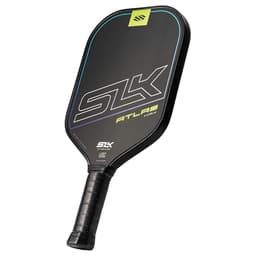
Selkirk SLK Atlas Max

Our pick

Selkirk SLK Atlas Max

The Selkirk SLK Atlas Max pairs the 16 mm Rev-Control core with the widest face of any 16 mm paddle we list (16 x 7.85 in), so you get the soft contact of the thick core and a shorter distance from the middle to the edge. It is the pick for a player whose contact is not as reliable as it was ten years ago. The trade-off is honest: a 4.85 in handle is short, so a two-handed backhand does not fit.

$63.99 · View on Amazon

$79.9920% off

Price as of October 5, 2026. #ad How we’re funded

Read the full write-up
By Stephen V.Last updated How we research

The number in millimetres on a paddle spec sheet is the thickness of the core— the honeycomb slab, almost always polypropylene, sandwiched between the two faces. It has settled on two values, 13 mm and 16 mm, and USA Pickleball’s equipment rules place no limit on it at all, so the number is a design decision rather than a regulation.

What 16 mm buys you, in one paragraph: a thicker core flexes more on impact, so it absorbs more of the ball’s energy instead of firing it back. Less power comes off the face, the ball dwells on the paddle a fraction longer, drops and resets get easier to soften, the sweet spot feels larger, and — the reason this page exists on this site — less of each hit travels up the handle into your hand, wrist and elbow. Pickleball Studio’s testing-based guide puts the other side of it plainly: thinner paddles “usually provide more vibration and worse off-center shot performance”, and it recommends a thicker paddle for any player up to about a 3.5 rating.

So if your elbow, wrist or hand notices the game, or your contact has become less consistent than it used to be, 16 mm is the right end of the range for you. Below are the five paddles in our registry whose makers publish a 16 mm core — not “thick”, not “control-oriented”, the actual figure — ranked for an older arm. If you want the thickness argument in full, including what 16 mm costs you, read 13mm vs 16mm pickleball paddles first.

How this is funded: we earn a commission if you buy through our links, at no extra cost to you. It never changes which product we recommend, and we’ll tell you plainly when to skip one. Full disclosure.

Quick picks

Ranked on published specs, grip and build, and honest buyer fit. Select a row to jump to the full write-up. We have not lab-tested these — here is exactly what we do instead.

#ProductBest forPrice
1
Selkirk SLK Atlas Max

Selkirk SLK Atlas Max

The paddle that makes the sub-$100 argument all by itself. A carbon-fiber face over a 16mm polymer honeycomb core is the same recipe premium comfort paddles use, and Selkirk publishes the whole spec sheet - weight range, grip circumference, handle length - which almost nothing else at this price will do. If you want one paddle under $100 and you want it to feel muted rather than tinny, start here.

Best overall - widest 16 mm face
$63.99 · View on Amazon

$79.9920% off

Price as of October 5, 2026. #ad How we’re funded

2
Franklin Sports Signature Series Pro 16mm

Franklin Sports Signature Series Pro 16mm

The one on this list built for a hand that hurts. Its published grip circumference is 4.5 inches - the largest we found on any paddle under $100 - and a larger grip is what lets an arthritic hand hold the paddle loosely instead of squeezing it. Add a 16 mm polypropylene core and USA Pickleball approval and that is a lot of comfort for the money.

Best for arthritic hands - 4.5 in grip
$62.92 · View on Amazon

Price as of October 5, 2026. #ad How we’re funded

3
JOOLA Graf Edge 16mm

JOOLA Graf Edge 16mm

The only paddle we could find under $50 with a 16 mm polypropylene core AND a carbon face AND a published weight - the three things this site tells arm-sore players to buy first, at a price where you normally get none of them. JOOLA's spec sheet puts it at 7.6-8.0 oz with a small 4 1/8 in grip on a 5.5 in handle. The catch is the shape: 16.5 in long and elongated, which is the one thing a weak wrist does not want.

Best under $50
$49.95 · View on Amazon

Price as of October 5, 2026. #ad How we’re funded

4
JOOLA Ben Johns Hyperion CAS 16

JOOLA Ben Johns Hyperion CAS 16

The performance benchmark on this list — a carbon-surface, 16mm-core paddle with an elongated handle built for spin and reach. It's more paddle than a beginner needs, but for an improving player the extra sweet spot and control are the payoff. Note the elongated handle suits a two-handed backhand.

Best for a strong arm
$119.95 · View on Amazon

Price as of October 5, 2026. #ad How we’re funded

5
Friday Challenger

Friday Challenger

Friday's Gen 2 paddle, and the cheapest way into the brand's thermoformed carbon build. Two layers of T700 raw carbon over a 16mm honeycomb core with foam-injected walls give a stiff, stable, big-sweet-spot feel that flatters a developing game — and unlike most makers here, Friday actually publishes what the paddle weighs.

Best modern thermoformed build
$99.99 · View on Amazon

Price as of October 5, 2026. #ad How we’re funded

The picks in full

#1Best overall - widest 16 mm face

Selkirk SLK Atlas Max

The paddle that makes the sub-$100 argument all by itself. A carbon-fiber face over a 16mm polymer honeycomb core is the same recipe premium comfort paddles use, and Selkirk publishes the whole spec sheet - weight range, grip circumference, handle length - which almost nothing else at this price will do. If you want one paddle under $100 and you want it to feel muted rather than tinny, start here.

Easier on the joints: A 16 mm core is the thickest, softest construction in common use, and it does the single most important job for a sore elbow: it slows the impact down. Pair that with a carbon face, which returns a duller, more predictable ball than fiberglass, and you get about the least jarring feel available under $100.

What we like

  • 16 mm Rev-Control polymer honeycomb core - the thick, soft kind that muffles impact
  • Carbon-fiber face gives a muted, predictable response instead of a lively fiberglass ping
  • Selkirk publishes weight, grip circumference and handle length - rare at this price

Skip it if

  • The 4.85-inch handle is short - no room for a two-handed backhand and little to choke up on
  • Selkirk's own product page does not state USA Pickleball approval, so we do not claim it
  • The 4.25-inch grip is fine for most hands but on the small side for arthritic fingers
Face materialRaw carbon fiber (Raw Spin Technology)
Core16 mm Rev-Control polymer honeycomb
Weight7.6-8.1 oz (published range)
Grip circumference4.25 in
Handle length4.85 in
ShapeMax (widebody)
Dimensions16 x 7.85 in
Edge guardEdgeSentry (low-profile)
USA Pickleball approvedNot published

Specs read from the product listing, on September 15, 2026. “Not published” means the maker does not state that figure.

#2Best for arthritic hands - 4.5 in grip

Franklin Sports Signature Series Pro 16mm

The one on this list built for a hand that hurts. Its published grip circumference is 4.5 inches - the largest we found on any paddle under $100 - and a larger grip is what lets an arthritic hand hold the paddle loosely instead of squeezing it. Add a 16 mm polypropylene core and USA Pickleball approval and that is a lot of comfort for the money.

Easier on the joints: Grip size is the one paddle spec that changes how hard your hand has to work, and a too-small grip is the classic self-inflicted cause of hand and elbow pain. At 4.5 inches this is the rare affordable paddle you can hold loosely without building it up with overgrips first.

What we like

  • 4.5-inch grip circumference - the largest published grip in this price range
  • 16 mm polypropylene honeycomb core for a soft, stable, quiet feel
  • USA Pickleball approved, so it is legal for club and tournament play

Skip it if

  • At 7.9-8.3 oz it is one of the heavier paddles here - not the pick for a weak wrist
  • That 4.5-inch grip is genuinely large; smaller hands will find it a stretch
  • The fiberglass face is livelier than carbon, so it transmits a little more feel
Face materialMaxGrit coated fiberglass
Core16 mm polypropylene honeycomb
Weight7.9-8.3 oz (published range)
Grip circumference4.5 in (large)
Handle length5.6 in
Dimensions16.5 x 7.5 in
USA Pickleball approvedYes

Specs read from the product listing, on August 24, 2026. “Not published” means the maker does not state that figure.

#3Best under $50

JOOLA Graf Edge 16mm

The only paddle we could find under $50 with a 16 mm polypropylene core AND a carbon face AND a published weight - the three things this site tells arm-sore players to buy first, at a price where you normally get none of them. JOOLA's spec sheet puts it at 7.6-8.0 oz with a small 4 1/8 in grip on a 5.5 in handle. The catch is the shape: 16.5 in long and elongated, which is the one thing a weak wrist does not want.

Easier on the joints: A 16 mm core flexes more on contact and returns less of the ball's energy, so less shock reaches your elbow - and a carbon face mutes the rest. That combination is the reason our tennis-elbow and low-vibration lists cost more; here it is at a beginner price. Just size the small grip up so you are not clenching it.

What we like

  • 16 mm polypropylene honeycomb core - the thick, absorbing kind, rare at this price
  • Textured carbon fiber face for a muted, controlled feel
  • Published 7.6-8.0 oz weight and 4 1/8 in grip - you know what you are buying
  • USA Pickleball and UPA-A approved

Skip it if

  • Elongated 16.5 x 7.5 in shape with a 5.5 in handle - moves mass away from the hand, so a sore wrist should choose a standard shape instead
  • 4 1/8 in grip is small; most adult hands will want an overgrip or two
  • Retail list is around double the Amazon price we see, so check the live price before assuming
Face materialTextured carbon fiber
Core16 mm polypropylene honeycomb
Weight7.6-8.0 oz (published range; 7.8 oz average)
Grip circumference4.125 in (small)
Handle length5.5 in
Dimensions16.5 x 7.5 in (elongated)
USA Pickleball approvedYes (USAP and UPA-A)

Specs read from the product listing, on September 20, 2026. “Not published” means the maker does not state that figure.

#4Best for a strong arm

JOOLA Ben Johns Hyperion CAS 16

The performance benchmark on this list — a carbon-surface, 16mm-core paddle with an elongated handle built for spin and reach. It's more paddle than a beginner needs, but for an improving player the extra sweet spot and control are the payoff. Note the elongated handle suits a two-handed backhand.

Easier on the joints: The thick 16mm core is the soft, control-oriented kind that muffles impact well — but the elongated head puts a little more weight out front, so it's better for elbows than for a weak wrist.

What we like

  • Carbon abrasion surface generates real spin and control
  • Thick 16mm polypropylene honeycomb core for a soft, muted feel
  • Elongated handle helps two-handed backhands and reach

Skip it if

  • The elongated head can feel heavier in the hand — not ideal for a sore wrist
  • More paddle (and price) than a casual player needs
Face materialCarbon abrasion surface
Core thickness16 mm polypropylene honeycomb
HandleElongated (sure-grip)
Weight8.3 oz average (published)
Grip circumference4.25 in
Handle length5.5 in
Dimensions16.5 x 7.5 in
USA Pickleball approvedYes (per listing)

Specs read from the product listing, on September 18, 2026. “Not published” means the maker does not state that figure.

#5Best modern thermoformed build

Friday Challenger

Friday's Gen 2 paddle, and the cheapest way into the brand's thermoformed carbon build. Two layers of T700 raw carbon over a 16mm honeycomb core with foam-injected walls give a stiff, stable, big-sweet-spot feel that flatters a developing game — and unlike most makers here, Friday actually publishes what the paddle weighs.

Easier on the joints: Foam-injected walls stiffen the paddle's edges, which widens the area that answers the same way on contact — and more centered-feeling contact is the single biggest thing you can do to keep harsh off-center vibration out of your elbow.

What we like

  • Double-layer T700 raw carbon face with a gritty surface for spin
  • Thermoformed Gen 2 build with foam-injected walls — a stable, large sweet spot
  • USA Pickleball approved, and Friday publishes the weight when most brands won't

Skip it if

  • Thermoformed paddles feel stiffer, which not every sore arm loves
  • At 16.5 in it's an elongated shape, which sits heavier in the hand than a standard head
Face materialDouble-layer T700 raw carbon fiber
ConstructionThermoformed (Gen 2), foam-injected walls
Core16 mm polypropylene honeycomb
Weight8.0 oz average (published)
USA Pickleball approvedYes (per listing)

Specs read from the product listing, on August 24, 2026. “Not published” means the maker does not state that figure.

What to look for in a 16 mm paddle, in the order that matters

Core thickness is the first filter, not the last. Once every paddle on your shortlist is 16 mm, these are the specs that decide which of them suits your arm — and all five below publish them, which is itself the reason they are here.

  • Grip circumference. The most under-rated spec on a paddle and the one most likely to be hurting you. A grip that is too small forces you to squeeze to keep the paddle from twisting, and squeezing is what loads the forearm tendons. Franklin publishes 4.5 in (large)on the Signature Series Pro — the largest published grip on any paddle we list. JOOLA publishes 4.25 in on the Hyperion and 4.125 in (small) on the Graf Edge, Selkirk 4.25 in on the Atlas Max. Our grip size guide has the measuring method; paddles for small hands covers the other direction.
  • Face material, because it changes the feel of the 16 mm core. Fiberglass (Franklin’s MaxGrit) is the softer, more forgiving face and gives a little more pop; raw carbon (Selkirk, JOOLA, Friday) is stiffer and grittier for spin. A 16 mm core under a fiberglass face is the gentlest combination here. See carbon vs fiberglass and graphite vs carbon fiber for the distinctions makers blur.
  • Shape.Three of these five are elongated (16.5 x 7.5 in): more reach, more leverage, and a sweet spot that sits further from your hand. The Atlas Max is the exception at 16 x 7.85 in — a widebody, so the middle is closer to the edges and an off-centre hit is less punished. If your contact wanders, take the widebody. Paddle shapes explained covers the families.
  • Published weight, where it exists.Four of the five publish a figure or a range: 7.6-8.1 oz (Atlas Max), 7.9-8.3 oz (Franklin), 7.6-8.0 oz (Graf Edge), 8.0 oz average (Friday Challenger) and 8.3 oz average (Hyperion). The Hyperion is the heaviest here by a clear margin, and on a sore shoulder that figure is the one to respect — see lightweight paddles if under 8 oz is the constraint.
  • Handle length, last — unless you hit a two-hander. If you do, the 4.85 in Atlas Max handle will not fit your bottom hand; the 5.5 in and 5.6 in handles will.

What 16 mm gives up

Honesty matters more than enthusiasm here, so: the thicker core costs you power. A 16 mm paddle returns less of the ball’s energy, which means a drive that would have landed deep off a 13 mm paddle lands shorter, and serves take more arm to hit the same distance. For a player who hits cleanly, has no arm trouble and misses the pop of a tennis racket, that is a real loss and 13 mm is a defensible choice. For everyone else the trade is lopsided in favour of the 16: the extra dwell time is what makes a drop shot land in the kitchen instead of popping up, and the game at 55+ is decided by resets far more than by drives. Our control paddles roundup is the broader version of that argument.

A second caveat worth stating: 16 mm is not a cure for a sore elbow. It reduces one input — shock arriving at your hand — and so does a bigger grip, a softer ball and a shorter swing. If your elbow already hurts, the paddle is one change among four, and tennis elbow from pickleball covers the rest. There is a documented link between tendon load and this kind of overuse injury, but no paddle has been shown to treat it, and we will not pretend otherwise.

How we ranked these five

We own none of these paddles and have tested none of them. Every figure in the tables above was read off a manufacturer or retailer spec sheet on the date stamped in that product’s own table, and the ranking is editorial: how many players over 55 each paddle is right for, weighted toward the comfort specs rather than price. There are no scores, because a score would dress spec-reading up as testing — here is exactly what we do.

That filter also set the count. The registry holds nineteen paddles; only these five have a maker who prints the core thickness. Several paddles we like — the ProKennex Kinetic models, the Gamma Obsidian 13, the Paddletek Bantam EX-L at a published 12.7 mm — are either thinner or do not publish the number, and a page that guessed on their behalf would be worth less than this one. Where a cell in a spec table reads “Not published”, that is a finding about the maker, not a gap in our research.

Two of these also carry a price-tier argument. The JOOLA Graf Edge 16 is the only 16 mm paddle we list that lands under $50, which makes it the cheapest honest route into a thick core — it is also the top of our best paddles under $50 page. If your ceiling is three figures rather than two, under $100 has the wider field.
Frequently asked questions

Is a 16mm pickleball paddle better for beginners?

Usually yes. A thicker core absorbs more of the ball's energy, which makes the paddle slower but far more forgiving: the sweet spot feels bigger, off-centre hits are less harsh, and drops and resets are easier to soften. Pickleball Studio's testing-based guide recommends a thicker paddle for players up to about a 3.5 rating. The one group it does not suit is players who hit cleanly and want pop on drives.

Is 16mm good for tennis elbow?

It is the better of the two standard thicknesses for a sore arm, because less of each impact travels up the handle into your hand and elbow. But it is one change among several, and the bigger ones are usually grip size and swing length. A 16mm paddle with a grip that is too small will still have you squeezing, which is what loads the forearm tendons in the first place.

What is the difference between 14mm and 16mm paddles?

14mm is the compromise between the two standards: slightly more pop than a 16, slightly more forgiveness than a 13. The difference between 14 and 16 is far smaller than the difference between 13 and 16, and in practice shape, grip and face material will change how a paddle feels to you more than two millimetres of core will. We list no 14mm paddle because no paddle in our registry publishes that figure.

Do 16mm paddles have less power?

Yes, and that is the design intent. The thicker core flexes more and gives back less of the ball's energy, so drives land shorter and serves take more arm for the same depth. What you get in exchange is dwell time - the ball stays on the face a fraction longer - which is what makes a soft third shot drop land where you aimed it.

Which 16mm paddle has the biggest grip?

The Franklin Sports Signature Series Pro 16mm, at a published 4.5 in (large) circumference - the largest published grip on any paddle we list. That matters if you have arthritic hands or thick fingers, because a grip that is too small forces a tighter squeeze. If you need the opposite, JOOLA publishes 4.125 in (small) on the Graf Edge 16.

Are all 16mm paddles USA Pickleball approved?

Not automatically, and the rules do not restrict thickness at all - USA Pickleball's equipment standards set no limit on core thickness, so 16mm is a design choice. Approval is a separate certification per model. JOOLA publishes approval for the Hyperion CAS 16, Franklin's spec sheet states USAP Approved, and the Friday Challenger listing states approval; Selkirk does not state it on its own Atlas Max page, which is why that row of its table reads 'Not published'.

Sources

  • Pickleball Studio — How Thick Should Your Pickleball Paddle Be? (Chris Olson, Aug 31, 2022) — Thicker cores (16 mm and above) are for control: 'less power but usually improves your blocks, resets, and drop shots', 'helps absorb more of the pace from the ball', and they 'usually feel like they have a better sweet spot'. Thinner cores (13 mm and below) 'feel stiffer when the ball hits the paddle', the core 'doesn't absorb as much energy, so the ball comes off faster', and 'thinner paddles usually provide more vibration and worse off-center shot performance'. Recommendation: 'If you are a new player up to about 3.5, I would usually tell you to opt for a thicker paddle.' The article does not address arm pain or older players specifically (accessed September 18, 2026)
  • USA Pickleball — Equipment Standards Manual — The manufacturing specifications and testing (including the PBCoR power test) paddles must meet to be approved (accessed July 22, 2026)
  • Selkirk Sport — SLK Atlas Max product page (manufacturer specifications) — Selkirk publishes a full spec sheet: premium carbon fiber face with Raw Spin Technology, 16 mm Rev-Control polymer honeycomb core, 7.6-8.1 oz weight range, 4.25 in grip circumference, 4.85 in handle length, 16 in x 7.85 in, EdgeSentry low-profile edge guard, SLK Ultra-Comfort grip, skill level beginner-intermediate, 1-year limited warranty, designed and quality controlled in the USA and manufactured in China. No USA Pickleball approval statement appears anywhere on the page (accessed September 15, 2026)
  • Pickleball Central - Franklin Sports Signature Series Pro 16mm spec table (retailer-published manufacturer specifications) — Re-read in full on October 4, 2026 and unchanged: core thickness '16mm (.629")', polypropylene honeycomb core, 'Max Grit coated Fiberglass' face, weight range '7.9 - 8.3 ounces' with an 8.1 oz average, grip circumference '4 1/2" (Large)', 5.6 in handle length, 16.5 in length, 7.5 in width, elongated shape, 'USAP Approved'. Used because franklinsports.com returns HTTP 403 to automated requests, so the maker's own page cannot be read directly (accessed October 4, 2026)
  • JOOLA — Ben Johns Hyperion CAS 16 product page (manufacturer specifications) — JOOLA publishes: average weight 8.3 oz (no range stated), grip circumference 4.25 in ('may vary slightly'), grip length 5.5 in, paddle length 16.5 in, width 7.5 in, 16 mm Response honeycomb polymer core, Carbon Abrasion Surface (CAS) face, Ridge grip, USA Pickleball approved: yes (accessed September 18, 2026)
  • A Review of Physiotherapy Techniques Used in the Treatment of Tennis Elbow — PMC (2023) — Lateral epicondylitis is an overuse tendinopathy of the forearm extensors; conservative care — rest, bracing/counterforce straps and graduated loading — is the mainstay (accessed July 22, 2026)

Keep reading