Kitchen & Court

Best 13mm Pickleball Paddles

The four paddles whose makers actually publish a 13 mm (or thinner) core — what the thin core gives you, who it suits, and why most older arms should still buy 16 mm.

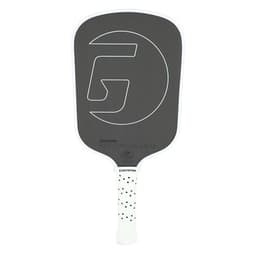
Gamma Obsidian 13

Our pick

Gamma Obsidian 13

The best 13 mm paddle for a player over 55, because it is the only one that treats the thin core as a problem to be managed: Gamma publishes the 13 mm figure and then puts a molded foam handle under your hand instead of a wrapped grip. The budget pick is the Franklin Signature Series Pro 13mm — the cheapest paddle here that publishes core, weight range, grip circumference and dimensions all at once.

$129.99 · View on Amazon

$159.9919% off

Price as of November 8, 2026. #ad How we’re funded

Read the full write-up
By Stephen V.Last updated How we research

A 13 mm core is the thin, stiff, poppy half of the paddle market, and it is the half this site usually steers older players away from. We are not going to pretend otherwise on its own page. If your elbow, wrist or hand feels the game, the honest recommendation is our 16 mm list, because a thicker core deforms more on contact and sends less of each impact back up the handle. What follows is for the reader who has decided they want the thin core anyway — usually for drive, put-aways and a faster ball off the face — and wants the four paddles whose makers will actually print the number.

That last part is the whole ranking. Of the twenty paddles in our registry, only four publish a core thickness at or below 13 mm: the Gamma Obsidian 13 at 13 mm, the Selkirk SLK Halo Power XL at 13 mm, the Franklin Signature Series Pro 13mm at 13 mm, and the Paddletek Bantam EX-L at 12.7 mm — the thinnest published core we list anywhere. Every other paddle either publishes 16 mm or publishes nothing at all, and “nothing at all” is the most common answer in this category. USA Pickleball places no restriction on paddle thickness in its rulebook, so no maker is obliged to disclose it, and plenty do not. We rank the four that do, in the order we would hand them to a 55-plus player, and the price on every button is today’s live Amazon number with the date it was checked.

How this is funded: we earn a commission if you buy through our links, at no extra cost to you. It never changes which product we recommend, and we’ll tell you plainly when to skip one. Full disclosure.

Quick picks

Ranked on published specs, grip and build, and honest buyer fit. Select a row to jump to the full write-up. We have not lab-tested these — here is exactly what we do instead.

#ProductBest forPrice
1
Gamma Obsidian 13

Gamma Obsidian 13

The standout for hands that hurt: Gamma gives this one a molded foam handle instead of a hard wrapped grip, plus a system that lets you add handle weight to balance the paddle. Softer to hold and easier to customize is exactly what an arthritic grip wants.

Best overall — 13 mm with a foam handle
$129.99 · View on Amazon

$159.9919% off

Price as of November 8, 2026. #ad How we’re funded

2
Selkirk SLK Halo Power XL

Selkirk SLK Halo Power XL

A carbon-fiber Selkirk that still lands under most premium paddles. The XL shape adds reach and a generous sweet spot; the carbon face gives a cleaner, more controlled response than the fiberglass Evo. A strong mid-tier step up.

Best carbon face, fullest spec sheet
3
Paddletek Bantam EX-L

Paddletek Bantam EX-L

A long-running paddle from an established American maker, and the most settled reputation on this list. Paddletek publishes its weight range and handle length, the Bantam PolyCore is a proper polymer honeycomb, and the standard 16 x 8-inch shape keeps the weight close to your hand rather than out at the tip. It is the closest thing under $100 to buying a serious club player's paddle.

Thinnest published core — 12.7 mm
$89.99 · View on Amazon

$99.9910% off

Price as of November 8, 2026. #ad How we’re funded

4
Franklin Sports Signature Series Pro 13mm

Franklin Sports Signature Series Pro 13mm

The thinner, livelier sibling of the 16 mm Franklin we recommend for arthritic hands - same MaxGrit fiberglass face and 16.5 x 7.5 in shape with a 5.6 in handle, but a 13 mm core, a medium 4 1/4 in grip and a published 7.5-8.0 oz. More pop and a little more feedback into the arm, for the budget buyer who wants to put the ball away. USA Pickleball approved.

Budget pick — cheapest full spec sheet
$51.99 · View on Amazon

$99.9948% off

Price as of November 8, 2026. #ad How we’re funded

The picks in full

#1Best overall — 13 mm with a foam handle

Gamma Obsidian 13

The standout for hands that hurt: Gamma gives this one a molded foam handle instead of a hard wrapped grip, plus a system that lets you add handle weight to balance the paddle. Softer to hold and easier to customize is exactly what an arthritic grip wants.

Easier on the joints: The molded foam handle spreads pressure across your palm instead of concentrating it, and the weight system lets you keep the paddle light — both directly reduce hand and wrist strain.

What we like

  • Molded foam handle is genuinely softer to grip than a standard wrap
  • Customizable handle-weight system lets you tune the balance
  • 13mm carbon-fiber build for a controlled, forgiving feel

Skip it if

  • Foam handle is a love-it-or-not feel — try before committing if you can
  • Exact weight isn't published
Face materialCarbon fiber
Core thickness13 mm
GripMolded foam handle
WeightNot published (adjustable via weight system)
USA Pickleball approvedNot published

Specs read from the product listing, on July 22, 2026. “Not published” means the maker does not state that figure.

#2Best carbon face, fullest spec sheet

Selkirk SLK Halo Power XL

A carbon-fiber Selkirk that still lands under most premium paddles. The XL shape adds reach and a generous sweet spot; the carbon face gives a cleaner, more controlled response than the fiberglass Evo. A strong mid-tier step up.

Easier on the joints: Carbon faces tend to feel more muted and predictable than fiberglass, so the ball comes off cleanly — easier on the arm than a lively, unpredictable budget face.

What we like

  • Carbon-fiber face for cleaner control than fiberglass
  • XL shape adds reach and forgiveness
  • Priced well below premium carbon paddles

Skip it if

  • The Power build leans toward drive, not pure touch
  • Elongated shape isn't for everyone
Face materialT700 CarbonFusion carbon fiber
Core13 mm Rev-Power polymer honeycomb
ShapeXL (elongated)
Weight7.7-8.0 oz (published range)
Grip circumference4.25 in
Handle length5.75 in
Dimensions16.4 x 7.4 in
USA Pickleball approvedNot published

Specs read from the product listing, on September 18, 2026. “Not published” means the maker does not state that figure.

#3Thinnest published core — 12.7 mm

Paddletek Bantam EX-L

A long-running paddle from an established American maker, and the most settled reputation on this list. Paddletek publishes its weight range and handle length, the Bantam PolyCore is a proper polymer honeycomb, and the standard 16 x 8-inch shape keeps the weight close to your hand rather than out at the tip. It is the closest thing under $100 to buying a serious club player's paddle.

Easier on the joints: A standard 16 x 8-inch shape carries its weight close to the handle rather than out at the tip, so it feels lighter to swing than the number suggests - and that balance matters more to a sore wrist than the raw ounces do.

What we like

  • Established brand with a long production history behind this exact model
  • Bantam PolyCore polymer honeycomb core, not a cheap stiff core
  • Standard 16 x 8-inch shape keeps weight near the hand - easier on the wrist than an elongated paddle

Skip it if

  • 7.8-8.4 oz is the heaviest published range on this list
  • The 12.7 mm core is thinner than the 16 mm picks, so the feel is firmer
  • Paddletek does not publish a grip circumference
Face materialPolycarbonate (per listing)
Core12.7 mm Bantam PolyCore honeycomb
Weight7.8-8.4 oz (published range)
Grip circumferenceNot published
Handle length5 in
Dimensions16 x 8 in (standard)
USA Pickleball approvedYes (per listing)

Specs read from the product listing, on August 24, 2026. “Not published” means the maker does not state that figure.

#4Budget pick — cheapest full spec sheet

Franklin Sports Signature Series Pro 13mm

The thinner, livelier sibling of the 16 mm Franklin we recommend for arthritic hands - same MaxGrit fiberglass face and 16.5 x 7.5 in shape with a 5.6 in handle, but a 13 mm core, a medium 4 1/4 in grip and a published 7.5-8.0 oz. More pop and a little more feedback into the arm, for the budget buyer who wants to put the ball away. USA Pickleball approved.

Easier on the joints: A 13 mm core returns more of the ball's energy than a 16, which is where the pop comes from and also where the extra feedback into your elbow comes from. If something already hurts, buy the 16 mm Franklin or the JOOLA instead; if nothing does and you miss the drive, this is the honest budget choice.

What we like

  • Published 7.5-8.0 oz - one of the lighter floors on this page
  • Long 5.6 in handle suits a two-handed backhand
  • USA Pickleball approved, from an established brand with a published spec sheet

Skip it if

  • 13 mm core is the stiffer, poppier kind - more vibration and harsher mis-hits than the 16 mm version
  • Elongated 16.5 in shape moves mass away from the hand - not the pick for a sore wrist
  • The 16 mm version's 4.5 in large grip is not offered here; this one is a medium 4 1/4 in
Face materialMaxGrit coated fiberglass
Core13 mm polypropylene honeycomb
Weight7.5-8.0 oz (published range; 7.75 oz average)
Grip circumference4.25 in (medium)
Handle length5.6 in
Dimensions16.5 x 7.5 in (elongated)
USA Pickleball approvedYes

Specs read from the product listing, on September 20, 2026. “Not published” means the maker does not state that figure.

What a 13 mm core actually changes

Core thickness is the closest thing a paddle has to a suspension setting. Pickleball Studio’s write-up on the subject is blunt about the direction of the trade: thicker cores (16 mm and up) “absorb more of the pace from the ball” and usually feel like they have a better sweet spot, while thinner cores “feel stiffer when the ball hits the paddle”, the core “doesn’t absorb as much energy, so the ball comes off faster”, and thinner paddles “usually provide more vibration and worse off-center shot performance”.

Read that list as a buyer over 55 and the picture is clear. The thin core gives you a faster ball and a crisper feel, and charges you in two currencies an older player pays with: vibration into the arm, and forgiveness on the shots you mis-hit. That is why the paddle we lead with is the one that spends engineering money buying some of the vibration back.

The picks in order

Gamma Obsidian 13. First, and the only one of the four we would hand to someone with arthritic or sensitive hands. Gamma publishes a 13 mm core and a carbon fiber face, and then does the thing nobody else here does: the handle is a molded foam piece rather than a wood or composite handle under a wrapped grip. For a hand that aches after two games, that is a bigger deal than three millimeters of core, because it changes what your palm is actually holding. The honest gaps: Gamma does not publish a weight figure for it at all (the paddle ships with an adjustable weight system, which is presumably why), and the listing we read states no USA Pickleball approval. Full write-up in the Gamma Obsidian review.

Selkirk SLK Halo Power XL. Second, and the fullest spec sheet on the page. Selkirk’s own product page publishes all of it: a 13 mm Rev-Power polymer honeycomb core, a T700 CarbonFusion carbon fiber face, a 7.7–8.0 oz weight range, a 4.25 in grip circumference, a 5.75 in handle and 16.4 x 7.4 in dimensions. The name is the warning label — “Power” is Selkirk’s own word for what the thin core does — and the XL is an elongated shape with a long handle, which raises the swing weight a tired wrist notices. If you want the Selkirk build with the softer core instead, the Atlas Max on our under-$100 list is a 16 mm widebody at a lower price. Full write-up in the SLK Halo review.

Paddletek Bantam EX-L. Third, and the thinnest published core in our registry: 12.7 mm, which is Paddletek’s metric rendering of a half inch. It is also the largest published hitting face we list, at a standard 16 x 8 in, with a published 7.8–8.4 oz range and a 5 in handle. Those two facts pull against each other in a way worth understanding: the big face widens the sweet spot, the thin core narrows the margin on the shots that land outside it. Paddletek publishes no grip circumference and no face material for it. It is here because it is the established-brand answer and because the face area genuinely helps — see paddles with the largest sweet spot for that argument in full, and the Bantam EX-L review for the rest.

Franklin Sports Signature Series Pro 13mm. The budget pick, and the cheapest paddle anywhere on this site that publishes a core thickness, a weight range, a grip circumference and full dimensions at once: 13 mm polypropylene honeycomb, 7.5–8.0 oz (7.75 oz average), a medium 4.25 in grip, a 5.6 in handle, 16.5 x 7.5 in elongated, a MaxGrit coated fiberglass face, USA Pickleball approved. The fiberglass face is livelier than the two carbon faces above it, which on a 13 mm core compounds rather than offsets the stiffness — this is the most “thin core” paddle on the page in feel, and the right pick only for a healthy arm that wants pop for fifty-odd dollars. Full write-up in the Franklin Signature Pro review.

Who should buy 16 mm instead

  • Tennis elbow, or contact that stings. Buy 16 mm. The thick core is the first lever and the cheapest one; the tennis-elbow roundup ranks on it.
  • Arthritic hands. If you are set on 13 mm, the Gamma above is the one. If you are not, the 16 mm Franklin with the published 4.5 in grip on our arthritis roundup is the better buy, because grip circumference matters more to an arthritic hand than core thickness does.
  • You mis-hit a lot, or you are new to the sport. Buy 16 mm. Off-center performance is exactly what the thin core gives up, and our beginner list is built around forgiveness.
  • You want drive, and your arm is fine. This page. Start with the Gamma if your hands complain, the Selkirk if they do not, and the Franklin if the budget is the constraint.

What we left off, and why

Every paddle whose maker does not publish a core thickness. That is most of the market and it is not an accident: a figure a brand withholds is a figure it has decided not to be held to. Several paddles we like — the ProKennex line, the HEAD Extreme Elite, the Niupipo — may well be thin-core paddles, and we are not going to write that down, because nobody has published it. We also left off any paddle with no live Amazon offer on the day we wrote this; all four above had one. And we did not invent a “13 mm feel” score. We own none of these paddles and have not tested them, which is the whole reason this page ranks on published numbers and on who each paddle suits, and nothing else.

One last note on prices. Every number here comes from the live price layer and is stamped with the date it was checked, so a paddle that moves overnight shows its real number rather than a rounded promise. The ranking is on published specs and buyer fit, so a price swing does not reorder it. If the thin core is a budget decision rather than a playing one, read best pickleball paddles under $50 instead — the 16 mm JOOLA on that list costs less than three of the four paddles above.
Frequently asked questions

What is the best 13mm pickleball paddle?

For a player over 55, the Gamma Obsidian 13. It is the only paddle we list that publishes a 13 mm core and pairs it with a molded foam handle rather than a wrapped grip, which is the part your hand actually feels. If you want the fullest published spec sheet instead, the Selkirk SLK Halo Power XL prints core, face, weight range, grip circumference, handle length and dimensions. The budget pick is the Franklin Signature Series Pro 13mm, the cheapest paddle on this site that publishes all four of those figures.

Is 13mm or 16mm better for seniors?

16 mm, for most older players. A thicker core deforms more on contact and absorbs more of the ball's energy, so less of each impact travels up the handle into your wrist and elbow. A thinner core is stiffer, returns the ball faster and, per Pickleball Studio's analysis, usually provides more vibration and worse off-center performance. Buy 13 mm only if you specifically want the extra drive and your arm is not already complaining.

How many pickleball paddles actually publish their core thickness?

Fewer than half the ones we list. Of twenty paddles in our registry, four publish a figure of 13 mm or thinner and five publish 16 mm; the rest state a core material — polypropylene or polymer honeycomb — with no thickness at all. USA Pickleball's rulebook places no restriction on paddle thickness, so disclosure is voluntary, and at the budget end it is usually absent.

What is the thinnest pickleball paddle core you list?

The Paddletek Bantam EX-L at 12.7 mm, which is Paddletek's metric figure for a half-inch core. It is also the largest published hitting face we list at 16 x 8 in, which widens the sweet spot and partly offsets what a thin core gives up on off-center shots. Paddletek publishes no grip circumference and no face material for it.

Does a 13mm paddle cause tennis elbow?

No single paddle causes tennis elbow, and we will not claim one does. What is fair to say is that a stiffer core transmits more vibration into the arm, and that AAOS counts a racquet-sport equipment check as part of treating epicondylitis. If you already have elbow pain, the sensible order is to size the grip correctly first, then move to a 16 mm core, then consider a brace. Our tennis-elbow paddle roundup and grip guide cover the first two steps.

Do thin-core paddles really give you more power?

They give the ball more speed off the face, which most players experience as power — Pickleball Studio's description is that the thinner core does not absorb as much energy, so the ball comes off faster. What you give back is control on resets and drops, a smaller effective sweet spot, and more feedback into your hand. On a 55-plus court where the third-shot drop decides more points than the drive does, that trade is not obviously in your favor.

Sources

  • Pickleball Studio — How Thick Should Your Pickleball Paddle Be? (Chris Olson, Aug 31, 2022) — Thicker cores (16 mm and above) are for control: 'less power but usually improves your blocks, resets, and drop shots', 'helps absorb more of the pace from the ball', and they 'usually feel like they have a better sweet spot'. Thinner cores (13 mm and below) 'feel stiffer when the ball hits the paddle', the core 'doesn't absorb as much energy, so the ball comes off faster', and 'thinner paddles usually provide more vibration and worse off-center shot performance'. Recommendation: 'If you are a new player up to about 3.5, I would usually tell you to opt for a thicker paddle.' The article does not address arm pain or older players specifically (accessed September 18, 2026)
  • USA Pickleball - Official Rulebook (paddle dimensions) — USA Pickleball caps paddle size in the rulebook's equipment section, and repeats it as 2.E.3 ('Size') of the Equipment Standards Manual: the combined length and width of the paddle, INCLUDING any edge guard and butt cap, shall not exceed 24 inches (60.96 cm), and the paddle length alone shall not exceed 17 inches (43.18 cm). No restriction is placed on paddle thickness. This is the rule that makes face width and face length a zero-sum trade - a maker cannot add width without taking away length - and it is why no legal paddle is both long and wide (accessed October 18, 2026)
  • USA Pickleball — Equipment Standards Manual — The manufacturing specifications and testing (including the PBCoR power test) paddles must meet to be approved (accessed July 22, 2026)
  • Selkirk Sport — SLK Halo Power product page (manufacturer specifications, XL and Max variants) — Selkirk publishes a full spec sheet for the Halo Power XL: 7.7-8.0 oz weight range, 4.25 in grip circumference, 5.75 in handle length, 16.4 in x 7.4 in, 13 mm Rev-Power polymer honeycomb core, T700 CarbonFusion carbon fiber face, SLK Ultra-Comfort grip. The Max variant on the same page: 7.7-8.0 oz, 4.25 in grip, 4.85 in handle, 16 in x 7.85 in, 16 mm Rev-Control core, 18k UltraWeave carbon face. No USA Pickleball approval statement appears on the page (accessed September 18, 2026)
  • Paddletek — Bantam EX-L product page (manufacturer specifications) — Paddletek publishes: 7.8-8.4 oz weight range, 5 in handle length, a 'Standard - 16 x 8' shape, 12.7 mm core thickness, Bantam PolyCore interior, $89.99. Grip circumference, face material and USA Pickleball approval are not stated on the page (accessed September 18, 2026)
  • American Academy of Orthopaedic Surgeons (OrthoInfo) - Tennis Elbow (Lateral Epicondylitis) — AAOS: tennis elbow 'involves the degeneration (wearing down) or, in some cases, microtearing of the tendons that join the forearm muscles on the outside of the elbow', specifically the extensor carpi radialis brevis (ECRB) where it attaches to the lateral epicondyle. Symptoms: 'Pain or burning on the outer part of your elbow', 'Weak grip strength', 'Sometimes, pain at night', 'often worsened with forearm activity, such as holding a racquet, turning a wrench, or shaking hands'. Most people who get it are 'between the ages of 30 and 50'. THE PLACEMENT SENTENCE: 'Using a brace centered over the back of your forearm may also help relieve symptoms of tennis elbow. This can reduce symptoms by resting the muscles and tendons.' AAOS calls this a counterforce brace - it is NOT worn on the elbow joint itself. 'Approximately 80 to 95% of patients have success with nonsurgical treatment', beginning with rest: 'you will have to stop or decrease participation in sports, heavy work activities, and other activities that cause painful symptoms for several weeks'. AAOS also lists an EQUIPMENT CHECK as treatment: 'Stiffer racquets and looser-strung racquets often can reduce the stress on the forearm, which means that the forearm muscles do not have to work as hard.' Steroid injections 'should be used very sparingly for lateral epicondylitis, as excessive use can weaken the lateral epicondyle'. Surgery is considered only 'if your symptoms do not respond after 6 to 12 months of nonsurgical treatments' (accessed October 17, 2026)

Keep reading