How we ranked them
On the published figures, in this order: core thickness first (because it decides how much of each impact reaches your arm), then grip circumference, then the published weight range, then the dimensions themselves. Four of the six paddles here publish a full set of all four. Two do not, and they rank last for that reason rather than because we dislike them.
The dimensions matter more on this page than on any other list we keep, because “elongated” is a marketing word with no standard behind it. The honest way to compare is to read the numbers: 16.5 x 7.5 in is the common elongated footprint (the two JOOLAs and both Franklins), 16.4 x 7.4 in is Selkirk’s XL, and a standard-shape paddle for comparison is nearer 16 x 7.9 in. Half an inch of length and half an inch of width is the entire difference, and it changes the paddle more than that sounds.
The picks in order
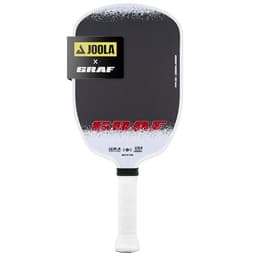
JOOLA Graf Edge 16mm. First, because it is the only paddle on this page that gives you the elongated shape without the usual penalty. JOOLA publishes a 16 mm polypropylene honeycomb core, a textured carbon fiber face, a 7.6–8.0 oz range (7.8 oz average), a 5.5 in handle, 16.5 x 7.5 in dimensions and both USA Pickleball and UPA-A approval. The 16 mm core is the thing: it absorbs more of the ball’s pace, which partly offsets the extra leverage the long body puts behind every contact. Its published grip is 4.125 in, which is small for most adult hands, so budget for an overgrip or two — a clenched hand on a too-small grip undoes the comfort you just paid for. It is usually also the cheapest elongated paddle we list, which makes it both the top pick and the budget pick; the Franklin 13mm below sits within a dollar or two if this one is out of stock.
Franklin Sports Signature Series Pro 16mm. Second, and the pick for anyone whose hands are the problem. It is the only elongated paddle we list with a published 4.5 in (large) grip circumference, which is the single most useful number on this page for an arthritic hand: a larger circumference means less finger curl and less squeeze to hold the handle steady. Everything else is published too — a 16 mm polypropylene core, a MaxGrit coated fiberglass face, 7.9–8.3 oz, a 5.6 in handle, 16.5 x 7.5 in, USA Pickleball approved. The fiberglass face is livelier than carbon, so the ball comes off faster and feeds back more; on a 16 mm core that stays manageable. Full write-up in the Franklin Signature Pro review.
JOOLA Ben Johns Hyperion CAS 16. Third, and the one a competitive player will have already shortlisted. JOOLA publishes an 8.3 oz average weight (no range), a 4.25 in grip, a 5.5 in grip length, 16.5 x 7.5 in, a 16 mm Response honeycomb polymer core, a Carbon Abrasion Surface face and USA Pickleball approval. The 8.3 oz average is the heaviest published figure on this page, and on an elongated body that compounds — this is the paddle here that asks the most of a shoulder. It earns third because the build and the face are genuinely a step up, not because it suits more players. Full write-up in the Hyperion review, and if you are shopping it against cheaper options, our Hyperion alternatives page does that comparison directly.
Selkirk SLK Halo Power XL. Fourth. Selkirk publishes the fullest spec sheet of any paddle on this page: 13 mm Rev-Power polymer honeycomb core, T700 CarbonFusion face, 7.7–8.0 oz, 4.25 in grip, a long 5.75 in handle and 16.4 x 7.4 in. It is fourth and not higher only because of the 13 mm core — thinner, stiffer, more vibration into the hand, which is the opposite of what this site usually recommends. If drive is what you want from the shape, this is the paddle on the page built for it, and the long handle is the best here for a two-handed backhand. Full write-up in the SLK Halo review; the core argument is in our 13 mm roundup.
Franklin Sports Signature Series Pro 13mm. Fifth. The same 16.5 x 7.5 in body, 5.6 in handle and MaxGrit fiberglass face as the 16 mm Franklin, with a 13 mm core, a medium 4.25 in grip and a published 7.5–8.0 oz. Thin core plus fiberglass face plus elongated body is the stiffest, poppiest combination here, and the least forgiving on a mis-hit. A good paddle for a healthy arm that wants to put the ball away cheaply, and the wrong one for a sore elbow.
Selkirk SLK Evo Hybrid XL. Sixth, honestly, and only because of what Selkirk declines to publish for it. The listing gives a fiberglass face and an XL (elongated) shape and then stops: no core thickness, no weight, no grip circumference, no dimensions. It is a real Selkirk at a budget price and it has earned a place on our under-$100 list for that reason, but on a page ranked by published numbers, a paddle with four empty cells goes last. An empty cell is a finding, not a gap in our research.
Elongated, standard or widebody — which shape for which player
- Wrist pain, or a wrist that tires in the third game. Not elongated. Standard shape, short handle, mass near the hand — see paddles for wrist pain.
- Shoulder pain. Also not elongated, for the same reason plus the extra ounce the longer paddles tend to carry. Our shoulder-pain roundup ranks on published weight and length together.
- You mis-hit often, or you are new. Widebody. A wider face is a bigger target, and the largest-sweet-spot list ranks the nine paddles that publish dimensions on exactly that.
- You came from tennis and the handle feels stubby. Elongated, and specifically one of the long-handled models here — our paddles for tennis players page is built around that reader.
- You want reach and your arm is fine. The JOOLA Graf Edge first, the Franklin 16 mm if your hands want the bigger grip.
What this page does not claim
We have not measured a swing weight, a balance point or a twist weight for any of these paddles, and we are not going to publish one. Nobody we link to publishes those figures either, and inventing them would dress spec-reading up as lab work. We own none of these paddles and have not tested them. What is on this page is the manufacturer’s own published geometry, read from the pages named in each product’s spec table on the date shown there, plus our reading of who each one suits. Prices come from the live price layer with an “as of” date on every button, and the ranking is on specs and fit, so a price change does not reorder it.