What to look for in an ASICS, specifically
Three ASICS technology names do real work and one is a marketing wrapper. Knowing which is which is most of what you need to choose inside this line.
- GEL — and above all, where it is. GEL is ASICS’ shock absorption insert and it is the oldest name in the catalog, which is exactly why the word on its own tells you very little. The useful question is placement. ASICS publishes GEL in the forefoot of the Gel-Renma 2, and the forefoot is where a pickleball player loads the foot: split-stepping at the kitchen line, pushing off sideways, reaching forward for a dink. A heel-only cushioning package is aimed at a heel-striking runner, which is not what you are doing on a 44-foot court. If you want the long version, see how to choose pickleball shoes.
- TRUSSTIC — the midfoot plate. A rigid insert under the arch that stops the shoe folding in the middle when you push off laterally. This is the specification that separates a court shoe from a running shoe, and it is why a running shoe is the wrong tool for this sport no matter how comfortable it feels in the store. ASICS publishes TRUSSTIC on both Gel-Renma 2 models, and on the Gel-Dedicate generation that succeeded our budget pick.
- DYNAWALL — the lateral wall, and the premium feature. ASICS states that a “re-engineered Dynawall maximizes the lateral stability” on the Gel-Resolution X, and the Amazon listing for the same shoe describes that frame as extending around the heel. This is a structure built specifically to resist the foot rolling outward, and nothing else in the ASICS line we list publishes one. Published senior-injury work on pickleball puts sprains and falls at the top of the injury list, which is why we treat a named lateral structure as a safety spec rather than a performance one. See also best pickleball shoes for ankle support.
- AHAR Plus — the outsole compound, when ASICS names it. ASICS publishes a “full length AHAR Plus rubber outsole in a multi-directional tread pattern” on the Gel-Resolution X. On the Gel-Renma 2 — its own pickleball shoe — it publishes a “wrap-up outsole” with a wider gauge and flex grooves, and names no compound at all, and no non-marking statement. That is backwards from what you would expect, and it matters if you play indoors on a gym floor.
The four picks in order
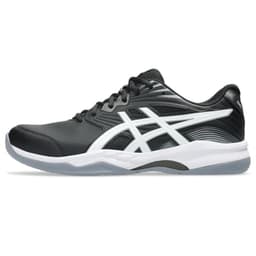
ASICS Gel-Renma 2 Pickleball. First, and the straightforward recommendation. This is ASICS’ pickleball shoe rather than a tennis model with the word added to the listing, and the design decisions reflect it: GEL in the forefoot, TRUSSTIC midfoot support reinforced with synthetic leather overlays, and a wrap-up outsole with a wider gauge and flex grooves — a wider platform underfoot is steadiness, which is the single most useful property a court shoe can have after 55. It sits in the high seventies, under our $100 line, and it is the ASICS we recommend most often on this site. The honest cons are all disclosure gaps rather than design faults: ASICS publishes no outsole compound and no non-marking statement for it, no weight, and one width (“Regular”). Full write-up in the Gel-Renma 2 review, and the K-Swiss vs Gel-Renma comparison puts it against the shoe that beats it on our senior list.
ASICS Gel-Resolution X (Tennis). Second, and the most heavily specified court shoe anywhere in our registry — ASICS or otherwise. The published build: “FlyteFoam Blast+ and ECO Foam combine for cushioning and energy return” over a two-piece midsole, GEL for shock absorption, the re-engineered Dynawall, DYNALACING with additional lateral eyelets for cinching the laces down, a full-length AHAR Plus rubber outsole in a multi-directional tread, a PGuard toe protector for players who slide and toe-drag, and a full-length Flexion Fit upper. It also carries a six-month outsole durability guarantee from Tennis Warehouse, whose terms state that the warranty covers the rubber outsole only. If an ankle you do not trust is the reason you are shopping, this is the most purpose-built answer ASICS sells.
It is second rather than first because of three published facts that this audience should weigh more heavily than a younger player would. Tennis Warehouse lists the length as running Long, recommending a half size down if you are between sizes. It lists break-in: yes, and a shoe that needs breaking in will rub for the first few sessions — a real problem with thin skin, a bunion or neuropathy. And it is heavy: a published 16.1 oz at size 10.5, which is the heaviest figure in our registry. The Amazon listing we link publishes 15.0 oz at men’s size 9 — the same shoe on a smaller foot, and both numbers are real. ASICS publishes no width options and no heel-to-toe drop.
ASICS Gel-Renma 2 Pickleball (Women’s). Third, and the women’s pick by default rather than by argument: it is the women’s cut of our number one, on the same published spec sheet — forefoot GEL, TRUSSTIC with synthetic leather overlays, the wrap-up outsole with wider gauge and flex grooves, one “Regular” width — and it prices within pennies of the men’s. If you want the pickleball-specific ASICS and you want a women’s last, this is the whole answer and there is nothing clever to add. The same cons apply, including the unnamed outsole compound. Our best women’s pickleball shoes page ranks it against the K-Swiss and Skechers women’s models, two of which publish a wide width that this one does not.
ASICS Gel-Dedicate 8 (Tennis). The budget pick, and genuinely good value — with the thinnest spec sheet of anything here. ASICS publishes GEL cushioning and an entry-level court-support build, and that is close to all of it: no width options, no outsole compound, no weight. It is a tennis shoe rather than a pickleball one, which matters less than it sounds, because the movement patterns overlap almost entirely; our tennis-crossover page covers where they do not. Two things to know before you buy. The Gel-Dedicate 9 has shipped, which is usually why the 8 is near fifty dollars, and it pairs the same GEL with TRUSSTIC — so price the newer one before you commit. And at this price you are buying a competent court shoe, not a structured one: if your ankles or knees are the reason you are shopping, spend more. Full write-up in the Gel-Dedicate 8 review, and the Gel-Renma 2 vs Gel-Dedicate 8 comparison is the exact decision most readers of this page are trying to make.
Which ASICS, for which problem
- You just want the right ASICS for pickleball. The Gel-Renma 2. Stop here.
- An ankle that has rolled before. The Gel-Resolution X, for the Dynawall — and consider pairing it with an ankle brace, which does more for a previously sprained ankle than any shoe.
- Knees that feel the pounding. The Gel-Renma 2, for forefoot GEL placement rather than a heel-loaded package. Then read best pickleball shoes for bad knees.
- You are buying a first court shoe and want to spend the least. The Gel-Dedicate 8, and price the Gel-Dedicate 9 alongside it.
- Wide feet. None of them, honestly. ASICS publishes no wide width on any of these four. Go to best pickleball shoes for wide feet, where the 4E options live.
- You have about $150 and want the best structure you can get. The Gel-Resolution X leads best pickleball shoes under $150 on structure for exactly this reason.
The width problem, and the model we left off
It is worth being blunt about the width issue because it is the one thing that stops us putting an ASICS at the top of our senior list. Across these four models ASICS publishes one width option in total: “Regular” on the two Gel-Renma 2 models. The Gel-Dedicate 8 and the Gel-Resolution X publish nothing in that cell at all. Feet broaden and swell with age, and a brand that does not publish the letter is a brand you cannot shop for a broad forefoot without guessing. That is not a claim that the shoes run narrow — we have not measured them and we will not pretend to. It is a claim about the information, and on this site the missing cell counts against the shoe.
We also left one ASICS off the list. The Gel-Resolution X women’s model is in our registry on the same published build as the men’s — Dynawall, FF Blast Plus Eco heel, AHAR Plus outsole, and a published 13.2 oz at women’s size 8 — but it had no live offer on the day we wrote this page, and a pick you cannot buy or price is not a pick. If it comes back in stock it belongs directly beneath its men’s counterpart, and it is the right shoe for a woman who wants the Dynawall. We would rather say that than pad the list.
What we do not claim: we have not worn any of these shoes, measured a drop, or tested an outsole. We own no units and run no lab. Every figure above is read from ASICS’ own published wording or from the retailer spec page named in each product’s table, on the date shown there — including the measured weights. Where ASICS publishes nothing, the cell says “Not published”, which is information too. Prices come from the live price layer with an “as of” date, and the ranking is on published specs and fit, so a price swing does not reorder it.