Kitchen & Court

Best Pickleball Shoes Under $150

Fifteen of the sixteen court shoes we list sit under $150, so this is not an affordability question. It is a question about what the second hundred dollars actually buys — and the answer is width and structure.

New Balance Fresh Foam X 1007 (Men's, 4E)

Our pick

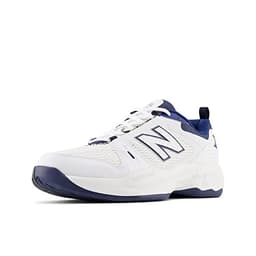
New Balance Fresh Foam X 1007 (Men's, 4E)

The best court shoe under $150 for an older foot, and the clearest example of what the band buys: it is the only shoe we list sold in a published 4E extra-wide width. New Balance publishes the rest of the build too — a Fresh Foam X midsole, a non-marking NDurance rubber outsole with a six-month durability guarantee, and a measured 15.6 oz at size 10.5. If your feet are not wide, the ASICS Gel-Resolution X is the most structured shoe in the band. The budget pick is the K-Swiss Express Light at around eighty dollars — because on this page, spending the whole $150 is a choice, not a requirement.

$119.95 · View on Amazon

Price as of November 8, 2026. #ad How we’re funded

Read the full write-up
By Stephen V.Last updated How we research

Start with the honest arithmetic, because it changes the question. Fifteen of the sixteen court shoes in our registry had a live price under $150 when we wrote this. A $150 ceiling is not a constraint on this site — it is nearly the whole shelf. So this page is not a list of what you can afford. It is an answer to a narrower and more useful question: if you have already read our under-$100 page, what does the next fifty dollars actually get you?

Six shoes. Raising the ceiling from $100 to $150 adds exactly six court shoes to the shortlist, and they are not simply nicer versions of the cheap ones — they are where two specifications live that no sub-$100 shoe on this site publishes at all. The first is width: the only 4E extra-wide court shoe we list costs about $120. The second is a full tennis stability chassis: a named lateral wall, a full-length abrasion outsole and a two-piece midsole, which is the build you buy when a sideways push-off is the thing that worries you. Those two features matter more to a player over 55 than any amount of foam, and they are the entire reason this page exists beside best pickleball shoes under $100.

Everything below is ranked on published construction — what the maker or its retailer states about the midsole, the outsole compound and tread, the stability features, the width options and the weight. Where nothing is published, the spec table says so rather than guessing, and one shoe in this band publishes conspicuously little for its price. Every button shows today’s live price with the date it was checked. We have not worn any of these shoes.

How this is funded: we earn a commission if you buy through our links, at no extra cost to you. It never changes which product we recommend, and we’ll tell you plainly when to skip one. Full disclosure.

Quick picks

Ranked on published specs, grip and build, and honest buyer fit. Select a row to jump to the full write-up. We have not lab-tested these — here is exactly what we do instead.

#ProductBest forPrice
1
New Balance Fresh Foam X 1007 (Men's, 4E)

New Balance Fresh Foam X 1007 (Men's, 4E)

The honest pick for two specific people: anyone with a wide foot, and anyone who has already been told to wear an orthotic. New Balance lists this in a 4E extra-wide, which almost no court shoe offers, and it has the internal volume to swallow a real insert without squashing your toes. Read the con about the arch before you buy — it changes who this shoe is for.

Best overall — the only published 4E width
$119.95 · View on Amazon

Price as of November 8, 2026. #ad How we’re funded

2
ASICS Gel-Resolution X (Tennis)

ASICS Gel-Resolution X (Tennis)

The most structured shoe on this page by some distance. ASICS' DYNAWALL frame now wraps the heel, the midsole is built in two pieces so the heel can be softer than the forefoot, and a higher medial collar fights the ankle roll that ends up loading the fascia. This is the shoe for someone whose heel pain has gone past annoying. It is heavy and it is expensive, and both of those are the price of the support.

Most structured — re-engineered DYNAWALL
$138.95 · View on Amazon

Price as of November 8, 2026. #ad How we’re funded

3
Skechers Pickleball Viper Court Pro 2.0 (Men's)

Skechers Pickleball Viper Court Pro 2.0 (Men's)

Skechers has quietly become a favorite of the 55+ pickleball crowd for one reason: comfort straight out of the box. The Viper Court Pro is a proper court shoe — lateral support and a grippy outsole — with the plush, forgiving feel Skechers is known for. No break-in misery.

Best fit package — two widths, removable insole
$103.50 · View on Amazon

$120.0014% off

Price as of November 8, 2026. #ad How we’re funded

4
New Balance FuelCell 996 V6 (Tennis)

New Balance FuelCell 996 V6 (Tennis)

A tennis shoe that crosses over well to pickleball, built on New Balance's FuelCell foam for a springy, cushioned ride with tennis-grade lateral stability. Buy it for the cushioning and the stable platform, not for room: the standard width runs narrow (the shoe's most common owner complaint), and New Balance's July 2026 successor, the 996v7, was redesigned with a roomier toe box. If width is your problem, order a wide or look at the v7.

Softest ride
$134.95 · View on Amazon

Price as of November 8, 2026. #ad How we’re funded

5
K-Swiss Express Light Pickleball (Women's)

K-Swiss Express Light Pickleball (Women's)

The women's version of our best all-round court shoe: a purpose-built pickleball shoe that's lightweight yet stable, with reinforced toe protection. Light-and-stable is the combination that keeps an older player balanced and reduces stumbles.

Best women's pickleball-specific
$115.00 · View on Amazon

Price as of November 8, 2026. #ad How we’re funded

6
K-Swiss Express Light Pickleball

K-Swiss Express Light Pickleball

The all-rounder for a 55+ player: a purpose-built pickleball court shoe that's lightweight but stable, with reinforced toe protection for all the toe-dragging the sport does to sneakers. Stable and light is exactly the combination that keeps you balanced and reduces stumbles.

Budget pick — you can stop at $80
$79.94 · View on Amazon

$110.0027% off

Price as of November 8, 2026. #ad How we’re funded

The picks in full

#1Best overall — the only published 4E width

New Balance Fresh Foam X 1007 (Men's, 4E)

The honest pick for two specific people: anyone with a wide foot, and anyone who has already been told to wear an orthotic. New Balance lists this in a 4E extra-wide, which almost no court shoe offers, and it has the internal volume to swallow a real insert without squashing your toes. Read the con about the arch before you buy — it changes who this shoe is for.

Easier on the joints: A wide shoe with a low arch and a removable liner is a chassis, not a finished product. Pair it with a supportive insert and you get arch support shaped to your foot plus room your toes are not fighting for — which for a wide-footed player is a better answer than cramming into a narrower shoe that has the arch built in.

What we like

  • Listed in 4E extra wide — genuinely rare in a court shoe
  • Fresh Foam midsole for shock absorption, with a plush heel and ankle area
  • NDurance rubber outsole with a six-month outsole durability guarantee
  • No break-in period, which matters when your foot already hurts

Skip it if

  • Tennis Warehouse lists it as a LOW arch design — on its own it gives you little arch support, which is exactly what plantar fasciitis wants
  • 15.6 oz in a size 10.5 — heavy
  • The stability comes from integrated stabilizers rather than a rigid chassis, so it is less locked-down than the ASICS
  • Realistically a two-part purchase: the shoe plus an insert
TypeTennis / court shoe (men's)
Midfoot supportIntegrated stabilizers
ArchLow arch design (per Tennis Warehouse)
MidsoleFresh Foam
OutsoleNDurance rubber, six-month durability guarantee
Weight15.6 oz (size 10.5, per listing)
Width options4E extra wide
Heel-to-toe dropNot published

Specs read from the product listing, on August 31, 2026. “Not published” means the maker does not state that figure.

#2Most structured — re-engineered DYNAWALL

ASICS Gel-Resolution X (Tennis)

The most structured shoe on this page by some distance. ASICS' DYNAWALL frame now wraps the heel, the midsole is built in two pieces so the heel can be softer than the forefoot, and a higher medial collar fights the ankle roll that ends up loading the fascia. This is the shoe for someone whose heel pain has gone past annoying. It is heavy and it is expensive, and both of those are the price of the support.

Easier on the joints: Every degree your arch collapses inward is extra stretch on an already-irritated band of tissue. A frame this rigid simply does not let the foot do that, which is why the stiff, heavy shoe is often the one that lets a stubborn heel settle down.

What we like

  • DYNAWALL frame extends around the heel — among the most rigid platforms sold for court sport
  • Two-piece midsole: FF BLAST PLUS ECO under the heel, FLYTEFOAM in the forefoot
  • Higher medial collar resists the ankle roll that overloads the arch
  • AHARPLUS outsole rubber, so a heavy shoe still lasts

Skip it if

  • 15.0 oz in a men's size 9 — the heaviest shoe here, and you feel it late in a session
  • The stiffest shoe here, which some players simply find uncomfortable
  • Premium price, and it is a tennis shoe rather than a pickleball-specific one
  • ASICS does not publish a heel-to-toe drop for it
TypeTennis / court shoe (men's)
Midfoot supportDYNAWALL frame, extends around the heel
HeelFF BLAST PLUS ECO foam
MidsoleTwo-piece: FLYTEFOAM forefoot, FF BLAST PLUS ECO heel
OutsoleAHARPLUS rubber
Weight15.0 oz (men's size 9, per listing)
Heel-to-toe dropNot published
Width optionsNot published

Specs read from the product listing, on September 22, 2026. “Not published” means the maker does not state that figure.

#3Best fit package — two widths, removable insole

Skechers Pickleball Viper Court Pro 2.0 (Men's)

Skechers has quietly become a favorite of the 55+ pickleball crowd for one reason: comfort straight out of the box. The Viper Court Pro is a proper court shoe — lateral support and a grippy outsole — with the plush, forgiving feel Skechers is known for. No break-in misery.

Easier on the joints: Two of its published features matter more than the comfort it is famous for. The Arch Fit insole is removable, so this is a shoe you can put your own orthotic into — and the Goodyear Gold outsole is grip, which for a player over 60 is fall prevention rather than performance. A cushioned shoe that needs no break-in also keeps your gait normal, and a normal gait keeps load off your knees and hips.

What we like

  • Cushioned, forgiving feel with little to no break-in
  • A real court shoe with lateral support, not a walking sneaker
  • Popular with older players for all-day comfort

Skip it if

  • Not as low and locked-in as a racing-style court shoe
  • Some players want more lateral stiffness for aggressive play
TypePickleball court shoe (men's)
InsoleRemovable Arch Fit EVA (podiatrist-certified shape)
MidsoleULTRA GO foam
OutsoleGoodyear Gold compound, for “controlled slides”
Non-markingNot published
UpperMesh with synthetic overlays, rubber toe guard
Heel height1 1/4 in
Width optionsMedium and Wide
Heel-to-toe dropNot published

Specs read from the product listing, on September 6, 2026. “Not published” means the maker does not state that figure.

#4Softest ride

New Balance FuelCell 996 V6 (Tennis)

A tennis shoe that crosses over well to pickleball, built on New Balance's FuelCell foam for a springy, cushioned ride with tennis-grade lateral stability. Buy it for the cushioning and the stable platform, not for room: the standard width runs narrow (the shoe's most common owner complaint), and New Balance's July 2026 successor, the 996v7, was redesigned with a roomier toe box. If width is your problem, order a wide or look at the v7.

Easier on the joints: FuelCell cushioning plus a tennis-grade stable platform means soft landings and a foot that doesn't roll — the combination that protects sore knees and weak ankles at once. Just don't buy it to solve a width problem.

What we like

  • FuelCell foam gives a cushioned, energetic feel
  • Tennis-grade lateral support handles pickleball's cuts easily
  • The same FuelCell midsole and tennis platform the v7 keeps — the update was about fit, not cushioning

Skip it if

  • Standard width runs narrow — the shoe's most common owner complaint, and the reason the newer v7 got a roomier toe box
  • Superseded by the FuelCell 996v7 (July 2026); still sold, but no longer the current model
  • A tennis last is a touch heavier than a minimal court shoe
TypeTennis / court shoe
Cushioning techFuelCell foam
Width optionsNot published
Key featuresLateral stability, FuelCell cushioning
Successor modelFuelCell 996v7 (July 2026) — roomier toe box

Specs read from the product listing, on October 13, 2026. “Not published” means the maker does not state that figure.

#5Best women's pickleball-specific

K-Swiss Express Light Pickleball (Women's)

The women's version of our best all-round court shoe: a purpose-built pickleball shoe that's lightweight yet stable, with reinforced toe protection. Light-and-stable is the combination that keeps an older player balanced and reduces stumbles.

Easier on the joints: A stable, low-to-the-ground court shoe keeps your ankle and knee tracking straight through side-to-side moves — where older players most often roll an ankle.

What we like

  • Purpose-built for pickleball, not a repurposed runner
  • Lightweight yet stable — the balance most players want
  • Durable toe protection where court shoes wear out

Skip it if

  • Less cushioned than a GEL or FuelCell shoe
  • Color/size availability varies
TypePickleball court shoe (women's)
Key featuresLightweight, stable support, durable toe
OutsoleNon-marking Aosta 7.0 rubber, modified herringbone tread
MidsoleK-EVA, with a midfoot shank
UpperSeamless synthetic and mesh, DuraWrap toe, OrthoLite liner
WeightNot published
Width optionsWide (W) sold — the linked listing is a W
Cushioning techNot published

Specs read from the product listing, on July 22, 2026. “Not published” means the maker does not state that figure.

#6Budget pick — you can stop at $80

K-Swiss Express Light Pickleball

The all-rounder for a 55+ player: a purpose-built pickleball court shoe that's lightweight but stable, with reinforced toe protection for all the toe-dragging the sport does to sneakers. Stable and light is exactly the combination that keeps you balanced and reduces stumbles.

Easier on the joints: A stable, low-to-the-ground court shoe keeps your ankle and knee tracking straight during side-to-side moves — the situation where older players most often roll an ankle or tweak a knee.

What we like

  • Purpose-built for pickleball's lateral movement, not a running shoe
  • Lightweight yet stable — the balance most older players want
  • Durable toe protection where court shoes usually wear out

Skip it if

  • Not the most cushioned option if your knees need maximum padding
  • Color/size availability varies
TypePickleball court shoe
Key featuresLightweight, stable support, durable toe
OutsoleNon-marking Aosta 7.0 rubber, modified herringbone tread
MidsoleK-EVA, with a midfoot shank
UpperSeamless synthetic and mesh, DuraWrap toe, OrthoLite liner
Weight12.4 oz (size 10.5, per Tennis Warehouse)
Width optionsMedium (per Tennis Warehouse)
Cushioning techNot published

Specs read from the product listing, on July 22, 2026. “Not published” means the maker does not state that figure.

What the second hundred dollars buys, feature by feature

Four things separate the $100–$150 rung from the one below it. Only two of them are worth paying for, and which two depends entirely on your feet.

  • Width, and it is the big one. Under $100 the widest published option on this site is a “Wide” — Skechers publishes Medium and Wide on the women’s Viper Court Pro 2.0, and K-Swiss sells a W in the women’s Express Light. Above $100 you get a genuine 4E extra wide in the New Balance 1007, and New Balance is the only maker in our registry that publishes that letter at all. Feet broaden with age, and a swollen or bunion-affected forefoot squeezed into a medium is not a comfort complaint — it is why people stop playing. If this applies to you, the width decision outranks every other spec on this page, and our best pickleball shoes for wide feet page takes it further.
  • A named lateral stability structure. The sub-$100 shoes publish midfoot support — a shank, a TRUSSTIC, a TPU chassis — and that is real. What the band above adds is a structure built specifically to resist the foot rolling sideways: ASICS publishes a “re-engineered Dynawall” on the Gel-Resolution X that it states “maximizes the lateral stability”, and the Amazon listing for the same shoe describes that frame as extending around the heel. Published senior-injury work on pickleball puts sprains and falls at the top of the injury list, and lateral containment is the equipment half of that problem. See best pickleball shoes for ankle support.
  • A full-length, guaranteed outsole. Both New Balance shoes and the Gel-Resolution X carry a published six-month outsole durability guarantee — New Balance attaches an NDurance guarantee to the 1007 itself, and Tennis Warehouse attaches its own to both that shoe and the ASICS. No sub-$100 shoe on this site carries one. A guarantee is not a lifespan figure and nobody publishes one of those, but it is a maker putting money behind the rubber, which is more than marketing adjectives.
  • Weight, in the wrong direction. This is the honest cost. The band above $100 is heavier, not lighter: 15.6 oz for the 1007 at size 10.5 and 16.1 oz for the Gel-Resolution X at the same size, against a measured 12.4 oz for the K-Swiss Express Light at $80. That is nearly four extra ounces on each foot, lifted several thousand times in a session. Structure has mass. If nothing about your feet demands width or a lateral wall, the extra fifty dollars buys you a heavier shoe, and you should keep it — see the lightest court shoes by published weight.

The picks in order

New Balance Fresh Foam X 1007 (Men’s, 4E). First, on fit rather than on performance. For an older foot, fit is performance: a shoe that pinches changes how you walk, and how you walk is what hurts a knee or a hip three sets later. This is the only court shoe in our registry sold in a published 4E extra-wide width, and New Balance publishes the rest honestly — a Fresh Foam X midsole described as delivering “comfort, shock-absorption, and energy return”, anon-marking NDurance rubber outsole in a unique tread pattern (both the compound and the non-marking status stated, which is not true of every shoe on this site), synthetic-and-mesh upper with added toe protection, a measured 15.6 oz at size 10.5, an arch listed as low, and a hard all-court surface rating. Two honest cons. It is heavy, and the spec page publishes no midfoot or lateral stability feature at all — no shank, no chassis, no wall. That is a real gap for a side-to-side sport, and it is why this shoe is our pick for a wide foot rather than for an unstable ankle. There is no heel-to-toe drop published either.

ASICS Gel-Resolution X (Tennis). Second, and the most heavily specified shoe anywhere in our registry. ASICS publishes a two-piece midsole (“FlyteFoam Blast+ and ECO Foam combine for cushioning and energy return”, with GEL for shock absorption), a re-engineered Dynawall that it states “maximizes the lateral stability”, DYNALACING with extra lateral eyelets, a full-length AHAR Plus rubber outsole in a multi-directional tread pattern, a PGuard toe protector for players who slide and toe-drag, and a full-length Flexion Fit upper. If the thing that worries you is your ankle giving way on a wide forehand, this is the most purpose-built answer under $150. The cons are specific and published, and they matter to this audience more than they would to a 30-year-old: Tennis Warehouse lists the length as running Long, recommending a half size down if you are between sizes, and lists break-in: yes. A shoe you have to break in is a shoe that will rub for the first few sessions, which is a genuine problem if you have thin skin or neuropathy. It is also the heaviest pick here at a published 16.1 oz (size 10.5), and ASICS publishes no width options and no non-marking statement for the outsole. The Amazon listing we link publishes 15.0 oz at men’s size 9 — the same shoe, a smaller foot, and both figures are real.

Skechers Pickleball Viper Court Pro 2.0 (Men’s). Third, and the shoe to buy if you want the most accommodating fit package rather than the most structure. Skechers publishes a removable Arch Fit EVA insole with a podiatrist-certified shape, an ULTRA GO foam midsole, a Goodyear Gold compound outsole described as suiting controlled slides, a mesh upper with a rubber toe guard, a 1 1/4 in heel height, and both Medium and Wide widths. Removable insole plus two widths is the combination that lets you bring your own orthotic without the shoe becoming a vice, and it is the only shoe in this band that offers it. The women’s version of this same shoe sits under $100 and leads our under-$100 page, which tells you something about where the value sits in the Skechers line. Cons: the words “non-marking” appear nowhere on Skechers’ page for this model even though Skechers uses them elsewhere in the Viper Court family, so we record it as not published — check before you play on a gym floor. No heel-to-toe drop and no weight are published either. Full write-up in the Viper Court Pro 2.0 review.

New Balance FuelCell 996 V6 (Tennis). Fourth, for the ride, and fourth precisely because of what it does not tell you. New Balance publishes FuelCell foam cushioning and lateral stability, and FuelCell is genuinely one of the softer, more responsive court foams you can buy at this price — a real argument if the pounding is what you feel afterwards. But set that beside the Gel-Resolution X’s spec sheet and the disclosure gap is stark: no published width options, no named outsole compound, no weight, no drop. On a page ranked by published construction, a shoe at $135 that publishes less than a shoe at $120 goes fourth. One more thing you should know before buying: the FuelCell 996v7 shipped in July 2026 with a roomier toe box, which is usually why the V6 is discounted — and a roomier toe box is exactly what this audience wants, so it is worth pricing the newer one too. Full write-up in the FuelCell 996 V6 review.

K-Swiss Express Light Pickleball (Women’s). Fifth, and the women’s pick in the band — with a caveat we are not going to hide. This is the women’s cut of our favorite shoe under $100, it is pickleball-specific rather than a tennis crossover, the listing we link is a W (wide), and K-Swiss publishes the whole build: a K-EVA midsole with a midfoot shank, a non-marking Aosta 7.0 rubber outsole with modified herringbone tread, a seamless synthetic-and-mesh upper with a DuraWrap toe and an OrthoLite liner. The caveat is the price. The men’s version of the same shoe sits near eighty dollars while this one sits near $115, which is the wide-width premium rather than a different shoe, and K-Swiss publishes no weight for the women’s model even though it publishes 12.4 oz for the men’s. If you want a women’s shoe and not a wide one, our best women’s pickleball shoes page has cheaper answers.

K-Swiss Express Light Pickleball. The budget pick, and the pick we hand to most readers of this site regardless of what their ceiling is. At around eighty dollars it is pickleball-specific, publishes the fullest build in the whole registry for the money, and is the lightest court shoe we list at a measured 12.4 oz (men’s 10.5) — nearly four ounces under both of the shoes at the top of this page. The limitation is the one that sends people up a band in the first place: the men’s listing publishes medium width only. If your feet are medium and your ankles are sound, buy this and keep the seventy dollars. Full write-up in the Express Light review, and the K-Swiss vs ASICS Gel-Renma comparison covers the obvious alternative at the same price.

Which one, for which foot

  • Wide, swollen or bunion-affected feet. The New Balance 1007 in 4E. Nothing else on this site publishes that width. Then read pickleball and bunions.
  • An ankle you do not trust. The ASICS Gel-Resolution X, for the re-engineered Dynawall and the full-length AHAR Plus outsole — and pair it with an ankle brace if you have sprained it before.
  • You wear your own orthotic. The Skechers Viper Court Pro 2.0 — removable insole, two published widths.
  • Knees and hips that feel the pounding. The FuelCell 996 V6 for the foam, or the ASICS Gel-Renma 2 under $100 for forefoot GEL. Both are covered on best pickleball shoes for bad knees.
  • Medium feet, sound ankles, and you would rather not carry the weight. The K-Swiss Express Light, and stop reading.
  • All ASICS, because that is the brand that fits you. Two of our picks and two more under $100 are ASICS — best ASICS pickleball shoes ranks the whole line.

What a $150 ceiling will not buy you

It will not buy a court shoe under thirteen ounces with a wide width — every shoe on this site is one or the other. It will not buy a published heel-to-toe drop: not one of the sixteen court shoes in our registry publishes that number, which makes any claim about “drop for knee pain” unverifiable for every shoe we list. It will not buy a published outsole lifespan either; the closest thing available is the six-month durability guarantee on three of these shoes. And it will not buy you out of the one shoe we refuse to recommend at any price in the band — the Skechers Viper Court Smash, which qualifies on price but publishes no insole, midsole, outsole, width or drop at all.

What we do not claim: we have not worn any of these shoes, measured a drop, or tested an outsole. We own no units and run no lab. Every figure above is read from the maker’s or retailer’s published spec page named in each product’s table, on the date shown there, including the measured weights. Where a maker publishes nothing, the cell says “Not published”, which is information too. Prices come from the live price layer with an “as of” date, so a shoe that drifts over $150 on a given day shows its real number; the ranking is on published specs and fit, so a price swing does not reorder it.
Frequently asked questions

What are the best pickleball shoes under $150?

The New Balance Fresh Foam X 1007, for most players over 55, because it is the only court shoe we list sold in a published 4E extra-wide width — and for an older foot, fit outranks every other specification. New Balance also publishes a Fresh Foam X midsole, a non-marking NDurance rubber outsole with a six-month durability guarantee, and a measured 15.6 oz at size 10.5. If your feet are medium and your ankles are sound, the K-Swiss Express Light at around eighty dollars is the better buy and the budget pick here.

Is it worth spending $150 on pickleball shoes instead of $100?

Only for two reasons, and both are about your feet rather than your game. The first is width: above $100 you can get a published 4E extra-wide, which no sub-$100 shoe on this site offers. The second is a named lateral stability structure — the ASICS Gel-Resolution X publishes a re-engineered Dynawall plus a full-length AHAR Plus outsole, which is the build to buy if an ankle is your concern. If neither applies, the extra fifty dollars mostly buys weight: the two shoes at the top of this page are about four ounces heavier per foot than the K-Swiss Express Light at eighty.

Which pickleball shoe under $150 is best for wide feet?

The New Balance Fresh Foam X 1007 in 4E, which is the only extra-wide court shoe in our registry. The runner-up is the Skechers Pickleball Viper Court Pro 2.0, which publishes Medium and Wide plus a removable Arch Fit insole so an orthotic goes in without crowding the shoe. Both New Balance FuelCell 996 V6 listings we link are W widths as well, though New Balance does not publish width options for that model generally.

How many pickleball shoes actually cost under $150?

Fifteen of the sixteen court shoes in our registry had a live price under $150 when we wrote this, which is why this page is framed around what the extra money buys rather than around affordability. Raising the ceiling from $100 to $150 adds six shoes to the shortlist: the Skechers Viper Court Pro 2.0 men's, both New Balance FuelCell 996 V6 models, the K-Swiss Express Light women's, the New Balance 1007 4E and the ASICS Gel-Resolution X.

Do any shoes in this band come with a durability guarantee?

Three of them carry a published six-month outsole guarantee. New Balance attaches its own NDurance 6-month outsole durability guarantee to the 1007, and Tennis Warehouse attaches a one-time six-month guarantee of its own to the 1007 and the ASICS Gel-Resolution X — its terms state the warranty covers the rubber outsole only, excluding the toe guard and the upper. No sub-$100 shoe on this site carries one. A guarantee is not a published lifespan, and nobody publishes one of those.

Is the ASICS Gel-Resolution X too heavy for an older player?

It is the heaviest shoe on this page at a published 16.1 oz (size 10.5) — about four ounces per foot more than the K-Swiss Express Light. Whether that matters depends on which risk you are managing. If your ankles are the concern, the weight is the price of the lateral structure and worth paying. If they are not, it is dead weight you lift on every step. Two other published details belong in the decision: Tennis Warehouse lists the shoe as running long (go a half size down if between sizes) and as requiring break-in.

Sources

  • Tennis Warehouse - New Balance MC 1007 4E men's court shoe (spec page) — The published build of the only court shoe in our registry sold in a 4E width. Midsole: 'Fresh Foam X material underneath your foot in the midsole', with the spec list adding that 'Fresh Foam provides a high level of comfort, shock-absorption, and energy return for easy rebound'. Outsole: 'Non-marking NDurance rubber outsole in a unique tread pattern design' - so BOTH the compound and the non-marking status are published, which is not true of every shoe we list. Durability: New Balance attaches an 'NDurance 6-month outsole durability guarantee' to the shoe itself, and Tennis Warehouse separately attaches its own 'one-time TW 6-month outsole durability guarantee' covering the rubber outsole only, excluding the toe-guard and upper. Upper: 'Synthetic materials combined with mesh provide lightweight support and breathability', plus 'Added protection around the toes helps provide durability'. Weight '15.6 ounces (size 10.5)'. Width '4E Extra Wide'. Arch listed as 'Low'. Surface 'Hard (all-court)'. NOT PUBLISHED: any midfoot or stability feature - the page describes none - and no heel-to-toe drop (accessed November 8, 2026)
  • Tennis Warehouse - ASICS Gel-Resolution X men's shoe (spec page) — The most heavily specified court shoe in our registry, and the reason a $150 ceiling buys something a $100 one cannot. Midsole: 'FlyteFoam Blast+ and ECO Foam combine for cushioning and energy return', with ASICS' GEL adding shock absorption. Stability: 'A re-engineered Dynawall maximizes the lateral stability', plus 'DYNALACING for a customizable fit and added comfort when cinching the laces tightly'. Outsole: 'Full length AHAR Plus rubber outsole in a multi-directional tread pattern', with a 'PGuard Toe Protector for those who slide and toe drag'. Upper: 'Full length Flexion Fit upper with increased support, comfort, and ventilation'. Durability: 'Backed by a Tennis Warehouse six month outsole durability guarantee', whose terms state the 'Warranty only covers the rubber outsole of the shoe'. Weight '16.1 ounces (size 10.5 US)' - heavier than, and consistent with, the 15.0 oz at men's size 9 the Amazon listing publishes for the same shoe. Width Medium, Arch Medium, Surface 'All Court (Hard)'. TWO FIT WARNINGS PUBLISHED ON THE PAGE AND WORTH MORE THAN THE SPECS: length runs 'Long (if you are in-between sizes, we recommend going a half size down)', and Break-in is listed as 'Yes'. NOT PUBLISHED: heel-to-toe drop, and no non-marking statement for the outsole (accessed November 8, 2026)
  • Skechers - Pickleball Viper Court Pro 2.0 (maker's product page) — Outsole: 'Goodyear Gold compound, built for increased durability to allow the elite player to perform controlled slides specifically on the court surface.' The words 'non-marking' do NOT appear anywhere on this model's page. Insole: 'Patented Skechers Arch Fit EVA insole system with podiatrist-certified arch support', 'Removable EVA insole'. Midsole: 'Lightweight, responsive ULTRA GO Foam midsole cushioning'. Upper: 'Innovative durable yet breathable mesh technology with synthetic overlays and a lace-up front' plus a 'Rubber toe guard for lasting durability'. Width shown: Medium Wide. Described as 'Built for the elite pickleball athlete' and also suitable for 'padel and tennis game play'; no indoor-vs-outdoor distinction is stated (accessed October 11, 2026)
  • Tennis Warehouse - K-Swiss Express Light Pickleball (spec page) — Outsole: 'Non-marking Aosta 7.0 rubber outsole in a modified herringbone tread pattern provides excellent traction and good durability on any court surface.' Midsole: 'K-EVA midsole for cushion and support under foot' plus a 'Midfoot shank for added stability and unwanted twisting.' Upper: 'Seamless synthetic materials and mesh for comfort and breathability. DuraWrap protection in the toe for extra durability. An Ortholite liner for added cushioning.' Weight 12.4 oz (size 10.5); medium width only. No outsole durability guarantee listed and no indoor-vs-outdoor statement beyond 'any court surface' (accessed October 11, 2026)
  • Style Rave — New Balance FuelCell 996v7 debuts ahead of the US Open (Aug 7, 2026) — On the outgoing 996v6: 'the previous version received recurring criticism across online communities for its incredibly restrictive, narrow internal proportions.' On the v7: 'The revised design officially features a considerably roomier toe box to enhance overall playing comfort.' Lists a standard 10 mm heel-to-toe drop and a $134.99 adult price (accessed September 15, 2026)
  • Tennisnerd — New Balance FuelCell 996v7 tennis shoes (Jul 20, 2026) — 'the v7 generation features an updated fit profile that provides a more accommodating, roomier toe box compared to earlier versions'; available in B, D and 2E widths; NDurance upper; priced around $135 (accessed September 15, 2026)
  • Non-fatal senior pickleball and tennis injuries in US EDs, 2010–2019 — Injury Epidemiology (2021) — For players 60+: strains/sprains 31.0%, fractures 30.4%; the wrist is the single most-injured body part (13.2%); women 3.7x more likely to fracture (accessed July 22, 2026)
  • Pickleball-Related Geriatric Fractures — Arthroscopy, Sports Medicine & Rehabilitation (2025) — Adults 60+ account for 74.1% of pickleball ED visits and are 1.6x more likely to fracture; 56.1% of geriatric injuries are ground-level falls; women 3x higher fracture odds (accessed July 22, 2026)
  • American Academy of Orthopaedic Surgeons (OrthoInfo) — Sprained Ankle — An ankle sprain is 'an injury to one or more of the ligaments that stabilize the ankle'; about 90% are inversion injuries to the lateral ligaments (ATFL and CFL). Causes named: walking or exercising on an uneven surface, falling or tripping, and 'high-risk sports that require cutting or jumping actions, such as trail running, basketball, tennis, football, and soccer'. Footwear risk factors: 'wearing shoes that do not provide enough foot and ankle support' and 'shoes with slippery soles'. Prevention: 'warm up thoroughly before exercise and physical activity', strengthening exercises for ankle stability, 'choose footwear with appropriate support for your activity', and balance (proprioception) training, often on a balance board (accessed September 18, 2026)

Keep reading