Kitchen & Court

Best Fiberglass Pickleball Paddles

Fiberglass is the cheap face, the lively face and — on two paddles here — the one with the biggest published grip. Six fiberglass paddles ranked on what their makers publish.

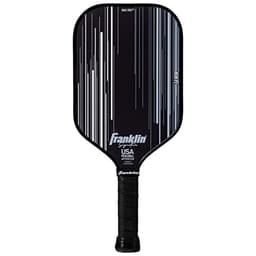
Franklin Sports Signature Series Pro 16mm

Our pick

Franklin Sports Signature Series Pro 16mm

The best fiberglass paddle for a player over 55, and the only paddle on this entire site with a published 4.5 in (large) grip circumference — the one number that matters most to an arthritic hand. Franklin publishes all of it: a 16 mm polypropylene core, a MaxGrit coated fiberglass face, 7.9–8.3 oz and USA Pickleball approval. The budget pick is the HEAD Extreme Elite, usually the cheapest paddle we list anywhere and the lightest published weight on the site at 7.7–7.9 oz.

$61.57 · View on Amazon

Price as of November 8, 2026. #ad How we’re funded

Read the full write-up
By Stephen V.Last updated How we research

Fiberglass (sometimes called composite) is the face material the paddle market has quietly decided is second-best, and the reason is price rather than physics. Carbon is stiffer and mutes contact more, which is why our carbon roundup is the page we send most arm-sensitive readers to. Fiberglass flexes more and returns the ball faster, so a fiberglass face feels livelier and pops more — and it costs a fraction as much to make, which is why almost every paddle under fifty dollars has one.

There is a less obvious reason to read this page, though. Two of the six paddles here are the only ones in our registry with large grips and full spec sheets in the same package, and one of them — the Franklin Signature Pro 16mm — is the single paddle we list with a published 4.5 in grip circumference. For a hand with arthritis, grip size outranks face material by a wide margin, and the face material you can afford at that grip size is fiberglass. So the ranking below is on published core thickness first, then grip, then published weight, then shape — and three of these six paddles leave at least one of those cells empty, which we say out loud rather than filling in with a guess. Live prices, each with the date it was checked.

How this is funded: we earn a commission if you buy through our links, at no extra cost to you. It never changes which product we recommend, and we’ll tell you plainly when to skip one. Full disclosure.

Quick picks

Ranked on published specs, grip and build, and honest buyer fit. Select a row to jump to the full write-up. We have not lab-tested these — here is exactly what we do instead.

#ProductBest forPrice
1
Franklin Sports Signature Series Pro 16mm

Franklin Sports Signature Series Pro 16mm

The one on this list built for a hand that hurts. Its published grip circumference is 4.5 inches - the largest we found on any paddle under $100 - and a larger grip is what lets an arthritic hand hold the paddle loosely instead of squeezing it. Add a 16 mm polypropylene core and USA Pickleball approval and that is a lot of comfort for the money.

Best overall — 16 mm core, 4.5 in grip
$61.57 · View on Amazon

Price as of November 8, 2026. #ad How we’re funded

2
HEAD Extreme Elite

HEAD Extreme Elite

The cheapest paddle on the site that still comes with a real spec sheet: a published 7.7-7.9 oz - the lightest and tightest range of anything under $50 - on a 16 x 7 7/8 in standard shape with a 5 in handle and a medium 4 1/4 in grip. Fiberglass over a polymer honeycomb, from the tennis brand. For a first paddle, or a spare in the bag, it is hard to argue with at the price.

Budget pick — lightest published weight
$24.99 · View on Amazon

Price as of November 8, 2026. #ad How we’re funded

3
Niupipo Fiberglass Pickleball Paddle

Niupipo Fiberglass Pickleball Paddle

The value pick, and a smart first paddle for a 55+ player. It's marketed as lightweight, has an ultra-cushion grip, and publishes its 4.8-inch grip length — one of the few here that tells you a real grip number. For a starter paddle that's easy on the hand, it's hard to beat the price.

Best for beginners over 60
$34.99 · View on Amazon

$36.995% off

Price as of November 8, 2026. #ad How we’re funded

4
Franklin Sports Signature Series Pro 13mm

Franklin Sports Signature Series Pro 13mm

The thinner, livelier sibling of the 16 mm Franklin we recommend for arthritic hands - same MaxGrit fiberglass face and 16.5 x 7.5 in shape with a 5.6 in handle, but a 13 mm core, a medium 4 1/4 in grip and a published 7.5-8.0 oz. More pop and a little more feedback into the arm, for the budget buyer who wants to put the ball away. USA Pickleball approved.

Best for power on a budget
$51.99 · View on Amazon

$99.9948% off

Price as of November 8, 2026. #ad How we’re funded

5
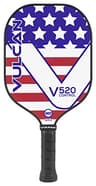
Vulcan V520

Vulcan V520

A control-first paddle at a fair price. The polypropylene core and fiberglass face are tuned for touch rather than raw power, which is exactly what most older players want — placement and soft hands beat trying to bang winners.

Best for control, thin spec sheet
$89.99 · View on Amazon

Price as of November 8, 2026. #ad How we’re funded

6
Selkirk SLK Evo Hybrid XL

Selkirk SLK Evo Hybrid XL

Selkirk is a top-tier pickleball name, and the SLK Evo Hybrid is its most affordable way in. A fiberglass XL shape gives you extra reach and a bigger sweet spot for the money — a lot of forgiveness for a budget paddle.

Trusted brand, least published
$59.88 · View on Amazon

Price as of November 8, 2026. #ad How we’re funded

The picks in full

#1Best overall — 16 mm core, 4.5 in grip

Franklin Sports Signature Series Pro 16mm

The one on this list built for a hand that hurts. Its published grip circumference is 4.5 inches - the largest we found on any paddle under $100 - and a larger grip is what lets an arthritic hand hold the paddle loosely instead of squeezing it. Add a 16 mm polypropylene core and USA Pickleball approval and that is a lot of comfort for the money.

Easier on the joints: Grip size is the one paddle spec that changes how hard your hand has to work, and a too-small grip is the classic self-inflicted cause of hand and elbow pain. At 4.5 inches this is the rare affordable paddle you can hold loosely without building it up with overgrips first.

What we like

  • 4.5-inch grip circumference - the largest published grip in this price range
  • 16 mm polypropylene honeycomb core for a soft, stable, quiet feel
  • USA Pickleball approved, so it is legal for club and tournament play

Skip it if

  • At 7.9-8.3 oz it is one of the heavier paddles here - not the pick for a weak wrist
  • That 4.5-inch grip is genuinely large; smaller hands will find it a stretch
  • The fiberglass face is livelier than carbon, so it transmits a little more feel
Face materialMaxGrit coated fiberglass
Core16 mm polypropylene honeycomb
Weight7.9-8.3 oz (published range)
Grip circumference4.5 in (large)
Handle length5.6 in
Dimensions16.5 x 7.5 in
USA Pickleball approvedYes

Specs read from the product listing, on August 24, 2026. “Not published” means the maker does not state that figure.

#2Budget pick — lightest published weight

HEAD Extreme Elite

The cheapest paddle on the site that still comes with a real spec sheet: a published 7.7-7.9 oz - the lightest and tightest range of anything under $50 - on a 16 x 7 7/8 in standard shape with a 5 in handle and a medium 4 1/4 in grip. Fiberglass over a polymer honeycomb, from the tennis brand. For a first paddle, or a spare in the bag, it is hard to argue with at the price.

Easier on the joints: Light and short with a medium grip is the profile a sore wrist or shoulder wants: less mass, kept close to the hand, held without a clench. What it gives up is a thick core, so it is the pick for the swing rather than for contact shock.

What we like

  • Published 7.7-7.9 oz - the lightest floor and narrowest range on this page
  • Standard 16 x 7 7/8 in shape with a 5 in handle keeps the mass close to the hand
  • 4 1/4 in medium grip - the size most adult hands land on without an overgrip
  • Typically the lowest price of any paddle we list

Skip it if

  • Core thickness is not published, so we cannot say how soft it is
  • Fiberglass face is livelier than carbon - more feedback into the arm on a mis-hit
  • No USA Pickleball approval statement on the spec sheet we read
Face materialFiberglass
CorePolymer honeycomb (thickness not published)
Weight7.7-7.9 oz (published range; 7.8 oz average)
Grip circumference4.25 in (medium)
Handle length5 in
Dimensions16 x 7.875 in (standard)
USA Pickleball approvedNot published

Specs read from the product listing, on September 20, 2026. “Not published” means the maker does not state that figure.

#3Best for beginners over 60

Niupipo Fiberglass Pickleball Paddle

The value pick, and a smart first paddle for a 55+ player. It's marketed as lightweight, has an ultra-cushion grip, and publishes its 4.8-inch grip length — one of the few here that tells you a real grip number. For a starter paddle that's easy on the hand, it's hard to beat the price.

Easier on the joints: A lightweight paddle with a cushioned grip asks the least of your wrist and elbow on every swing — the two things that matter most when you're new or playing around a sore joint.

What we like

  • Publishes a 4.8-inch grip length — most paddles won't tell you
  • Ultra-cushion grip and a lightweight build, both easy on the hand
  • USA Pickleball approved and comes with a cover

Skip it if

  • Fiberglass face gives less control finesse than carbon at higher levels
  • You'll likely outgrow it if you get serious about play
Face materialFiberglass
CorePolypropylene honeycomb
Grip length4.8 in (per listing)
WeightLightweight (exact figure not published)
USA Pickleball approvedYes (per listing)

Specs read from the product listing, on July 22, 2026. “Not published” means the maker does not state that figure.

#4Best for power on a budget

Franklin Sports Signature Series Pro 13mm

The thinner, livelier sibling of the 16 mm Franklin we recommend for arthritic hands - same MaxGrit fiberglass face and 16.5 x 7.5 in shape with a 5.6 in handle, but a 13 mm core, a medium 4 1/4 in grip and a published 7.5-8.0 oz. More pop and a little more feedback into the arm, for the budget buyer who wants to put the ball away. USA Pickleball approved.

Easier on the joints: A 13 mm core returns more of the ball's energy than a 16, which is where the pop comes from and also where the extra feedback into your elbow comes from. If something already hurts, buy the 16 mm Franklin or the JOOLA instead; if nothing does and you miss the drive, this is the honest budget choice.

What we like

  • Published 7.5-8.0 oz - one of the lighter floors on this page
  • Long 5.6 in handle suits a two-handed backhand
  • USA Pickleball approved, from an established brand with a published spec sheet

Skip it if

  • 13 mm core is the stiffer, poppier kind - more vibration and harsher mis-hits than the 16 mm version
  • Elongated 16.5 in shape moves mass away from the hand - not the pick for a sore wrist
  • The 16 mm version's 4.5 in large grip is not offered here; this one is a medium 4 1/4 in
Face materialMaxGrit coated fiberglass
Core13 mm polypropylene honeycomb
Weight7.5-8.0 oz (published range; 7.75 oz average)
Grip circumference4.25 in (medium)
Handle length5.6 in
Dimensions16.5 x 7.5 in (elongated)
USA Pickleball approvedYes

Specs read from the product listing, on September 20, 2026. “Not published” means the maker does not state that figure.

#5Best for control, thin spec sheet

Vulcan V520

A control-first paddle at a fair price. The polypropylene core and fiberglass face are tuned for touch rather than raw power, which is exactly what most older players want — placement and soft hands beat trying to bang winners.

Easier on the joints: A control paddle rewards a relaxed, placement-focused game — which means less full-force swinging and less strain on the arm than a power paddle invites.

What we like

  • Tuned for control and touch, not power
  • Polypropylene core dampens the ball nicely
  • USA Pickleball approved at a mid-budget price

Skip it if

  • Not the paddle if you want to hit hard
  • Specs beyond materials aren't published
Face materialFiberglass
CorePolypropylene
StyleControl performance
WeightNot published
USA Pickleball approvedYes (per listing)

Specs read from the product listing, on August 24, 2026. “Not published” means the maker does not state that figure.

#6Trusted brand, least published

Selkirk SLK Evo Hybrid XL

Selkirk is a top-tier pickleball name, and the SLK Evo Hybrid is its most affordable way in. A fiberglass XL shape gives you extra reach and a bigger sweet spot for the money — a lot of forgiveness for a budget paddle.

Easier on the joints: A bigger sweet spot means more clean, centered hits — and a centered hit sends far less jarring vibration into your arm than a mis-hit off the edge.

What we like

  • Selkirk quality at an entry price
  • XL shape gives a larger, more forgiving sweet spot
  • Good reach for defending the kitchen line

Skip it if

  • Fiberglass face over carbon at this tier
  • Elongated shape can feel head-heavy to some hands
Face materialFiberglass
CoreNot published
ShapeXL (elongated)
WeightNot published
USA Pickleball approvedNot published

Specs read from the product listing, on July 22, 2026. “Not published” means the maker does not state that figure.

What fiberglass actually does, and what it costs you

A fiberglass face is less rigid than a carbon one, so it deflects more on impact and then springs back. The practical effects are consistent across the category: the ball comes off faster for the same swing, the paddle feels livelier and louder, and more of the contact is fed back into your hand as vibration. Carbon does the opposite — stiffer face, more muted feel, a slower and more controllable ball. Our carbon vs fiberglass guide works through the full comparison.

For a 55-plus reader the honest summary is that fiberglass is the right buy in two situations and the wrong buy in one. It is right when the budget is the constraint, because a well-specified fiberglass paddle at forty dollars beats an unspecified carbon one at the same price. It is right when you need a grip size that only exists on fiberglass paddles. It is wrong when your elbow is the limiting factor, in which case the extra vibration is exactly the thing you are trying to avoid and the tennis-elbow roundup is the page to read.

One more thing worth knowing: Franklin’s MaxGrit is a textured coating applied over the fiberglass, which means these two Franklins grip the ball far better than a plain painted fiberglass face does. A grit coating wears down with use in a way a raw carbon weave does not, so it is grippiest when new — a fair trade at this price, but worth expecting.

The picks in order

Franklin Sports Signature Series Pro 16mm. First, and the reason this page exists. The published spec sheet is complete: 16 mm polypropylene honeycomb core, MaxGrit coated fiberglass face, 7.9–8.3 oz (8.1 oz average), 4.5 in (large) grip circumference, 5.6 in handle, 16.5 x 7.5 in elongated, USA Pickleball approved. The 4.5 in grip is unique in our registry and it is the single most useful figure for an arthritic hand: a bigger circumference means less finger curl and less squeeze to hold the paddle steady, which is the self-inflicted cause of most hand and elbow pain we write about. Pair it with the 16 mm core and the fiberglass face stops being a liability. The one caveat is the elongated shape, which raises swing weight — a weak wrist should read the HEAD below instead. Full write-up in the Franklin Signature Pro review.

HEAD Extreme Elite. The budget pick, and the paddle we recommend most often to someone with a sore wrist or shoulder on any budget. HEAD publishes 7.7–7.9 oz — the lightest floor and tightest range of any paddle on this site — on a standard 16 x 7.875 in shape with a 5 in handle and a medium 4.25 in grip. Light, short-handled, mass close to the hand, held without a clench, and usually the cheapest paddle we list anywhere. What HEAD withholds is the core thickness, so we cannot tell you how soft it is at contact; it also leads our largest-sweet-spot list among sub-$50 paddles on published face area.

Niupipo fiberglass paddle. Third, and the paddle we hand to beginners over 60. A fiberglass face over a polypropylene honeycomb core, a cushioned grip, a published 4.8 in grip length and USA Pickleball approval per the listing, at a price that makes switching later cost nothing. Niupipo calls it lightweight without printing a figure, which is why the two paddles above it rank higher: they publish ranges. Full write-up in the Niupipo review, and it leads our beginner roundup.

Franklin Sports Signature Series Pro 13mm. Fourth. Same 16.5 x 7.5 in body, 5.6 in handle and MaxGrit fiberglass face as the paddle at the top of this page, with a 13 mm core instead of a 16 mm one, a medium 4.25 in grip and a published 7.5–8.0 oz. Thin core plus lively fiberglass face is the poppiest combination here — genuinely more drive, and genuinely more feedback into the arm. A good value buy for a healthy arm; the wrong first paddle if anything aches. The 13 mm roundup covers the core trade in full.

Vulcan V520. Fifth. Vulcan states a fiberglass face, a polypropylene core and a “control performance” positioning, plus USA Pickleball approval per the listing — and then publishes no weight, no grip circumference, no core thickness and no dimensions. It is a well-regarded paddle and it has earned its place on our control list, but on a page ranked by published numbers, four empty cells put it fifth. Full write-up in the Vulcan V520 review.

Selkirk SLK Evo Hybrid XL. Sixth, and last for the same reason. A real Selkirk at a budget price, with a fiberglass face and an XL (elongated) shape — and nothing else published: no core thickness, no weight, no grip, no dimensions. If brand matters more to you than disclosure, it is a defensible buy and it sits on our under-$100 list. On this page it goes last, because an empty cell is a finding rather than a gap in our research.

Fiberglass or carbon, for which player

  • Arthritic hands. Fiberglass, specifically the Franklin 16 mm, because grip circumference beats face material and 4.5 in only exists here. See paddles for arthritis.
  • Tennis elbow, or contact that stings. Carbon. The muted face plus a 16 mm core is the combination that reduces what reaches your arm; the ProKennex line on our low-vibration list is the one to read.
  • Under fifty dollars. Fiberglass by default, because that is what exists — but pick one that publishes its numbers. Our under-$50 list ranks the budget tier on exactly that.
  • Sore wrist or shoulder. The HEAD Extreme Elite: lightest published weight, standard shape, short handle, medium grip.
  • New to the sport, over 60. The Niupipo. Forgiving, cushioned, cheap enough that changing your mind costs nothing.

What we left off, and what we do not claim

One fiberglass paddle in our registry is missing from this page: the JOOLA Essentials Performance, which carries a reinforced fiberglass face but had no live Amazon offer when we wrote this. We do not rank a paddle we cannot confirm is buyable today, and we do not show a price we cannot read from the live layer. We also did not include carbon paddles with grit coatings or hybrid faces — those belong on the spin page, where the mechanism is the same but the material is not.

And we have not tested any of these. We own no paddles, run no lab and publish no scores. Every figure above is read from the manufacturer’s or retailer’s published spec sheet named in each product’s table, on the date shown there; the rankings are ours, argued from those figures and from who each paddle suits. Prices come from the live price layer with an “as of” date on every button, so a paddle that moves overnight shows its real number.
Frequently asked questions

What is the best fiberglass pickleball paddle?

The Franklin Sports Signature Series Pro 16mm. It publishes a complete spec sheet — 16 mm polypropylene core, MaxGrit coated fiberglass face, 7.9-8.3 oz, a 4.5 in grip circumference, a 5.6 in handle, 16.5 x 7.5 in and USA Pickleball approval — and that 4.5 in grip is the only large published grip circumference on this site, which makes it the best paddle we list for an arthritic hand. The budget pick is the HEAD Extreme Elite, usually the cheapest paddle we list and the lightest published weight on the site.

Is fiberglass or carbon fiber better for a pickleball paddle?

Carbon is stiffer and mutes contact more, so it is the better buy if your elbow or wrist feels the game. Fiberglass flexes more, returns the ball faster and feeds back more vibration, and it costs much less to make — which is why nearly every paddle under fifty dollars has a fiberglass face. For a 55-plus player the practical rule is: carbon if your arm is the limit, fiberglass if the budget is, and fiberglass if you need a 4.5 in grip, because that size only exists here.

Do fiberglass paddles give more power?

More pop, yes. A less rigid face deflects further on impact and springs back, so the ball leaves faster for the same swing. You pay for it in two ways: a louder, livelier feel that is harder to control on resets and drops, and more vibration into the hand. On a thin core that compounds, which is why the 13 mm Franklin on this page is the poppiest and harshest paddle we list.

What is MaxGrit on a Franklin paddle?

MaxGrit is Franklin's textured coating applied over the fiberglass face, and it is why both Franklin paddles grip the ball noticeably better than a plain painted fiberglass face does. A grit coating is grippiest when new and wears down with use, unlike a raw carbon weave which is texture all the way through. At this price that is a fair trade, but expect the spin to fade over a season of regular play.

Are cheap fiberglass paddles any good for seniors?

Some are, and the test is disclosure rather than price. A forty-dollar fiberglass paddle that publishes its weight range, grip circumference and dimensions tells you what you are getting; a hundred-dollar one that publishes only a face material does not. Three of the six paddles on this page leave at least one of those cells empty, and that is exactly why they rank where they do.

Which fiberglass paddle is lightest?

The HEAD Extreme Elite, at a published 7.7-7.9 oz — the lightest floor and tightest range of any paddle on this site, on a standard 16 x 7.875 in shape with a short 5 in handle. That combination of light weight, standard shape and mass close to the hand is why we recommend it first for a sore wrist or shoulder, and it is usually the cheapest paddle we list as well.

Sources

  • Pickleball Central - Franklin Sports Signature Series Pro 16mm spec table (retailer-published manufacturer specifications) — Re-read in full on October 4, 2026 and unchanged: core thickness '16mm (.629")', polypropylene honeycomb core, 'Max Grit coated Fiberglass' face, weight range '7.9 - 8.3 ounces' with an 8.1 oz average, grip circumference '4 1/2" (Large)', 5.6 in handle length, 16.5 in length, 7.5 in width, elongated shape, 'USAP Approved'. Used because franklinsports.com returns HTTP 403 to automated requests, so the maker's own page cannot be read directly (accessed October 4, 2026)
  • USA Pickleball — Approved Paddles list — The searchable database of paddles that have passed USA Pickleball certification testing (accessed July 22, 2026)
  • USA Pickleball — Equipment Standards Manual — The manufacturing specifications and testing (including the PBCoR power test) paddles must meet to be approved (accessed July 22, 2026)
  • Pickleball Studio — How Thick Should Your Pickleball Paddle Be? (Chris Olson, Aug 31, 2022) — Thicker cores (16 mm and above) are for control: 'less power but usually improves your blocks, resets, and drop shots', 'helps absorb more of the pace from the ball', and they 'usually feel like they have a better sweet spot'. Thinner cores (13 mm and below) 'feel stiffer when the ball hits the paddle', the core 'doesn't absorb as much energy, so the ball comes off faster', and 'thinner paddles usually provide more vibration and worse off-center shot performance'. Recommendation: 'If you are a new player up to about 3.5, I would usually tell you to opt for a thicker paddle.' The article does not address arm pain or older players specifically (accessed September 18, 2026)
  • CDC — About Physical Activity and Arthritis — CDC: regular physical activity reduces arthritis pain and improves function, mood and quality of life; low-impact activity is recommended (accessed July 22, 2026)
  • American Academy of Orthopaedic Surgeons (OrthoInfo) - Tennis Elbow (Lateral Epicondylitis) — AAOS: tennis elbow 'involves the degeneration (wearing down) or, in some cases, microtearing of the tendons that join the forearm muscles on the outside of the elbow', specifically the extensor carpi radialis brevis (ECRB) where it attaches to the lateral epicondyle. Symptoms: 'Pain or burning on the outer part of your elbow', 'Weak grip strength', 'Sometimes, pain at night', 'often worsened with forearm activity, such as holding a racquet, turning a wrench, or shaking hands'. Most people who get it are 'between the ages of 30 and 50'. THE PLACEMENT SENTENCE: 'Using a brace centered over the back of your forearm may also help relieve symptoms of tennis elbow. This can reduce symptoms by resting the muscles and tendons.' AAOS calls this a counterforce brace - it is NOT worn on the elbow joint itself. 'Approximately 80 to 95% of patients have success with nonsurgical treatment', beginning with rest: 'you will have to stop or decrease participation in sports, heavy work activities, and other activities that cause painful symptoms for several weeks'. AAOS also lists an EQUIPMENT CHECK as treatment: 'Stiffer racquets and looser-strung racquets often can reduce the stress on the forearm, which means that the forearm muscles do not have to work as hard.' Steroid injections 'should be used very sparingly for lateral epicondylitis, as excessive use can weaken the lateral epicondyle'. Surgery is considered only 'if your symptoms do not respond after 6 to 12 months of nonsurgical treatments' (accessed October 17, 2026)

Keep reading